
The question “what network is the football game on” used to be answered by a simple glance at a printed television guide or a quick scroll through a dozen linear channels. Today, that same question triggers a complex search across a fragmented ecosystem of satellite signals, fiber-optic cables, over-the-top (OTT) streaming platforms, and mobile applications. The “network” is no longer just a frequency on a dial; it is a sophisticated software stack designed to deliver high-definition, low-latency content to millions of concurrent users.
As the digital transformation of sports media accelerates, the technology facilitating these broadcasts has become as critical as the athletes on the field. Navigating this landscape requires an understanding of how cloud infrastructure, content delivery networks (CDNs), and advanced encoding algorithms work together to ensure that when a user asks which network the game is on, they are met with a seamless viewing experience regardless of their hardware.
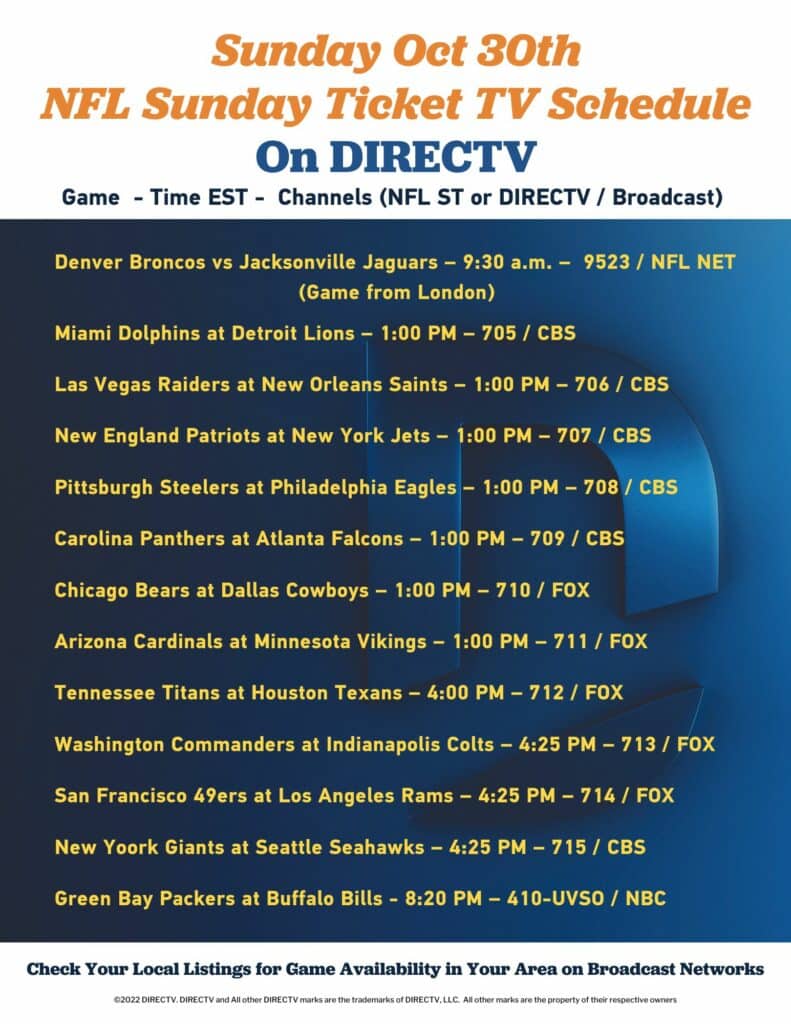
The Evolution from Linear Broadcast to Fragmented Streaming
The historical dominance of terrestrial and cable broadcasting has given way to a multi-platform environment. In the past, “networks” referred to the big broadcasters—CBS, NBC, FOX, and ABC—who utilized high-power transmitters to send signals to local affiliates. While these legacy systems still exist, they are now integrated into a broader digital framework.
Digital Rights Management and Geofencing Tech
One of the primary reasons users find it difficult to locate a game is the implementation of sophisticated Digital Rights Management (DRM) and geofencing. Broadcasting rights are sold in “windows” and “territories.” Technology companies use IP-based geofencing to ensure that a viewer in Chicago cannot access a local broadcast meant for a viewer in Los Angeles unless they are using a specific out-of-market package.
DRM technologies like Google’s Widevine, Apple’s FairPlay, and Microsoft’s PlayReady are the silent sentinels of sports broadcasting. They encrypt the video stream to prevent unauthorized restreaming. When a user logs into an app like Peacock or Paramount+ to find a game, a handshake occurs between the user’s device and the license server, verifying their location and subscription status in milliseconds. This tech-heavy verification process is the reason why some games are “blacked out” on one network but available on another.
The Rise of Over-the-Top (OTT) Platforms
The migration of football to OTT platforms marks a significant technological shift. Unlike traditional cable, which uses a dedicated slice of bandwidth to send a constant stream of data, OTT delivery relies on the public internet. This shift has necessitated a move from MPEG-2 transport streams to more flexible formats like HLS (HTTP Live Streaming) and DASH (Dynamic Adaptive Streaming over HTTP).
These protocols allow for “adaptive bitrate streaming.” If a viewer’s home Wi-Fi fluctuates, the technology automatically switches to a lower-resolution stream to prevent buffering. This ensures that even if the “network” is a bandwidth-heavy 4K stream on Amazon Prime, the viewer stays connected to the action, albeit at a temporary loss of visual fidelity.
The Engineering of Low-Latency Streaming
Perhaps the greatest technical challenge in sports broadcasting is latency. In the world of live sports, a 30-second delay can lead to a “Twitter spoiler,” where a fan sees a notification of a touchdown on their phone before it happens on their screen. Reducing this “glass-to-glass” latency is the current frontier of sports tech.
Solving the “Spoiler” Problem in Real-Time Delivery
Traditional streaming often suffers from latency because of the way video is “chunked.” A video stream is broken into segments, usually 2 to 6 seconds long. The player on the smart TV or smartphone must download and buffer several segments before playback begins to ensure smooth performance. This can easily result in a 20-40 second lag behind the live action.
To solve this, networks are adopting “Low-Latency HLS” (LL-HLS) and “HTTP/2 Push” technologies. These allow the server to send parts of a video segment before the full segment is even finished being encoded. By reducing the buffer size and optimizing the transmission path, tech-forward networks can now achieve latencies of 5 seconds or less, rivaling the speed of traditional satellite and cable broadcasts.
Content Delivery Networks (CDNs) and Edge Computing
When tens of millions of fans tune in to a high-profile game simultaneously, the strain on a central server would be catastrophic. This is where Content Delivery Networks (CDNs) like Akamai, Cloudflare, and AWS CloudFront become the “network” behind the network.
CDNs distribute the video content to “edge” servers located as close to the user as possible. If a viewer in Dallas is watching a game on YouTube TV, the video data isn’t traveling from a central data center in Virginia; it’s being served from a local node in North Texas. This decentralized approach reduces the physical distance the data must travel, further lowering latency and ensuring the “network” remains stable even during peak traffic events like the Super Bowl.
AI and Machine Learning in Live Game Navigation
As the number of potential “networks” increases, Artificial Intelligence (AI) has become the primary tool for helping users navigate the chaos. Finding a game today often starts with a voice command to a remote or a smart speaker, which triggers an AI-driven search algorithm.
Personalized Recommendation Engines and “Watch Next”
Modern streaming hubs use machine learning to understand viewer preferences. If a user frequently watches SEC football, the interface of their Smart TV (such as Roku OS or Fire OS) will prioritize that content on the home screen. These AI models analyze billions of data points, including viewing history, time of day, and even social media trends, to predict which “network” the user is looking for.
Furthermore, AI is being used to create “smart highlights.” For viewers who join a game late, some networks now offer a “Catch Up With Key Plays” feature. This utilizes computer vision algorithms to identify significant moments—touchdowns, turnovers, or big gains—and compiles them into a personalized recap that brings the viewer up to speed in minutes.
Real-Time Data Overlays and Augmented Reality
The definition of a “network” is also expanding to include the data layer. Companies like Genius Sports and Amazon’s AWS are integrating real-time telemetry into the broadcast. Through the use of chips in players’ shoulder pads and optical tracking cameras in the stadium, the “network” can now overlay advanced metrics—such as a receiver’s sprint speed or a quarterback’s probability of completing a pass—directly onto the screen in real-time.
This is made possible by high-speed data processing at the “edge.” The raw data from the field is sent to a local cloud instance, processed through a machine learning model, and synchronized with the video frames before being sent to the viewer. This tech stack transforms the passive viewing experience into an interactive, data-rich environment.
The Hardware Shift: Smart TVs and Integrated Hubs
The final piece of the “what network is the football game on” puzzle is the hardware through which the content is consumed. The television has evolved from a simple monitor into a high-performance computer.
Operating Systems as the New “Gatekeepers”
In the modern era, the operating system (OS) of the television acts as the gatekeeper. Platforms like Google TV, Tizen (Samsung), and webOS (LG) have integrated universal search functions. When a user asks “what network is the football game on,” the OS queries the APIs of every installed app—from ESPN+ to Hulu—to provide a direct link to the stream.
This integration represents a massive shift in power from the content creators (the networks) to the platform providers (the tech giants). The user interface (UI) design and the ease of navigation within these operating systems often dictate which network gets the most “eyes” on their broadcast. A game that is difficult to find within the OS search ecosystem is effectively invisible to a large portion of the audience.
The Future of Interconnectivity in Sports Tech
Looking forward, the tech behind finding and watching football is moving toward total interconnectivity. We are seeing the rise of “multiview” technology, where a viewer can watch four different games from four different “networks” on a single screen, all while the audio is managed by a smart algorithm that prioritizes the closest game or the one with the highest stakes.
As 5G and eventually 6G networks become more prevalent, the reliance on home Wi-Fi will diminish, allowing for high-bitrate, low-latency sports consumption on the go. The “network” will follow the user, transitioning seamlessly from a smart TV in the living room to a smartphone in a car, and eventually perhaps to an Augmented Reality (AR) headset that places the viewer on the 50-yard line.
In conclusion, the question “what network is the football game on” is no longer a simple inquiry about a channel. It is an entry point into a massive, interconnected web of software engineering, cloud computing, and artificial intelligence. The “network” is the invisible infrastructure that bridges the gap between a stadium in a distant city and the screen in a viewer’s hand, proving that in the modern world of sports, technology is the most valuable player on the field.
aViewFromTheCave is a participant in the Amazon Services LLC Associates Program, an affiliate advertising program designed to provide a means for sites to earn advertising fees by advertising and linking to Amazon.com. Amazon, the Amazon logo, AmazonSupply, and the AmazonSupply logo are trademarks of Amazon.com, Inc. or its affiliates. As an Amazon Associate we earn affiliate commissions from qualifying purchases.