
The digital landscape has fundamentally shifted how we consume cinema. When users search for what movies to watch on Prime, they are not merely looking for a list of titles; they are engaging with one of the most sophisticated technological ecosystems in the modern world. Amazon Prime Video is no longer just a repository for digital files; it is a complex intersection of machine learning, cloud infrastructure, and advanced video compression. Understanding the technology that powers these recommendations and the delivery of high-definition content is essential for any tech enthusiast looking to maximize their home theater experience.

The Recommendation Engine: Deciphering the Machine Learning Behind Your Home Screen
At the heart of the “what to watch” dilemma is a massive data processing challenge. Prime Video utilizes advanced AI and machine learning (ML) models to sift through tens of thousands of titles to present a curated list to the end-user. This isn’t a random selection; it is the result of billions of data points processed in real-time.
Collaborative Filtering and Behavioral Analysis
The primary mechanism for movie recommendations is collaborative filtering. This algorithm identifies patterns by comparing your viewing history with millions of other users. If “User A” watches a series of sci-fi tech thrillers and “User B” shares a 90% overlap in those viewing habits, the system will recommend User A’s outliers to User B.
However, Amazon’s tech goes deeper than simple “if/then” logic. The system analyzes “micro-behaviors.” It tracks not just what you watch, but when you pause, whether you skip the credits, and if you watch a trailer to completion. These interactions are fed into deep learning models that build a multi-dimensional profile of your preferences, moving beyond genre tags into more nuanced categories like “pacing,” “visual tone,” and “thematic complexity.”
The Cold Start Problem and Content-Based Filtering
A significant challenge in tech-driven curation is the “Cold Start” problem—how to recommend a brand-new movie that has no viewing history. To solve this, Prime Video employs content-based filtering powered by computer vision and natural language processing (NLP).
Before a movie is even released to the public, AI tools scan the metadata, scripts, and even individual frames of the film. These tools identify objects, settings, and lighting styles. If the AI detects a high concentration of neon aesthetics and synthesizer-heavy audio tracks, it can programmatically categorize the film alongside “Cyberpunk” or “80s-inspired Tech Noir” before the first human viewer clicks play.
High-Fidelity Streaming: The Intersection of Codecs and Hardware
When you finally decide what movie to watch on Prime, the technological challenge shifts from curation to delivery. Delivering a 4K Ultra HD film with HDR (High Dynamic Range) requires a robust stack of software and hardware synchronization to ensure the experience is seamless regardless of bandwidth fluctuations.
Adaptive Bitrate Streaming (ABS)
One of the most critical software components in the Prime Video app is the Adaptive Bitrate Streaming (ABS) algorithm. Streaming is not a constant flow of data but a series of small “chunks” of video. The ABS technology constantly monitors your network’s throughput and the processing power of your device (be it a smartphone or a high-end Smart TV).
If your bandwidth drops, the algorithm switches to a lower-resolution chunk in real-time to prevent buffering. Prime Video has pioneered several advancements in this space, utilizing the HEVC (High-Efficiency Video Coding) and the newer AV1 codec. AV1, in particular, is a royalty-free video coding format designed for the internet that provides 30% better compression than previous standards, allowing for “near-4K” quality even on relatively modest internet connections.
The HDR Battle: HDR10+ vs. Dolby Vision
For the technophile, the visual quality of a movie is often defined by its implementation of High Dynamic Range. Prime Video has been a primary advocate for HDR10+, an open-standard technology that uses dynamic metadata to adjust brightness levels on a scene-by-scene or even frame-by-frame basis.
While much of the industry leaned toward Dolby Vision (a proprietary format), Amazon’s support for HDR10+ has pushed hardware manufacturers like Samsung and Panasonic to optimize their panels for this specific tech stack. This ensures that when you watch a visually complex film, the shadows remain deep and the highlights retain detail, all managed through a software-handshake between the Amazon servers and your TV’s processor.
X-Ray Technology: How Metadata Enhances the Viewing Experience
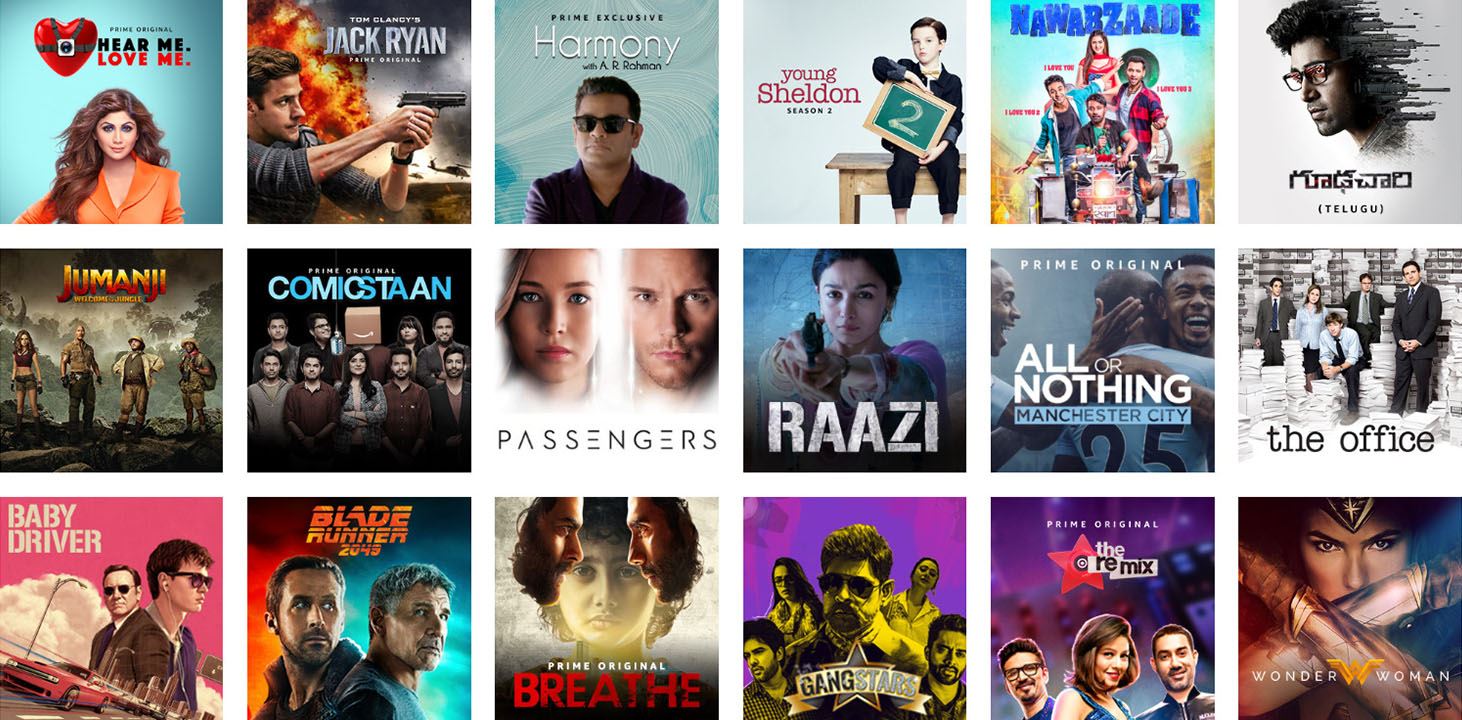
Perhaps the most distinct technological feature that influences what movies to watch on Prime is the “X-Ray” functionality. Powered by IMDb (an Amazon subsidiary), X-Ray is a masterclass in metadata integration and real-time data delivery.
Real-Time Facial Recognition and Spatial Metadata
X-Ray isn’t just a static list of actors. It utilizes facial recognition technology and time-synced metadata to identify who is on screen at any given second. From a software architecture perspective, this requires a specialized layer of data that runs parallel to the video stream.
As the video plays, the app queries a database that contains “spatial triggers.” When a specific actor enters the frame, the UI is ready to display their filmography, the name of the background song, and even trivia related to that specific scene. This tech transforms the passive act of watching a movie into an interactive, information-rich experience, often influencing users to choose Prime over other platforms where such deep-dive data is absent.
Integration with the AWS Ecosystem
The speed at which X-Ray functions is a testament to the power of Amazon Web Services (AWS). By hosting the video content and the X-Ray metadata on the same global edge network, Amazon minimizes latency. This means that when you hit pause, the information is already cached on your device, providing an instantaneous response that feels like a native part of the film rather than an external plugin.
Cross-Platform Performance and the Software Ecosystem
In the modern era, “watching a movie” often involves starting a title on a commute via a smartphone and finishing it in a home theater. Maintaining state across these disparate devices is a complex synchronization task.
Cloud-Sync and State Management
Amazon’s Whispersync technology, originally developed for Kindle, has been adapted for Prime Video. It manages the “state” of your viewing experience in the cloud. This involves micro-services that track your timestamp down to the millisecond. The technical feat here is the conflict resolution; if you are watching on a tablet offline and then open the app on a TV once you’re back on Wi-Fi, the system must reconcile those two data points to ensure you never lose your place.
Optimized Apps for Low-Powered Devices
A significant portion of Prime Video users access the service through budget-friendly streaming sticks or older Smart TVs with limited RAM and processing power. To accommodate this, Amazon’s engineering team focuses on “lean” app development. This involves offloading as much processing as possible to the server side (the cloud) and using lightweight UI frameworks that can render menus and posters quickly without crashing the device’s limited memory.
Future-Proofing: AI-Upscaling and Spatial Audio
As we look at the future of how we decide what movies to watch on Prime, the technology is moving toward enhancing older content through artificial intelligence.
AI-Driven Remastering
Many classic movies on the platform were filmed long before 4K was a reality. Amazon is increasingly utilizing AI-upscaling technologies to improve the quality of these older titles. By using generative adversarial networks (GANs), the software can “predict” what missing pixels should look like, effectively turning a 1080p source into a crisp 4K-like experience. This technological “facelift” breathes new life into legacy content, making it more appealing to modern audiences with high-end displays.

The Rise of Spatial Audio and Object-Based Sound
Finally, the tech of sound is catching up to the tech of sight. Prime Video is expanding its support for Dolby Atmos and other object-based audio formats. Unlike traditional surround sound, which assigns audio to a specific speaker channel, spatial audio treats sounds as “objects” in a 3D space. The software in the Prime Video app tells your soundbar or headphones exactly where that object is located, and your hardware calculates the output. This level of immersion is a key factor for tech enthusiasts when selecting a platform for their next cinematic experience.
In conclusion, the question of what movies to watch on Prime is inextricably linked to the technology that delivers them. From the AI that predicts your next favorite film to the codecs that ensure every pixel is perfect, Amazon Prime Video represents a pinnacle of modern digital engineering. For the user, the result is a seamless, high-quality experience; for the tech-minded observer, it is a fascinating display of how data, software, and hardware work in harmony to redefine entertainment.
aViewFromTheCave is a participant in the Amazon Services LLC Associates Program, an affiliate advertising program designed to provide a means for sites to earn advertising fees by advertising and linking to Amazon.com. Amazon, the Amazon logo, AmazonSupply, and the AmazonSupply logo are trademarks of Amazon.com, Inc. or its affiliates. As an Amazon Associate we earn affiliate commissions from qualifying purchases.