
The road to the 97th Academy Awards is not merely paved with artistic ambition and cinematic flair; it is constructed upon a foundation of complex financial strategies, high-stakes marketing investments, and the ruthless pursuit of Return on Investment (ROI). As the film industry stabilizes in a post-strike economy, the contenders for the 2025 Oscars represent a diverse portfolio of financial models, from the billion-dollar blockbuster “tentpoles” to the lean, high-margin independent features that leverage critical acclaim into long-term profitability.
To understand which movies are up for the Oscars in 2025, one must look past the red carpet and analyze the balance sheets. The “Oscar season” is a multi-billion dollar ecosystem where a single golden statuette can pivot a studio’s quarterly earnings and redefine the market value of its creative assets.
The Financial Landscape of the 2025 Oscar Season
The 2025 race is characterized by a significant tension between “Big Cinema”—the massive theatrical releases designed to save the box office—and the “Prestige Model”—films produced specifically to capture the cultural zeitgeist and awards hardware. From a financial perspective, the 2025 contenders are being judged as much by their fiscal discipline as their directorial vision.
The Blockbuster as a Serious Contender
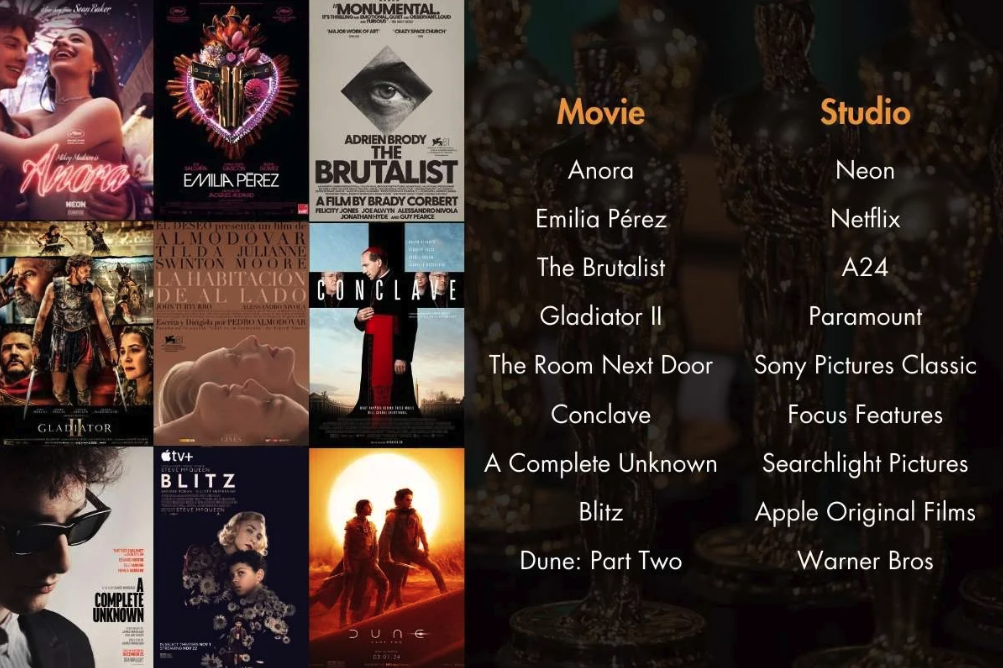
Leading the pack in the 2025 conversation are films that proved that high-budget spectacle can coexist with critical pedigree. Denis Villeneuve’s Dune: Part Two is perhaps the most prominent example. With a production budget estimated at $190 million and a global box office haul exceeding $700 million, the film is a masterclass in risk management. For Warner Bros. Discovery, a Best Picture nomination isn’t just an honor; it is a vital component of the franchise’s lifecycle management, ensuring the longevity of the IP as it expands into streaming and merchandise.
Similarly, Ridley Scott’s Gladiator II represents a massive capital outlay. For Paramount, the film serves as a high-leverage bet on “legacy sequels.” The financial goal here is to recoup a budget that reportedly ballooned due to production complexities, using the prestige of the Academy Awards to maintain theatrical momentum and justify premium pricing on VOD platforms.
The Rise of Mid-Budget Mastery
While the blockbusters dominate the headlines, the 2025 race is also heavily populated by mid-budget films that offer a superior ROI. Titles like Conclave and Anora operate on a fraction of a superhero movie’s budget but command significant market share in the “adult drama” demographic. These films are financial “scalpel” plays—targeted, efficient, and designed to thrive in the “long tail” of the awards cycle. For distributors like Neon or A24, the Oscar nomination is the primary engine of their business model, transforming a $10 million investment into a cultural phenomenon with global licensing appeal.
The “Oscar Bump”: Monetizing Critical Acclaim
The primary reason studios invest millions in awards campaigns is the “Oscar Bump.” This phenomenon refers to the measurable increase in revenue that occurs once a film is nominated. For the 2025 contenders, the financial stakes of a nomination are higher than ever, as the theatrical window continues to shrink and the competition for “eyeballs” on streaming platforms intensifies.
Box Office Expansion and Re-releases
For a film like Emilia Pérez or The Brutalist, an Oscar nomination serves as a global catalyst. Historically, a Best Picture nomination can add anywhere from $20 million to $50 million to a film’s domestic box office, depending on its release stage. In 2025, we expect to see studios utilizing a “staggered release” strategy—keeping films in a limited number of theaters through December and then aggressively expanding their footprint in January following the nomination announcement. This maximizes marketing efficiency by aligning theater availability with peak public interest.
The Value of the “Winner” Label in Domestic Licensing
Beyond the box office, the financial value of an Oscar-nominated film is cemented in its licensing agreements. When a movie like Sing Sing moves from theaters to streaming, the “Academy Award Nominee” tag acts as a premium brand marker. It allows distributors to command higher licensing fees from international broadcasters and subscription video-on-demand (SVOD) services. In the internal accounting of a company like Netflix or Apple TV+, an Oscar win is categorized as a “subscriber retention asset,” reducing churn by providing high-quality, exclusive content that justifies a monthly subscription fee.
Investing in Prestige: The ROI of “For Your Consideration” Campaigns
To get a movie up for an Oscar in 2025, a studio must spend money to make money. The “For Your Consideration” (FYC) campaign is a specialized marketing vertical that requires a distinct financial strategy. It is not uncommon for a studio to spend $5 million to $15 million—and in some cases, upwards of $25 million—on a single film’s awards campaign.
The Budgetary Breakdown of an Award Campaign
An FYC budget is typically allocated across several high-cost categories:
- Trade Advertising: Full-page ads in Variety, The Hollywood Reporter, and Deadline are essential for reaching the roughly 10,000 voting members of the Academy.
- Screening Events: Hosting lavish screenings with talent Q&As in Los Angeles, New York, and London involves venue rentals, catering, and security, often costing tens of thousands per event.
- Talent Travel: Flying actors and directors across the globe for press junkets and festivals is a significant line item, but essential for maintaining the film’s “buzz.”
- Digital Infrastructure: The “Academy Screening Room” app has reduced the cost of physical DVD screeners, but studios still invest heavily in high-end digital marketing and secure streaming links.
Risk vs. Reward in FYC Spending
From a purely financial standpoint, is this spend justifiable? For many independent distributors, the answer is a resounding yes. A nomination can increase the “valuation” of a film’s library by orders of magnitude. For a major conglomerate, the “halo effect” of an Oscar win can boost the company’s stock price by signaling to investors that the studio is a “destination for talent,” thereby attracting top-tier directors and actors for future lucrative projects.
Streaming Giants vs. Traditional Studios: The Billion-Dollar Tug-of-War
The 2025 Oscar race highlights a fascinating divergence in business models between tech-driven streamers and legacy Hollywood studios. The movies up for awards this year reflect these competing financial philosophies.
The Apple and Netflix Strategy: Content as a Loss Leader
Netflix’s The Piano Lesson and Apple’s potential contenders are not necessarily expected to turn a profit at the box office. Instead, these tech giants view film production through the lens of “Customer Acquisition Cost” (CAC). If a $100 million film wins Best Picture, the resulting media coverage provides hundreds of millions of dollars in earned media value. This drives global brand awareness and positions the tech platform as a cultural leader, which is invaluable for their broader ecosystem of hardware and services.
The Legacy Studio Strategy: Cash Flow and Catalog Value
In contrast, studios like Universal, Sony, and Warner Bros. are more focused on immediate cash flow and the long-term valuation of their film libraries. For them, an Oscar-contending film like Wicked or Joker: Folie à Deux must perform across multiple revenue streams: theatrical, PVOD, physical media, and finally, linear television. The financial objective is to create an “evergreen asset”—a film that will continue to generate royalties for decades.
The Future of Film Financing in a Post-Strike Economy
The 2025 Oscar contenders are the first crop of films to emerge from a significantly disrupted production cycle. The 2023 WGA and SAG-AFTRA strikes delayed many productions, leading to a “bottleneck” of high-quality content competing for the same awards window.
Co-Financing and Risk Mitigation
One of the most notable financial trends among the 2025 contenders is the rise of co-financing. Many of the films up for awards this year were not funded by a single entity. Instead, multiple production companies and private equity groups pooled their resources to spread the risk. This reflects a more cautious approach to film investment, where “prestige” is seen as a safer bet than unproven original IP, provided the budget is managed strictly.

The Globalization of the Oscar Market
Finally, we must consider the financial impact of international cinema. With the Academy’s voting body becoming increasingly global, international features are no longer relegated to a single category. From a business perspective, this opens up massive new markets. A film that succeeds both in its home country and on the Oscar stage—such as the international co-productions we see in the 2025 mix—represents a highly efficient use of capital, tapping into diverse revenue streams across different geographic regions.
In conclusion, the movies up for the Oscars in 2025 are more than just stories; they are sophisticated financial instruments. Whether it is a $200 million epic or a $5 million indie drama, each film is a bet on the enduring economic power of prestige. As we approach the ceremony, the ultimate winner will not just be the one with the best script or performance, but the one that best navigated the complex intersection of art and commerce in the modern entertainment economy.
aViewFromTheCave is a participant in the Amazon Services LLC Associates Program, an affiliate advertising program designed to provide a means for sites to earn advertising fees by advertising and linking to Amazon.com. Amazon, the Amazon logo, AmazonSupply, and the AmazonSupply logo are trademarks of Amazon.com, Inc. or its affiliates. As an Amazon Associate we earn affiliate commissions from qualifying purchases.