
In the world of high-stakes finance, few metrics are as publicly scrutinized yet fundamentally misunderstood as the box office rankings. While the general public views the question of “what movie is number one at the box office” as a matter of cultural popularity, institutional investors and business analysts view it as a critical data point in a complex ecosystem of capital allocation, risk management, and intellectual property valuation. To hold the top spot is not merely a badge of honor; it is a demonstration of a successful multi-million dollar investment strategy coming to fruition.

Understanding the financial mechanics behind a number one film requires looking past the marquee. It involves a deep dive into the unit economics of theatrical exhibition, the leverage of global distribution networks, and the strategic timing of product launches to maximize liquidity and shareholder value.
The Economics of the Opening Weekend and Revenue Velocity
The “Number One” status is most frequently contested during the opening weekend, a 72-hour window that dictates the financial trajectory of a film’s entire lifecycle. From a business perspective, the opening weekend is the ultimate stress test for a brand’s marketing efficiency and market penetration.
The 2.5x Rule and Break-Even Analysis
In film finance, the traditional rule of thumb for profitability is that a theatrical release must gross approximately 2.5 times its production budget to reach a break-even point. This multiplier accounts for the “theatrical rental”—the portion of ticket sales that the exhibitor (the theater) keeps—and the massive expenditures on Prints and Advertising (P&A). When a movie reaches the top of the box office, it is often because the studio has successfully front-loaded its marketing spend to create a surge in revenue velocity.
This velocity is crucial because theatrical revenue is not distributed evenly. Most distribution contracts are “front-heavy,” meaning the studio takes a larger percentage of the box office gross in the first two weeks (often up to 60-65%), with the exhibitor’s share increasing as the weeks progress. Therefore, being number one in the first few weeks is financially superior to having “long legs” at a lower ranking, as the studio captures a higher margin on those initial dollars.
Marketing as a Capital Investment
To secure the top spot, studios often spend between $50 million and $150 million on global P&A. This is essentially a capital investment in brand awareness. A number one ranking validates this spend, creating a “halo effect” that increases the value of the film across all subsequent windows, including Video-On-Demand (VOD), streaming licensing, and physical media. From an accounting standpoint, this marketing spend is often amortized over the life of the film, but the immediate cash flow generated by a number one opening is vital for maintaining the studio’s liquidity and funding its next slate of productions.
Global Market Dynamics and Currency Impacts
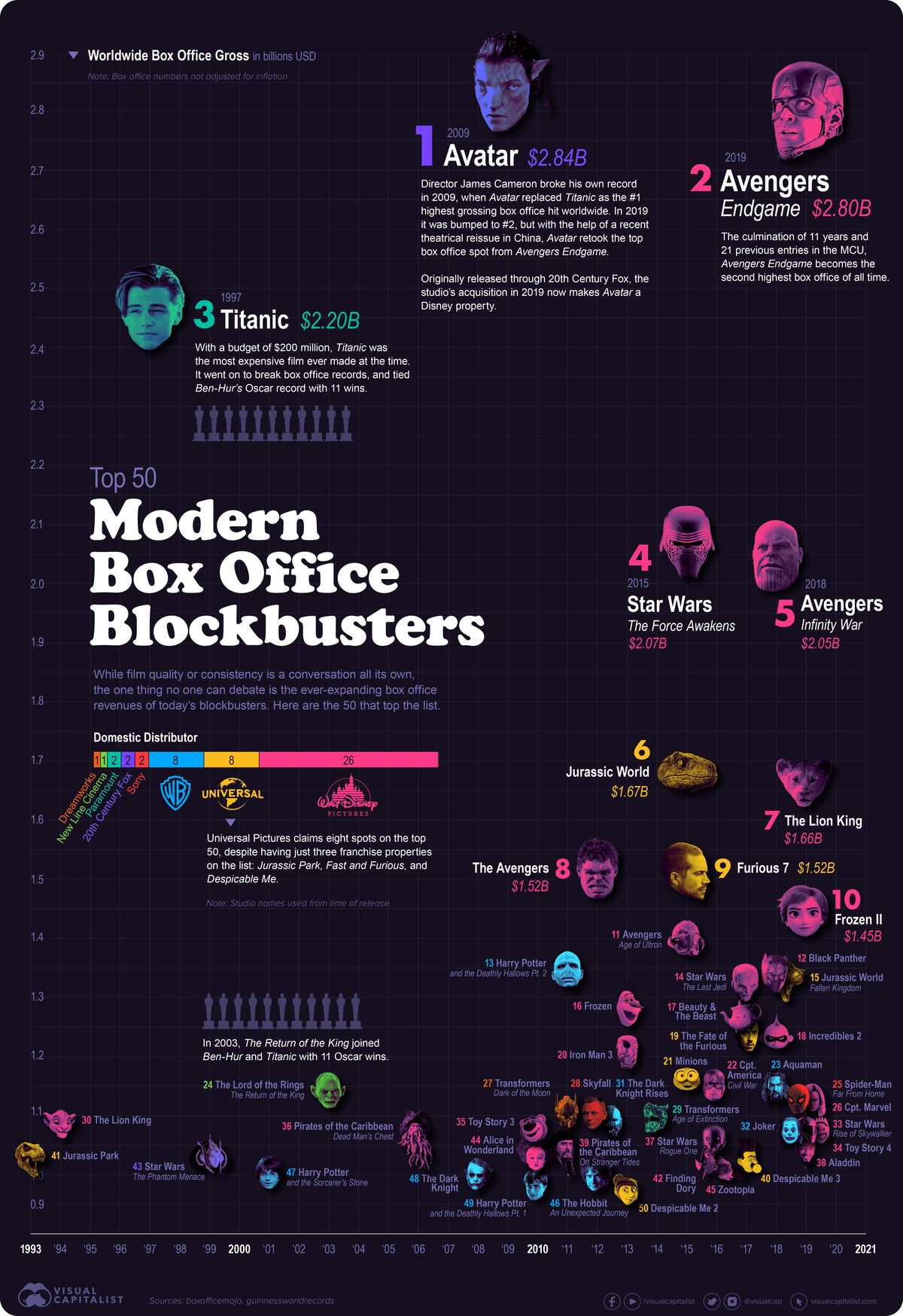
A film may be number one in the domestic market (North America) while performing differently on the global stage. For the modern media conglomerate, the “number one” question must be answered through the lens of international revenue streams, which now typically account for 60% to 70% of a blockbuster’s total gross.
Navigating International Distribution and Quotas
Securing the top spot globally requires navigating a maze of international trade laws, screen quotas, and censorship boards. In markets like China, the second-largest film market in the world, the revenue-sharing model is significantly different. Studios may only receive 25% of the box office gross compared to the 50% average in other territories.
When a movie sits at number one internationally, analysts look closely at the “territory mix.” A film that dominates in high-margin regions like the UK, Germany, and Japan is often more profitable than one that relies heavily on lower-margin or high-quota markets. Furthermore, the timing of international releases is a strategic financial decision; studios must weigh the benefits of a day-and-date global launch against the risks of piracy and the fluctuations in local currency values against the US Dollar.
The Impact of Foreign Exchange (FX) Risk
For investors, a movie’s number one status is also a play on currency. A strong US Dollar can eat into the reported earnings of a global hit. If a movie performs exceptionally well in the Eurozone or South Korea, but those currencies weaken against the dollar during the theatrical run, the “reported” number one gross may be lower than its actual market impact. Hedging these risks is a standard part of the corporate finance department’s role at major studios like Disney, Warner Bros., and Universal.
The Box Office as a Valuation Metric for Intellectual Property
The significance of being number one at the box office extends far beyond the theatrical run. It serves as a primary valuation metric for Intellectual Property (IP). In the era of the “franchise economy,” a number one film is a proof of concept for a multi-year, multi-platform revenue engine.
Franchise Scalability and Derivative Revenue
When a film like a Marvel entry or a major animated sequel hits number one, it triggers a cascade of derivative revenue. This includes theme park attractions, consumer products, video games, and spin-off series for streaming platforms. The box office total is the “anchor value” used to negotiate licensing deals with third-party vendors. A film that fails to reach the number one spot may see its licensing royalties discounted, as it hasn’t demonstrated the requisite level of market dominance to command premium rates.
The Shift to “Content-as-a-Service”
As the industry moves toward streaming, the theatrical box office has become the most expensive and effective “commercial” for a streaming service. A number one theatrical performance creates a sense of cultural urgency. When that film eventually moves to a platform like Disney+ or Max, its “number one” pedigree drives lower churn rates and higher new subscriber acquisition. From a financial reporting perspective, the box office gross is a tangible asset that offsets the intangible costs of content production for these platforms.
Risk Mitigation and Slate Financing
The pursuit of the number one spot is an inherently risky business. To mitigate this, the financial structure of big-budget movies often involves complex “slate financing” and “co-financing” agreements.
Diversification through Co-Financing
Rarely does a single studio shoulder the entire $200 million+ production cost of a potential number one hit. Instead, they partner with private equity firms, hedge funds, or other studios to spread the risk. In these arrangements, the “waterfall” of payments is strictly defined. The “senior” investors or those providing debt financing are usually paid back first, followed by the “equity” holders. Being number one is often the only way to ensure that everyone in the waterfall—from the primary studio to the secondary equity partners—reaches their expected Internal Rate of Return (IRR).
The Role of Data Analytics in Predicting Success
Modern box office dominance is less about “gut feeling” and more about predictive modeling. Studios employ data scientists to analyze social sentiment, trailer engagement metrics, and historical “comp” data to forecast opening weekend numbers with remarkable accuracy. This data allows studios to adjust their marketing spend in real-time. If a film is tracking to be number two, a studio might inject an additional $10 million into digital ad buys in the final 48 hours to push it to number one, knowing that the “Number One Movie in America” tagline will yield a higher return in the subsequent weeks and home entertainment windows.

The Future of Box Office Investment
As we look toward the future of the entertainment industry, the definition of a “number one” movie is evolving. While the raw dollar amount remains the headline, savvy financial observers are looking at “Profit Per Screen” and “Marketing ROI” as more accurate indicators of a film’s success.
The emergence of “event cinema”—films that demand a theatrical experience—has polarized the market. Mid-budget films are finding it harder to reach the top spot, as capital is increasingly concentrated in “tentpole” productions. This concentration of capital mirrors trends seen in the tech and finance sectors, where the biggest players capture a disproportionate share of the total market profit.
In conclusion, “what movie is number one at the box office” is a question that sits at the intersection of consumer psychology and sophisticated corporate finance. For the studio, it is the realization of a complex business plan. For the investor, it is a signal of IP strength and market health. For the broader economy, it is a significant driver of consumer spending and global trade. To hold the number one position is to successfully navigate the most competitive and volatile marketplace in the world of business, turning a creative vision into a powerhouse financial asset.
aViewFromTheCave is a participant in the Amazon Services LLC Associates Program, an affiliate advertising program designed to provide a means for sites to earn advertising fees by advertising and linking to Amazon.com. Amazon, the Amazon logo, AmazonSupply, and the AmazonSupply logo are trademarks of Amazon.com, Inc. or its affiliates. As an Amazon Associate we earn affiliate commissions from qualifying purchases.