
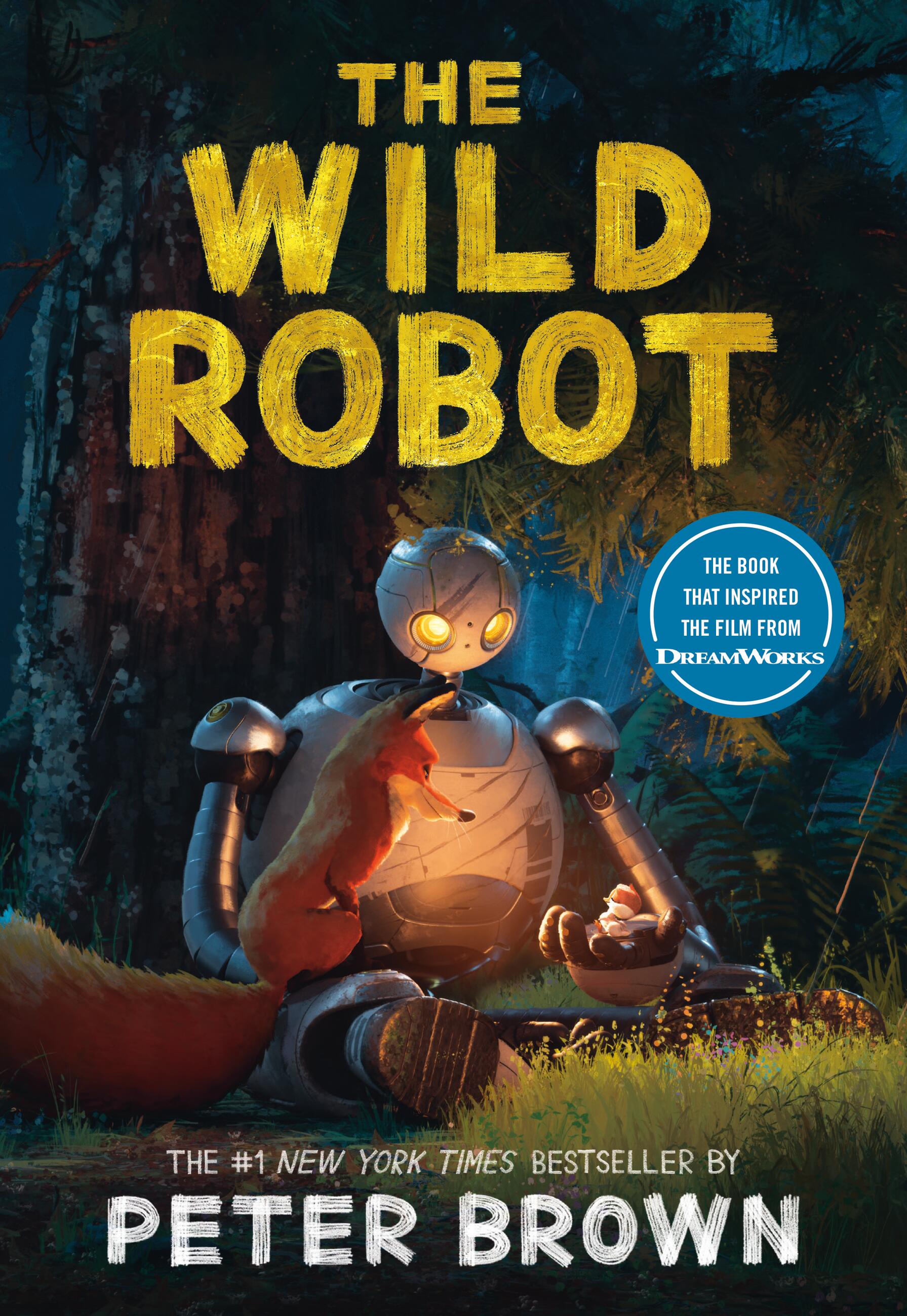
The concept of the “Wild Robot” has transcended the boundaries of children’s literature and cinematic storytelling to become a defining frontier in modern robotics and artificial intelligence. In a technological context, a wild robot represents a machine capable of operating with full autonomy within unstructured, unpredictable, and often hostile natural environments. Unlike industrial robots, which thrive in the controlled, geometric precision of a factory floor, the wild robot is designed to adapt, learn, and survive in the chaos of the biological world.
As we stand on the precipice of a new era in automation, the “Wild Robot” framework serves as a blueprint for the next generation of AI-driven hardware. It addresses the fundamental challenge of modern engineering: how to bridge the gap between digital logic and physical unpredictability. This transition requires a synthesis of advanced materials science, edge computing, and bio-inspired cognitive architectures.
The Architecture of Autonomy in Unstructured Environments
For a robot to be considered “wild,” it must solve the problem of environmental entropy. In a laboratory, a robot knows the friction of the floor and the exact coordinates of every obstacle. In the wild, surfaces are uneven, weather conditions fluctuate, and obstacles are dynamic.
Sensor Fusion and Real-Time Perception
The primary hurdle for any autonomous system in a natural setting is perception. Traditional LiDAR and camera systems often struggle with the visual noise of a forest or the refractive properties of water. Modern wild robots utilize “sensor fusion,” a process that integrates data from multiple sources—ultrasonic sensors, thermal imaging, and high-fidelity depth cameras—to create a persistent 3D map of their surroundings. This is coupled with Simultaneous Localization and Mapping (SLAM) algorithms that allow the robot to navigate and map an unknown area simultaneously, ensuring it can find its way back to a base or move toward a specific objective without GPS reliance.
Adaptive Locomotion and Hardware Resilience
Mechanical design is shifting away from rigid joints toward “soft robotics” and bio-mimicry. To navigate a mountain or a dense jungle, robots are adopting the gait of quadrupeds or the slithering motion of snakes. Companies like Boston Dynamics and Ghost Robotics have pioneered legged systems that use force-feedback loops to sense the stability of the ground before committing weight to a step. This physical intelligence—the ability of the hardware to react to the environment faster than the central processor can think—is a hallmark of the wild robot.
Artificial Intelligence: From Scripted Tasks to Machine Learning
The “brain” of a wild robot is fundamentally different from the logic gates of a traditional computer. To survive in the wild, a robot cannot rely on a pre-written script; it must possess the ability to generalize from previous experiences.
Reinforcement Learning and Neural Networks
The intelligence driving these machines is largely rooted in Reinforcement Learning (RL). Through millions of simulations, AI agents learn which movements result in a fall and which result in progress. When deployed in the physical world, these neural networks allow the robot to “feel” its way through a forest. If a limb is damaged or a motor fails, the AI can often recalibrate its movement patterns in real-time to compensate, mimicking the biological resilience of a wounded animal.
Edge Computing and Power Management
Autonomy in the wild is limited by the “umbilical cord” of power and data. A wild robot cannot rely on a constant cloud connection for its processing power, as latency would lead to mechanical failure in critical moments. Therefore, these systems utilize “edge computing”—processing all critical decision-making data on-board. To sustain this, engineers are developing low-power AI chips and integrating energy-harvesting technologies, such as high-efficiency solar skins or kinetic energy recovery systems, allowing the robot to remain operational for weeks or months without human intervention.
Industry Applications: Why the Wild Robot Matters

The pursuit of the wild robot is not merely an academic exercise; it is driven by urgent industrial and environmental needs. By creating machines that can thrive where humans cannot, we unlock new capabilities in conservation, disaster response, and resource management.
Environmental Monitoring and Reforestation
One of the most promising applications of wild robotics is in the field of “Precision Conservation.” Autonomous drones and ground-based crawlers are currently being used to map biodiversity in the Amazon and monitor illegal logging activities. Furthermore, swarms of small, autonomous robots are being designed to plant thousands of trees per day in areas too steep or remote for human crews. These robots analyze soil moisture and composition to ensure each seed is placed in the optimal micro-environment for survival.
Disaster Response and Search-and-Rescue
In the aftermath of earthquakes or floods, the environment becomes a “wild” space where traditional vehicles cannot pass. Wild robots equipped with thermal sensors and acoustic arrays can navigate through rubble to locate survivors. Their ability to operate independently of a communications grid makes them invaluable in the “golden hour” following a catastrophe, where every second of delay can mean the difference between life and death.
Agricultural Automation
The future of farming lies in “regenerative” practices that require high-density data and minimal soil compaction. Small, autonomous robots—essentially “wild” versions of tractors—can move through fields to identify and remove weeds mechanically, eliminating the need for chemical herbicides. These robots operate 24/7, adapting to changing weather conditions and soil health, representing a shift toward a more symbiotic relationship between technology and the earth.
The Ethical and Philosophical Frontier of Autonomous Tech
As we deploy increasingly intelligent and autonomous systems into natural ecosystems, we face a series of ethical dilemmas that the tech industry is only beginning to address. The concept of the “Wild Robot” forces us to reconsider the boundaries of the technosphere and the biosphere.
The Impact on Local Ecosystems
A robot in the wild is an invasive species of sorts. Engineers must consider the “technological footprint” of their creations. This has led to the development of biodegradable robotics—machines made from organic polymers that can decompose naturally at the end of their lifecycle. Additionally, there is the challenge of “robotic behavior”: how do we ensure that a patrolling robot does not disrupt the mating cycles or migratory patterns of local wildlife?
The “Black Box” of Autonomy
As AI becomes more sophisticated, the decision-making process of a wild robot becomes a “black box.” If an autonomous drone makes a decision that results in ecological damage, who is held responsible? The transition toward “wild” autonomy requires a parallel advancement in “Explainable AI” (XAI), ensuring that humans can audit and understand the logic behind a robot’s actions in the field.

The Future: Toward a Symbiotic Robotics
The ultimate goal of the “Wild Robot” movement is not to dominate nature with technology, but to integrate the two. We are moving toward a future where robots act as “stewards” of the environment, filling ecological niches that have been vacated or damaged by human activity.
This involves the development of “Kind Tech”—robotics designed with empathy and ecological preservation at their core. Future wild robots may not look like machines at all; they may be indistinguishable from the environments they inhabit, using soft sensors to “pulse” with the rhythm of the forest.
The journey from the rigid industrial robots of the 20th century to the fluid, intelligent “Wild Robots” of the 21st represents the pinnacle of human engineering. It is a testament to our desire to not just observe the world, but to participate in its preservation through the medium of silicon and steel. As these machines become more adept at navigating the complexities of the wild, they will eventually teach us more about our own world, providing data and insights that were previously unreachable. The Wild Robot is no longer a fiction; it is the vanguard of our technological future.
aViewFromTheCave is a participant in the Amazon Services LLC Associates Program, an affiliate advertising program designed to provide a means for sites to earn advertising fees by advertising and linking to Amazon.com. Amazon, the Amazon logo, AmazonSupply, and the AmazonSupply logo are trademarks of Amazon.com, Inc. or its affiliates. As an Amazon Associate we earn affiliate commissions from qualifying purchases.