
In the landscape of digital commerce and online income generation, eBay remains a cornerstone for entrepreneurs, side-hustlers, and personal finance enthusiasts. Whether you are liquidating household assets for extra cash or scaling a full-time reselling business, understanding the financial implications of the eBay return policy is critical. For buyers, the return policy represents a financial safety net; for sellers, it is a variable cost that must be managed to maintain healthy profit margins. This guide examines the mechanics of eBay’s return structure through the lens of financial management and business strategy.
Understanding the eBay Money Back Guarantee
The eBay Money Back Guarantee is the primary financial protection mechanism on the platform. From a personal finance perspective, this guarantee ensures that capital deployed for a purchase is not lost if the transaction fails to meet basic standards. It covers the vast majority of transactions and overrides a seller’s individual “no returns” policy in specific instances.
How the Guarantee Protects Your Capital
For a buyer, the Money Back Guarantee acts as a form of transaction insurance. It applies when an item is not received, is faulty or damaged, or does not match the listing description. In these scenarios, the seller is financially obligated to facilitate a return and provide a full refund, including original shipping costs. For someone managing a tight budget or an investment portfolio where every dollar counts, this guarantee provides the security necessary to participate in the secondary market.
Items That Do Not Match the Description
The most common friction point in eBay transactions involves the “Item Not as Described” (INAD) claim. From a business finance standpoint, an INAD claim is a significant liability for a seller. Regardless of the seller’s stated return policy, if eBay determines the item is significantly different from the listing, the seller must accept the return and pay for the return shipping. This serves as a powerful incentive for accurate asset valuation and transparency in business operations.
Seller Return Policies: Strategic Implications for Side Hustles
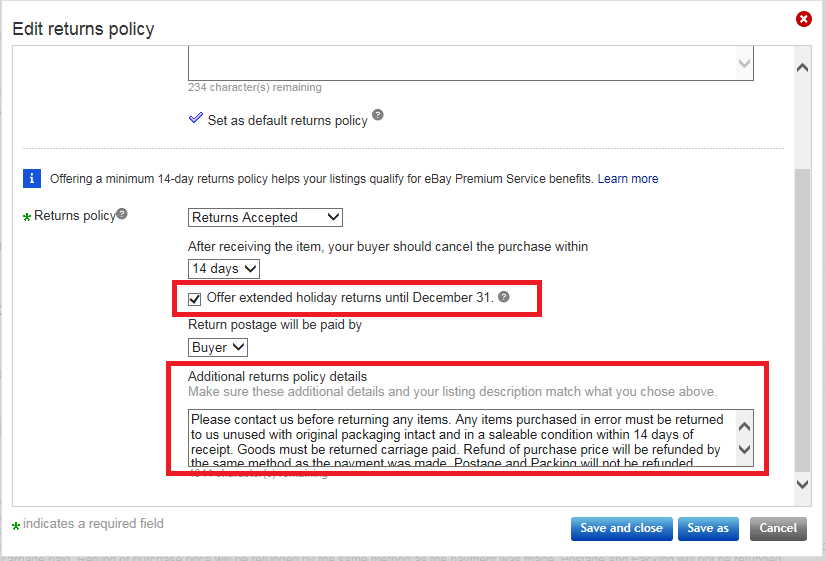
Every individual or business selling on eBay must define a return policy. This decision is not merely administrative; it is a strategic financial choice that affects sales velocity, search engine optimization (SEO) within the eBay algorithm, and overall net income.
The “No Returns” Policy vs. Financial Reality
Many new sellers opt for a “no returns” policy to protect their immediate cash flow. While this might seem like a way to lock in profits, it can often be a financial deterrent. Buyers are often willing to pay a premium for the security of a return window. Furthermore, as noted previously, a “no returns” policy does not protect a seller from INAD claims. In the context of building a sustainable side hustle, a rigid no-returns stance may lead to lower conversion rates and fewer repeat customers, ultimately hindering the long-term growth of the business.
Free Returns: An Investment in Sales Velocity
In the competitive marketplace, offering 30-day or 60-day free returns is a marketing expense that can drive significant revenue. eBay’s algorithm favors sellers who offer free returns, often placing their listings higher in search results. This increased visibility can lead to a higher volume of sales, which may offset the costs associated with the occasional return. For professional resellers, calculating the “return rate” is a standard part of business finance. If the increased sales volume from offering free returns generates a 20% increase in gross profit, but returns only cost 5% of revenue, the strategy is a net positive for the bottom line.
Managing Buyer Remorse
Under eBay’s structure, sellers can choose whether to accept returns for “buyer remorse”—reasons such as “changed my mind” or “found a better price.” Sellers can set their policy to have the buyer pay for return shipping in these instances. This is a common middle-ground strategy for those managing online income, as it protects the seller from the logistical costs of the buyer’s indecision while still providing a path for the buyer to recoup their funds.
The Financial Mechanics of Returns and Refunds
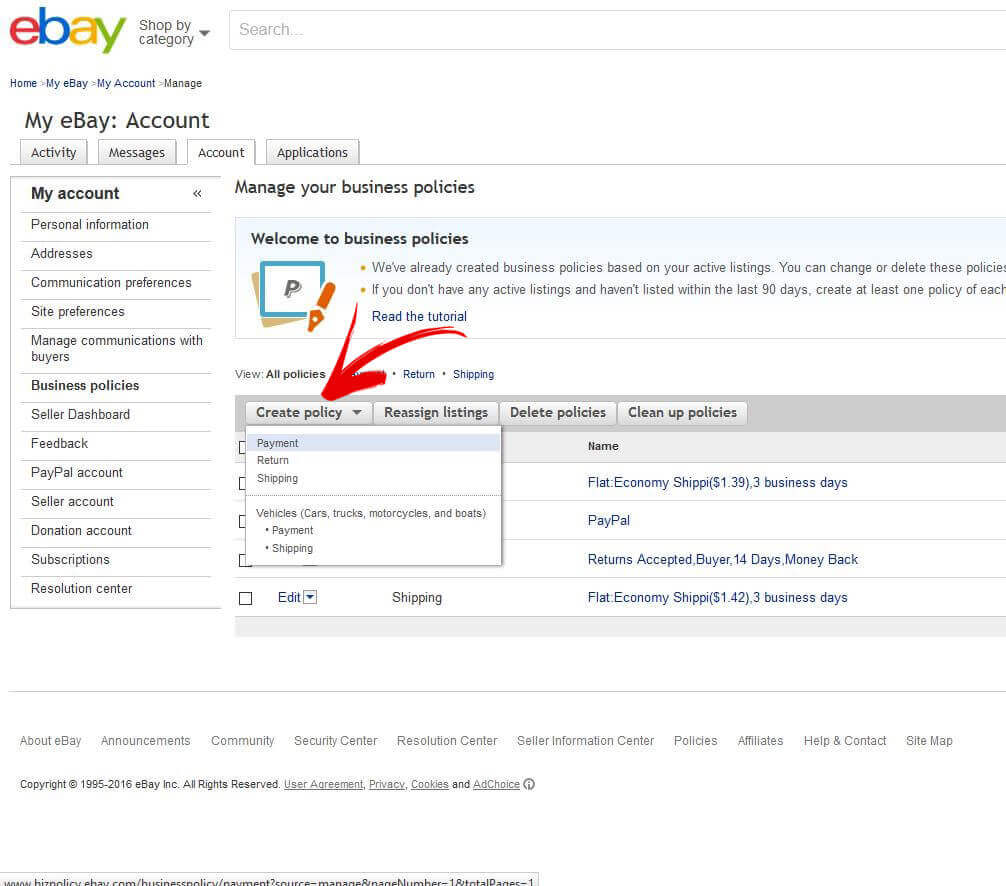
When a return is initiated, several financial levers are pulled. Understanding these mechanics is essential for accurate bookkeeping and cash flow management.
Shipping Costs and Final Value Fees
The allocation of shipping costs depends on the reason for the return and the seller’s stated policy. If the seller offers “free returns,” they bear the cost of the return label. If the buyer is responsible for return shipping, that cost is deducted from their potential refund or paid out of pocket.
From a seller’s perspective, one of the few financial silver linings of a return is the “Final Value Fee” credit. When a seller issues a full refund to a buyer, eBay generally credits back the percentage-based fee they charged on the original sale. However, the fixed per-order fee (usually $0.30 to $0.40) is typically not refunded. For high-volume businesses, these unrefunded transaction fees can add up, making it important to factor them into the cost of doing business.
Managing Refunds within Your Business Cash Flow
For those utilizing eBay as a primary source of income, cash flow management during a return is vital. When a return request is opened, eBay may place a “hold” on the funds from that sale in the seller’s account. This ensures that the capital is available to satisfy the refund once the item is returned. Sellers must maintain a cash reserve to handle these holds and potential refunds without disrupting their ability to purchase new inventory or pay operating expenses.
Partial Refunds as a Negotiation Tool
In some instances, a partial refund may be a more efficient financial resolution than a full return. If a buyer is unhappy with a minor aspect of an item, a seller might offer to refund 10-20% of the purchase price. This saves the seller the cost of return shipping and the risk of the item being damaged during transit, while the buyer receives a discount that compensates for the discrepancy. This is a common tactic in professional business finance to minimize losses and settle disputes quickly.
Handling Return Disputes and Protecting Profit Margins
Returns are an inevitable part of retail, but they can be abused. Protecting your profit margins requires a proactive approach to dispute resolution and risk mitigation.
The Dispute Resolution Process
If a buyer and seller cannot agree on a return, eBay’s resolution center steps in. Both parties provide evidence—such as photos, tracking numbers, and communication logs—to support their case. For a business, maintaining meticulous records of inventory condition and shipping procedures is a form of asset protection. Winning a dispute prevents a fraudulent return from impacting the company’s financial health.
Strategies to Minimize the Impact of Returns
To maximize online income, one must minimize the frequency of returns. This involves:
- High-Resolution Photography: Reducing the likelihood of “Item Not as Described” claims by showing every angle and flaw.
- Detailed Descriptions: Clear communication about specifications, measurements, and condition.
- Secure Packaging: Preventing damage during transit, which is a major driver of costly returns.
- Quality Control: Testing electronic items or inspecting garments thoroughly before listing.
The Role of Top Rated Seller Status
Sellers who maintain high standards and offer generous return policies can earn “Top Rated Seller” status. Financially, this is highly beneficial, as it provides a 10% discount on Final Value Fees and enhanced protection against certain types of return claims. For instance, Top Rated Sellers who offer 30-day returns are often allowed to deduct up to 50% from a refund if an item is returned in a different condition than it was sent. This is a critical protection for the business’s capital.

Conclusion: Returns as a Variable in the Wealth Creation Equation
Whether you are a buyer looking to protect your personal capital or a seller aiming to build a robust online income, the eBay return policy is a fundamental set of rules that governs the flow of money on the platform. For the buyer, it provides the confidence to spend; for the seller, it provides a framework for risk management and customer service.
Viewing returns not as a nuisance, but as a manageable business variable, allows for better financial planning. By incorporating return rates into your profit-and-loss statements and leveraging eBay’s protections, you can ensure that your activities on the platform contribute positively to your overall financial goals. In the world of online business finance, mastery of the return policy is just as important as mastery of the sales process itself.
aViewFromTheCave is a participant in the Amazon Services LLC Associates Program, an affiliate advertising program designed to provide a means for sites to earn advertising fees by advertising and linking to Amazon.com. Amazon, the Amazon logo, AmazonSupply, and the AmazonSupply logo are trademarks of Amazon.com, Inc. or its affiliates. As an Amazon Associate we earn affiliate commissions from qualifying purchases.