
The automotive landscape has undergone a seismic shift over the last decade, with Tesla sitting at the epicenter of the transition from internal combustion engines to electric propulsion. For the prospective buyer, the question “What is the price of a Tesla?” is no longer a simple matter of looking at a window sticker. It is a complex calculation involving dynamic manufacturer pricing, federal and state incentives, long-term operational savings, and the evolving resale market. Understanding the true cost of a Tesla requires a deep dive into the financial ecosystem that surrounds these vehicles.

The Current Price Spectrum: Mapping the Tesla Fleet
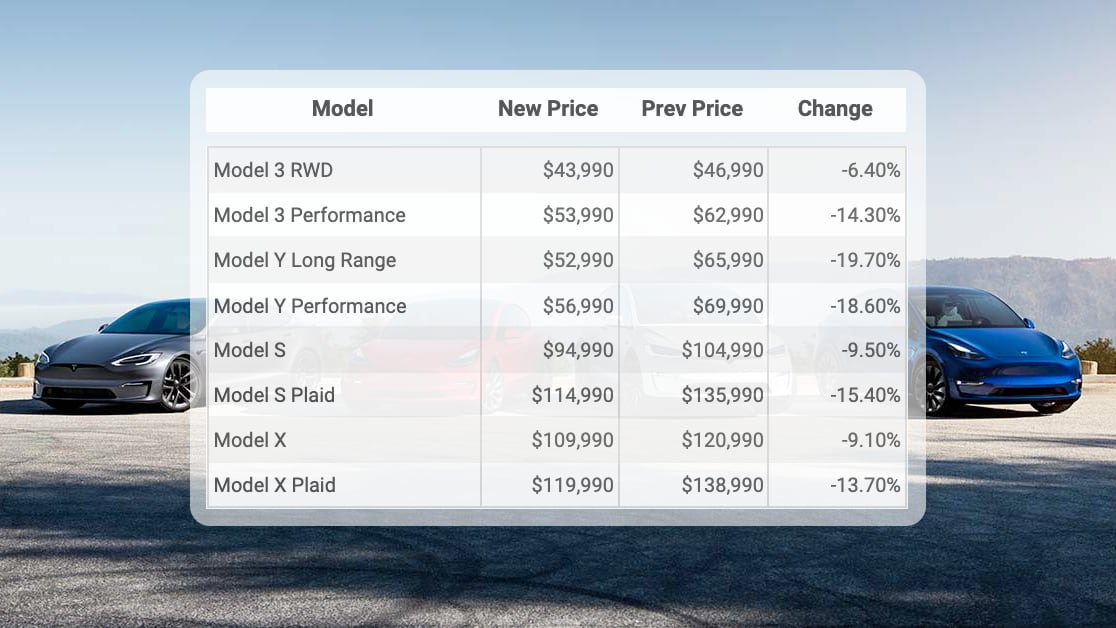
Tesla’s pricing strategy is notoriously fluid, often changing multiple times within a single fiscal quarter to reflect supply chain costs, inventory levels, and competitive pressures. To understand the financial commitment required, one must look at the base MSRP (Manufacturer’s Suggested Retail Price) across their core lineup.
The Model 3: The Entry Point
The Model 3 remains Tesla’s most affordable offering, designed to compete with mid-range luxury sedans. The Rear-Wheel Drive (RWD) variant typically starts in the neighborhood of $39,000 to $42,000. For those seeking better performance and range, the Long Range and Performance tiers can push the price toward the $54,000 mark. From a personal finance perspective, the Model 3 represents the most accessible “Total Cost of Ownership” (TCO) play for the average consumer.
The Model Y: The Market Leader
As the best-selling vehicle globally in recent years, the Model Y crossover commands a slight premium over the Model 3. Prices generally start around $43,000 for the Long Range RWD and can climb to $53,000 for the Performance model. Because it qualifies for various SUV-category tax incentives, the Model Y often represents a better financial “value” than the Model 3 for families, despite the higher upfront sticker price.
The Model S and Model X: The Luxury Tier
Tesla’s flagship sedan and SUV occupy the high-end luxury market. The Model S typically starts around $75,000, while the Plaid variant—featuring supercar-level acceleration—can exceed $90,000. The Model X, famous for its Falcon Wing doors, starts near $80,000, with the Plaid version reaching close to $95,000. These vehicles are positioned as premium assets, often attracting buyers who prioritize performance and status over pure cost-efficiency.
The Cybertruck: The New Frontier
The Cybertruck has introduced a new pricing paradigm for Tesla. While initial projections were lower, the current market reality sees the All-Wheel Drive variant starting around $80,000 and the high-end “Cyberbeast” exceeding $100,000. As production scales, these prices are expected to fluctuate, but the Cybertruck currently represents a significant capital expenditure for early adopters and commercial users.
The Impact of Federal and State Incentives
In the realm of personal finance, the “sticker price” of a Tesla is rarely what the consumer actually pays. The Inflation Reduction Act (IRA) in the United States has fundamentally altered the math of EV ownership through the Clean Vehicle Tax Credit.
The $7,500 Federal Credit
For eligible buyers, a federal tax credit of up to $7,500 can be applied at the point of sale, effectively acting as a down payment. However, this is subject to strict financial criteria:
- Income Caps: Individuals must earn less than $150,000, or $300,000 for joint filers, to qualify.
- MSRP Limits: Vans, SUVs, and trucks (like the Model Y and Cybertruck) must have an MSRP under $80,000. Sedans (like the Model 3) must be under $55,000.
- Battery Sourcing: The credit amount can vary based on where the battery components are manufactured, a factor that has caused the Model 3’s eligibility to shift frequently.
State and Local Rebates
Beyond federal aid, states like California, New York, and Colorado offer additional rebates ranging from $500 to $5,000. Some utility companies also offer credits for installing home charging stations. When these are stacked, the “net price” of a $43,000 Model Y can drop into the mid-$30,000 range, making it price-competitive with mass-market gasoline crossovers like the Honda CR-V or Toyota RAV4.
Total Cost of Ownership: The Long-Term Financial Play
A critical mistake many buyers make is comparing a Tesla to a gasoline car based solely on the monthly loan payment. To understand the true price, one must analyze the Total Cost of Ownership over a five-to-ten-year horizon.

Fuel vs. Electricity Savings
The most immediate financial benefit is the displacement of gasoline costs. On average, charging a Tesla costs about one-third as much as fueling a comparable internal combustion engine (ICE) vehicle. For a driver covering 15,000 miles per year, this can result in annual savings of $1,000 to $2,000, depending on local electricity rates and the price of gas. Over an eight-year ownership period, this equates to roughly $12,000 in “hidden” price reductions.
Maintenance and Repair
Tesla vehicles have significantly fewer moving parts than traditional cars. There are no oil changes, spark plugs, timing belts, or emissions tests. Regenerative braking also drastically extends the life of brake pads. While Tesla repairs—specifically bodywork—can be expensive due to the specialized aluminum casting and sensor suites, the routine maintenance costs are a fraction of those associated with BMW, Mercedes, or Audi.
Insurance Premiums: The Hidden Cost
One area where the “price” of owning a Tesla can surprise buyers is insurance. Due to high repair costs and the sophisticated technology onboard, insurance premiums for Teslas are often 20% to 30% higher than for equivalent gas cars. Tesla has attempted to mitigate this by launching “Tesla Insurance,” which uses real-time driving data to determine premiums, potentially offering lower rates for safe drivers.
Depreciation and Resale Value
For any significant investment, the rate of depreciation is a vital metric. Historically, Teslas held their value better than almost any other vehicle on the market. However, 2023 and 2024 saw a shift in this trend.
The Price War Effect
When Tesla aggressively cut the prices of new vehicles to maintain market share, the value of used Teslas plummeted overnight. While this was a win for new buyers, it negatively impacted the equity of existing owners. Currently, the resale market for Teslas has stabilized, but buyers should no longer view them as “depreciation-proof” assets.
Technology Obsolescence
Unlike traditional cars, a Tesla’s value is heavily tied to its software and hardware version. A car with “Hardware 4” will command a higher price than one with “Hardware 3.” Additionally, the inclusion of “Full Self-Driving” (FSD) capability—a software package that has cost as much as $15,000 in the past—does not always recoup its full value in the secondary market. From a financial standpoint, many experts now suggest subscribing to FSD on a monthly basis rather than purchasing it upfront, to avoid locking capital into a depreciating software asset.
Financing and Investment Strategies
Choosing how to pay for a Tesla is as important as the price itself. With interest rates hovering at higher levels than in the previous decade, the cost of capital must be factored in.
Leasing vs. Buying
Tesla offers competitive leasing programs, which can be an attractive “Money” move for those who want to avoid the risks of long-term depreciation and battery degradation. However, Tesla’s leases are unique in that they often do not allow for a “buyout” at the end of the term (specifically for Model 3 and Model Y). This means the lessee cannot capture any potential equity if the car’s market value is higher than the residual value.
Cash Flow and Opportunity Cost
For high-net-worth individuals, the decision to pay cash versus financing involves opportunity cost analysis. If a buyer can secure a 5% auto loan while their investment portfolio returns 8%, financing the vehicle and keeping their capital invested is the superior financial move. Conversely, if loan rates exceed expected market returns, paying cash or making a large down payment to reduce the principal is the safer play.
The Inventory Strategy
One of the best ways to reduce the price of a Tesla is to monitor the “Existing Inventory” section of their website. Tesla often discounts vehicles that are already at delivery centers to hit end-of-quarter targets. These discounts can range from $500 to $5,000, providing an immediate boost to the buyer’s bottom line without sacrificing the new-car warranty.
Conclusion: Is the Price Justified?
The price of a Tesla is a moving target that requires a holistic view of the current economic environment. While the upfront cost remains higher than the cheapest economy cars, the combination of federal tax credits, drastically lower “fuel” costs, and reduced maintenance makes a compelling financial case for many households.
To determine if the price is right for your specific financial situation, you must look past the HMI (Human-Machine Interface) and the acceleration stats. Instead, focus on the net effective cost: the MSRP minus incentives, plus the cost of insurance and financing, minus the projected fuel savings over your expected period of ownership. In the modern era of personal finance, a Tesla is not just a car; it is a complex financial instrument that, when managed correctly, can offer a lower lifetime cost than almost any vehicle in its class.
aViewFromTheCave is a participant in the Amazon Services LLC Associates Program, an affiliate advertising program designed to provide a means for sites to earn advertising fees by advertising and linking to Amazon.com. Amazon, the Amazon logo, AmazonSupply, and the AmazonSupply logo are trademarks of Amazon.com, Inc. or its affiliates. As an Amazon Associate we earn affiliate commissions from qualifying purchases.