
In the landscape of American personal finance, few phenomena capture the public imagination quite like the Powerball. When the jackpot climbs into the hundreds of millions—or the occasional billions—it transcends being a mere game of chance and becomes a cultural and economic event. For the casual observer, the question “What is the Powerball up to?” refers to the current jackpot total. However, from a professional financial perspective, the question probes deeper: What is the lottery doing to the economy, how does it function as a financial instrument, and what are the strategic implications for those who find themselves holding a winning ticket?

The Powerball is more than a gamble; it is a complex financial structure governed by probability, tax law, and the time value of money. Understanding its mechanics offers a unique lens through which we can view wealth management, risk assessment, and the psychological drivers of financial decision-making.
The Anatomy of a Jackpot: How the Numbers Climb
The meteoric rise of Powerball jackpots in recent years is not accidental. It is the result of deliberate structural changes designed to create larger prizes that drive ticket sales. By increasing the matrix of numbers from which players choose, the Multi-State Lottery Association (MUSL) decreased the odds of winning the grand prize, thereby ensuring more “rollovers.”
The Rollover Effect and Multi-State Liquidity
A rollover occurs when no ticket matches all six numbers in a drawing. When this happens, the jackpot portion of the prize pool is carried over to the next drawing. Because Powerball is played across 45 states, the District of Columbia, Puerto Rico, and the U.S. Virgin Islands, the liquidity—or the sheer volume of cash flowing into the pot—is immense. As the jackpot grows, “jackpot fatigue” vanishes, and a feedback loop begins: higher prizes lead to more media coverage, which leads to more ticket sales, which further inflates the jackpot.
Cash Option vs. Annuity: The Time Value of Money
When we ask what the Powerball is “up to,” we are usually looking at the advertised annuity value. However, the “Cash Option” is the actual amount of liquid currency held in the prize pool. The difference between these two figures is a masterclass in the time value of money.
The annuity option consists of 30 graduated payments over 29 years, where each payment is 5% larger than the previous one. The lottery commission arrives at the advertised jackpot total by taking the cash on hand and projecting what it would earn if invested in U.S. Treasury securities over three decades. Therefore, when interest rates rise, the gap between the cash lump sum and the advertised annuity widens. For a savvy investor, the choice between these two is the first and most critical financial decision of a lifetime.
The Odds Reality Check: Powerball vs. Traditional Investing
The allure of the Powerball lies in the “black swan” event—an improbable occurrence with a massive impact. However, looking at the lottery through the prism of personal finance requires a sober assessment of probability versus opportunity cost.
Probability and the “Tax on Hope”
The odds of winning the Powerball jackpot are approximately 1 in 292.2 million. To put this in perspective, an individual is statistically more likely to be struck by lightning, become a movie star, or be crushed by a meteor than to hit the jackpot. From a mathematical standpoint, the “expected value” of a $2 ticket rarely exceeds the cost of the ticket itself, except when the jackpot reaches historical highs. Even then, the “split-pot” risk—where multiple winners share the prize—drastically reduces the mathematical utility of the play.
Critics often refer to the lottery as a “tax on the poor” or a “tax on hope,” noting that a disproportionate amount of ticket sales come from lower-income brackets. From a wealth-building perspective, the lottery represents the antithesis of sound fiscal policy: it is a high-variance, negative-expectation play.
Opportunity Cost: What $2 a Week Could Become
For many, the $2 spent on a Powerball ticket is viewed as harmless entertainment. However, professional financial planning emphasizes the power of compound interest. If a 20-year-old were to invest $2 per week into a diversified low-cost index fund averaging a 7% annual return, that capital would grow significantly over 40 years. While it wouldn’t result in a billion dollars, it represents a guaranteed wealth-building strategy compared to the near-certain loss of the lottery. The Powerball is “up to” something subtle here: it diverts small amounts of capital that, in aggregate, could bolster the retirement security of millions of participants.
Sudden Wealth Management: Navigating the Financial Windfall
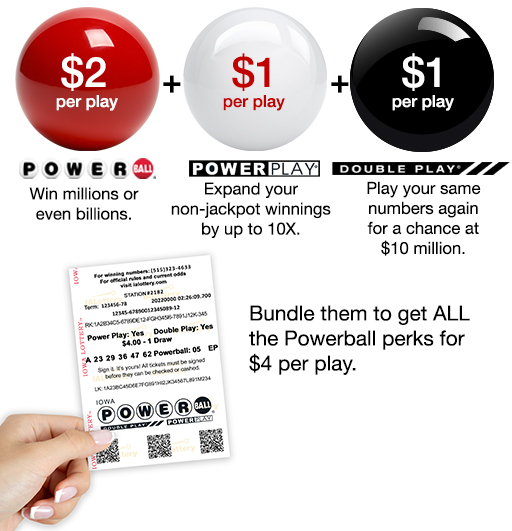
In the event that the 1-in-292-million chance occurs, the winner is immediately thrust into a high-stakes environment of “Sudden Wealth Syndrome.” The transition from a standard income to extreme wealth requires a complete overhaul of one’s financial identity and infrastructure.
Building the “Dream Team”
The first step for any winner is not to cash the ticket, but to build a protective barrier of professionals. This includes:
- Tax Attorneys: To navigate the immediate and long-term tax liabilities.
- Certified Financial Planners (CFP): To create a sustainable draw-down strategy and investment policy statement.
- Private Bankers: To manage liquidity and provide security for massive deposits.
- Security Consultants: To manage the physical and digital risks that come with public wealth.
In many jurisdictions, winners cannot remain anonymous. This “upward” shift in public profile can lead to “the lottery curse,” where winners are hounded by predatory requests for money. Establishing a legal entity, such as a blind trust or an LLC, can sometimes provide a layer of privacy depending on state laws.
Tax Implications: Federal and State Obligations
The Powerball jackpot is treated as ordinary income by the IRS. Upon winning, the lottery commission automatically withholds 24% for federal taxes. However, because the winner will almost certainly fall into the highest tax bracket (currently 37%), a significant additional payment will be due at tax time. Furthermore, state taxes vary wildly. A winner in Florida or Texas (states with no income tax) will take home millions more than a winner in New York or California. Understanding these liabilities is the difference between maintaining wealth and facing a future liquidity crisis.
The Behavioral Economics of the Lottery
The Powerball persists because it taps into fundamental aspects of human psychology. Behavioral economics studies why people make seemingly irrational financial choices, and the lottery is a prime case study.
Why We Play: The Psychology of Near-Misses
The “near-miss” effect—where a player matches two or three numbers—creates a psychological dopamine hit that mimics a win. This encourages continued play despite the astronomical odds against the grand prize. Furthermore, the “availability heuristic” causes people to overestimate their chances of winning because they frequently see news stories about winners, while the hundreds of millions of losers remain invisible.
Social Impact and Educational Funding Realities
Most state lotteries are marketed as a way to fund public education. However, the economic reality is often more complex. In many cases, lottery funds directed toward education do not result in a net increase in school budgets; instead, they allow state legislatures to divert the general fund money that would have gone to schools into other projects. From a macro-financial perspective, the Powerball acts as a voluntary redistribution of wealth that often replaces traditional tax revenue.
Long-Term Wealth Preservation for Winners
For those who do win, the goal shifts from acquisition to preservation. Managing a nine-figure fortune is a full-time job that requires a shift in mindset from “how do I spend this?” to “how do I protect this?”
Diversification and the Post-Jackpot Portfolio
A lottery winner’s portfolio should be built on the principle of capital preservation. Once you have “won the game,” there is no need to take excessive risks. A typical strategy involves:
- Fixed Income: Ladders of municipal and corporate bonds to provide a steady, lower-tax income stream.
- Equities: Global diversification to ensure growth that outpaces inflation.
- Real Estate: Tangible assets that provide both utility and long-term value.
- Alternative Investments: Hedge funds or private equity for those seeking to further diversify beyond public markets.
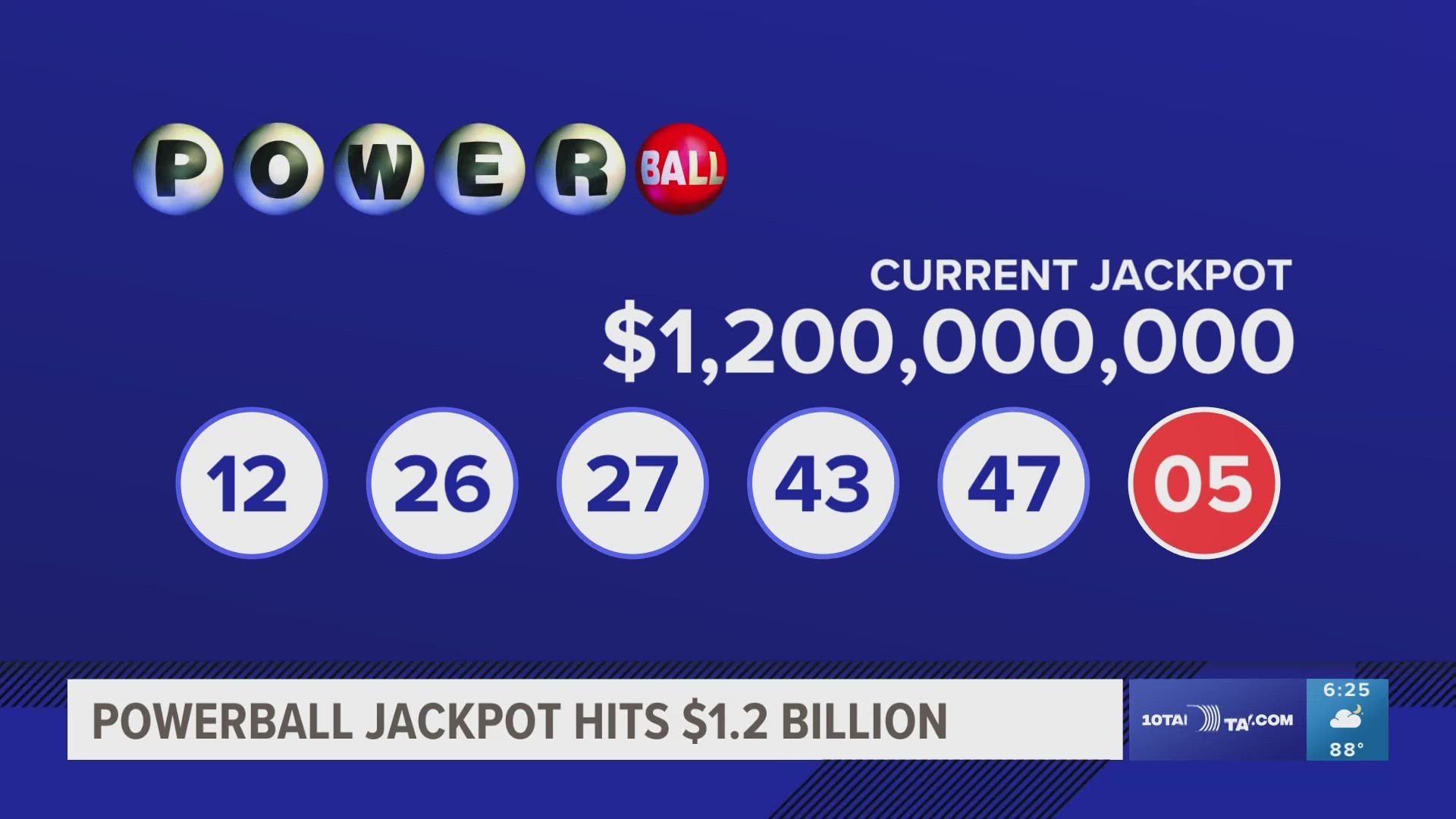
Philanthropy and Estate Planning
With extreme wealth comes the opportunity for significant social impact. Setting up a private foundation or a Donor-Advised Fund (DAF) allows winners to support causes they care about while optimizing their tax situation. Additionally, estate planning becomes paramount. Without a robust strategy involving irrevocable trusts and generation-skipping structures, a large portion of the Powerball winnings could be lost to estate taxes upon the winner’s death.
The Powerball is a fascinating intersection of hope, math, and high finance. Whether it is “up to” $20 million or $2 billion, its existence serves as a reminder of the power of compound interest, the importance of tax planning, and the enduring human desire for a transformative financial breakthrough. For the informed individual, the Powerball is best viewed as a spectacle to be understood, rather than a retirement plan to be relied upon. Consistent, disciplined investing remains the only “sure bet” in the world of personal finance.
aViewFromTheCave is a participant in the Amazon Services LLC Associates Program, an affiliate advertising program designed to provide a means for sites to earn advertising fees by advertising and linking to Amazon.com. Amazon, the Amazon logo, AmazonSupply, and the AmazonSupply logo are trademarks of Amazon.com, Inc. or its affiliates. As an Amazon Associate we earn affiliate commissions from qualifying purchases.