
In the rapidly evolving landscape of the twenty-first century, few technologies have sparked as much debate, excitement, and confusion as blockchain. While often synonymous with cryptocurrencies like Bitcoin, blockchain is, at its core, a sophisticated data structure—a transformative method of recording and verifying information that transcends any single application. As we transition deeper into a digital-first global economy, understanding the technical underpinnings of blockchain is no longer optional for tech enthusiasts; it is a fundamental requirement for understanding the future of software, security, and the internet itself.
The Fundamentals: Defining Blockchain Technology
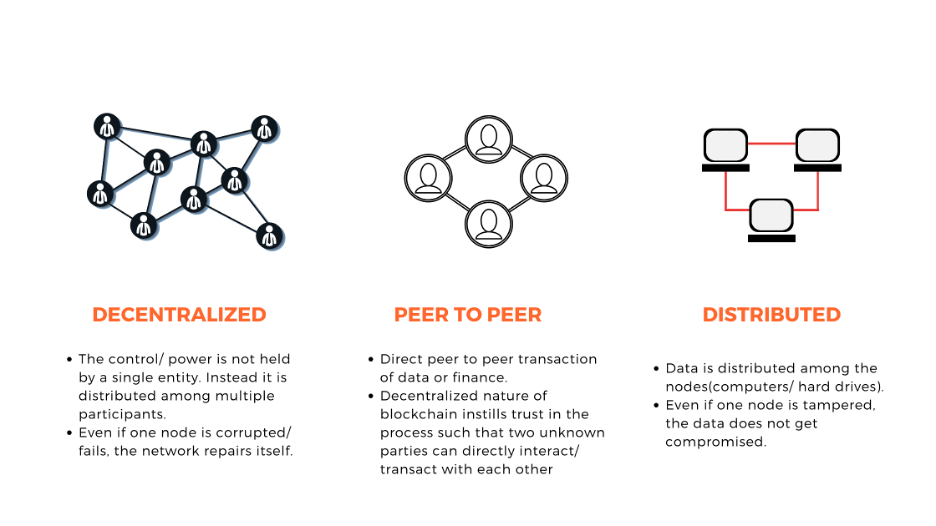
To understand blockchain from a technical perspective, one must first strip away the financial hype and view it as a distributed database. Unlike a traditional database managed by a central authority, such as a bank or a government agency, a blockchain is a decentralized ledger that is shared among a network of computers (nodes). This structure ensures that no single entity has control over the data, creating a system built on transparency and collective verification.
The Distributed Ledger Concept
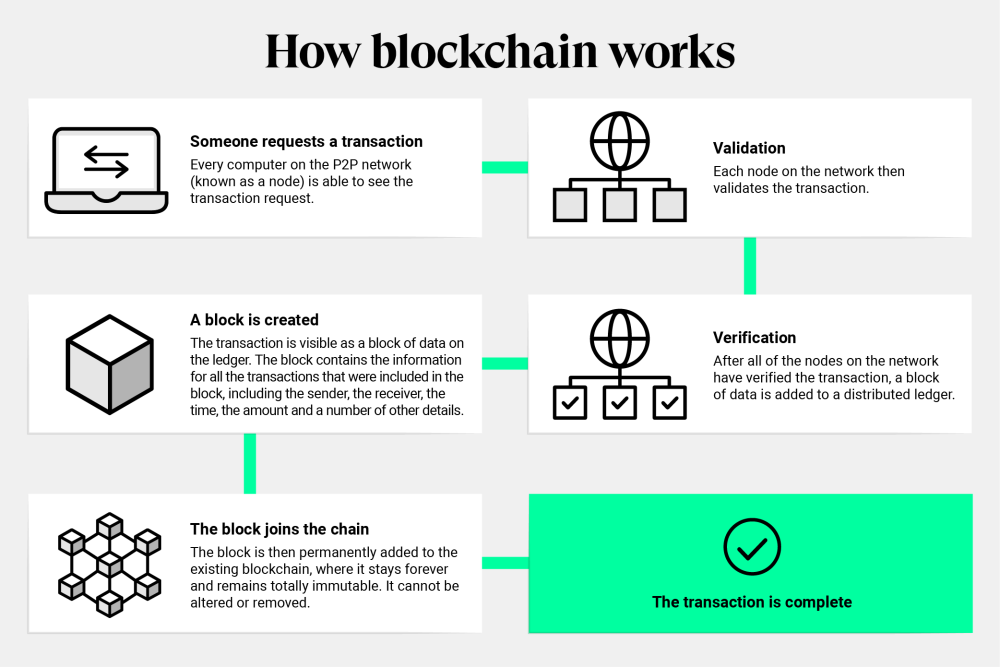
In a conventional centralized system, if you want to verify a transaction or a piece of data, you must trust the central record-keeper. If that central server is hacked or the record-keeper is corrupt, the data is compromised. Blockchain solves this by using a distributed ledger. Every participant in the network holds a complete copy of the entire history of data ever recorded. When a new entry is made, it is broadcast to the entire network. This redundancy ensures that even if one node goes offline or is compromised, the integrity of the system remains intact because thousands of other nodes maintain the “truth.”
Blocks, Chains, and Cryptographic Hashes
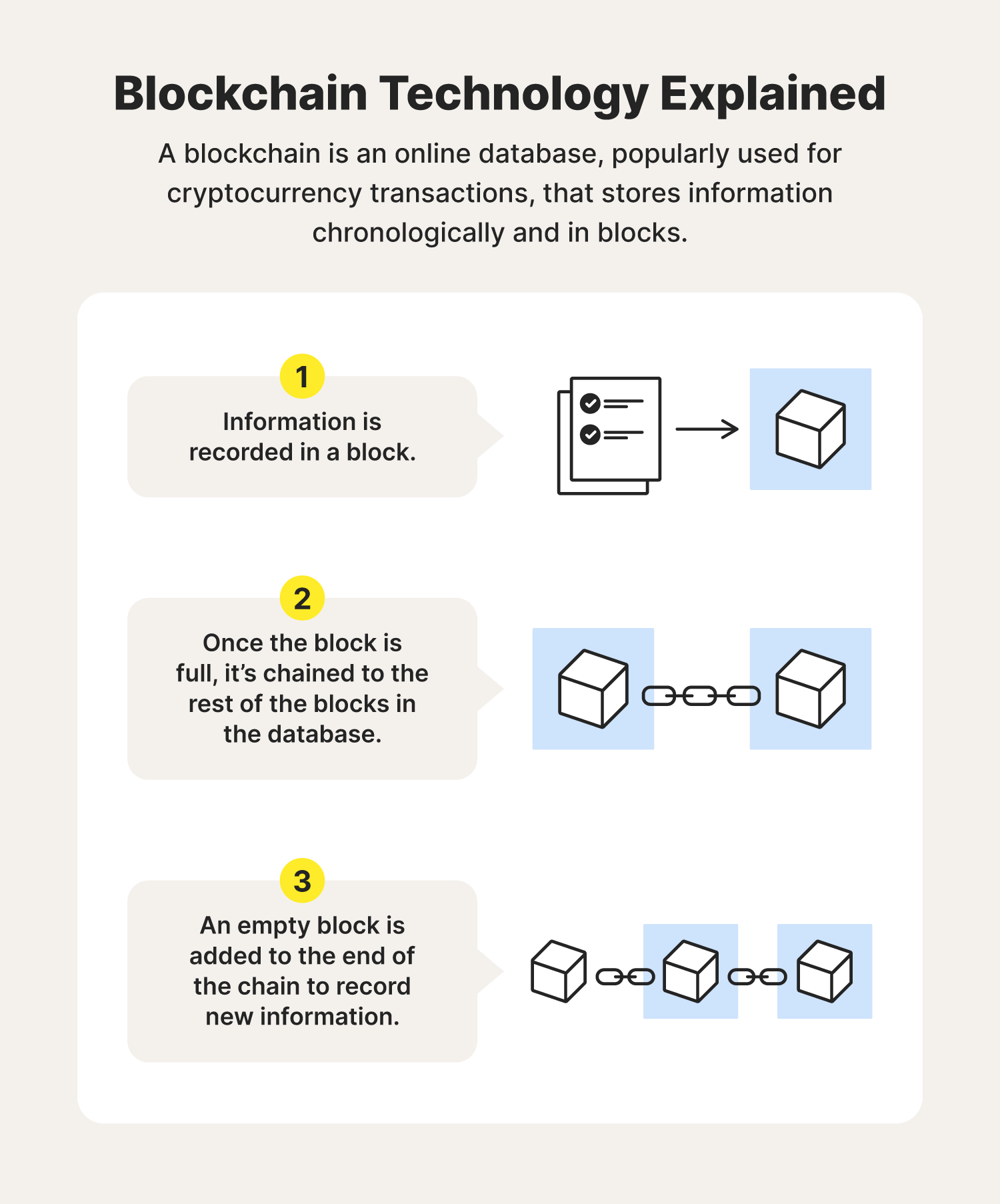
The “block” in blockchain refers to a collection of data. Each block contains a list of verified transactions or information. To link these blocks together into a “chain,” the system uses a mathematical process called “hashing.” A hash function takes an input of any size and produces a fixed-length string of characters, which acts as a digital fingerprint.
Crucially, each new block contains the hash of the previous block. This creates a mathematical link. If even a single character in a past block is altered, its hash changes. Because the subsequent block contains the old hash, the link is broken, and the network immediately identifies the data as invalid. This structural design is what makes the technology uniquely secure.
How the Network Operates: Consensus and Validation
A distributed system is only as good as its ability to agree on what is true. In a decentralized environment where participants may not know or trust each other, the technology relies on “consensus mechanisms” to ensure that every node agrees on the state of the ledger.
Nodes and the Decentralized Framework
A blockchain network is comprised of nodes—individual computers that run the blockchain software. These nodes perform various roles: some store the full history of the ledger (full nodes), while others participate in the validation of new data. Because there is no “master” server, these nodes communicate peer-to-peer. When a piece of data is submitted, it enters a “mempool” (memory pool) of unconfirmed transactions. Nodes then work together to verify these entries based on the rules of the protocol.
Proof of Work vs. Proof of Stake
The two most prominent methods for achieving consensus are Proof of Work (PoW) and Proof of Stake (PoS).
- Proof of Work: This is the original mechanism used by Bitcoin. It requires “miners” to solve complex mathematical puzzles using computational power. The first miner to solve the puzzle earns the right to add the next block to the chain. This process is energy-intensive but offers unparalleled security by making it prohibitively expensive to attack the network.
- Proof of Stake: To address the energy concerns of PoW, many modern blockchains, including Ethereum (following its “Merge”), use Proof of Stake. In this model, validators are chosen based on the number of tokens they “stake” or lock up as collateral. This reduces the need for massive hardware arrays while maintaining a high level of security through economic incentives and penalties.
Security Pillars: Immutability and Transparency
The technical brilliance of blockchain lies in its ability to create a record that is “immutable.” Once a piece of data is added to the chain and confirmed by the network, it becomes virtually impossible to change or delete. This characteristic provides a level of digital permanence that was previously unattainable in software engineering.
The Role of Public Key Cryptography
Blockchain security is underpinned by asymmetric or “public-key” cryptography. Every user on a blockchain has a pair of keys: a public key (which acts like an email address or account number) and a private key (which acts like a digital signature or password). When a user initiates a transaction, they use their private key to sign it. Other nodes use the corresponding public key to verify that the transaction was indeed authorized by the owner, without ever seeing the private key. This ensures that while the ledger is public, the control over individual data points remains strictly private.
Why Blockchains are Resistant to Tampering
Because the ledger is distributed across thousands of nodes, an attacker would need to control more than 51% of the network’s total computing power or staked assets to alter a past record. This is known as a “51% attack.” On a sufficiently large and decentralized network, the cost of acquiring this much power is so astronomical that it far outweighs the potential gains of the theft. Furthermore, because of the hashing mechanism mentioned earlier, changing one block would require re-mining or re-validating every subsequent block in real-time—a feat that is currently computationally impossible for modern hardware.
Beyond Simple Transactions: Smart Contracts and Programmability
While the first generation of blockchain was primarily focused on moving value (like a digital currency), the second and third generations have introduced “programmability.” This is most notably seen in the development of Ethereum and other “Layer 1” protocols that support smart contracts.
The Evolution from Bitcoin to Ethereum
Bitcoin was designed to be a “vending machine” for digital gold—simple, robust, and limited in scope. Ethereum, however, was designed as a “World Computer.” It introduced the Ethereum Virtual Machine (EVM), which allows developers to upload and execute code directly on the blockchain. This shift transformed blockchain from a simple ledger into a foundational layer for decentralized applications (dApps).
Automating Trust with Code
A smart contract is essentially an “if-then” statement written in code. For example, a smart contract could be programmed to release payment to a contractor only after a specific digital milestone is met. Because the contract lives on the blockchain, it is self-executing and requires no intermediary (like a lawyer or an escrow service) to oversee the process. This automation reduces human error, eliminates the need for expensive third-party verification, and ensures that the terms of an agreement are met exactly as written.
The Future Landscape: Scalability and Integration
As blockchain technology matures, the focus has shifted from basic functionality to scalability and interoperability. Early blockchains were slow, often handling only a handful of transactions per second. For the technology to achieve global adoption, it must compete with the speeds of centralized systems like Visa or Google.
Layer 2 Solutions and Interoperability
To solve the “Scalability Trilemma”—the challenge of balancing security, decentralization, and speed—developers have created Layer 2 solutions. These are secondary protocols built on top of the main blockchain (Layer 1). They process transactions off-chain and then “roll them up” into a single summary that is posted to the main chain. This drastically increases throughput while inheriting the security of the underlying network.
Simultaneously, “interoperability” protocols are being developed to allow different blockchains to communicate with each other. In the future, a user on a supply-chain blockchain should be able to interact seamlessly with a user on a healthcare-focused blockchain, creating a unified web of decentralized data.
Blockchain’s Role in the Next Era of the Internet (Web3)
We are currently entering the era of Web3—a decentralized internet where users own their data and digital identities. In the current Web2 model, big tech companies own your data and profit from it. In a Web3 world, blockchain serves as the foundational infrastructure that allows for “self-sovereign identity.” Through the use of cryptographic keys and decentralized ledgers, individuals can prove who they are and what they own without relying on a centralized platform.
In conclusion, blockchain is far more than a tool for financial speculation. It is a fundamental shift in how we handle information in the digital age. By combining cryptography, peer-to-peer networking, and game-theory-based incentives, blockchain provides a way to establish “trustless” systems—systems where we don’t have to trust a central authority because we can trust the math and the code. As the technology continues to evolve, its integration into software, security protocols, and digital governance will likely redefine our relationship with the digital world, making it more transparent, secure, and resilient.
aViewFromTheCave is a participant in the Amazon Services LLC Associates Program, an affiliate advertising program designed to provide a means for sites to earn advertising fees by advertising and linking to Amazon.com. Amazon, the Amazon logo, AmazonSupply, and the AmazonSupply logo are trademarks of Amazon.com, Inc. or its affiliates. As an Amazon Associate we earn affiliate commissions from qualifying purchases.