
The term “middle class” is one of the most ubiquitous yet elusive concepts in American economics. For many, it represents a stable lifestyle—homeownership, the ability to save for retirement, and a sense of financial security. For others, it is a moving target that feels increasingly out of reach due to inflation and the rising cost of living. While the definition can feel subjective, economists and research institutions use specific data points to define what it means to be middle class in financial terms.
Understanding where you fall on the economic spectrum requires looking beyond a single salary figure. It involves analyzing household size, geographic location, and the purchasing power of your dollar. In the modern economy, the income range for the middle class has shifted significantly, reflecting the broader trends of wealth inequality and the evolving nature of the workforce.

Defining the Middle Class: The Pew Research Standard and Beyond
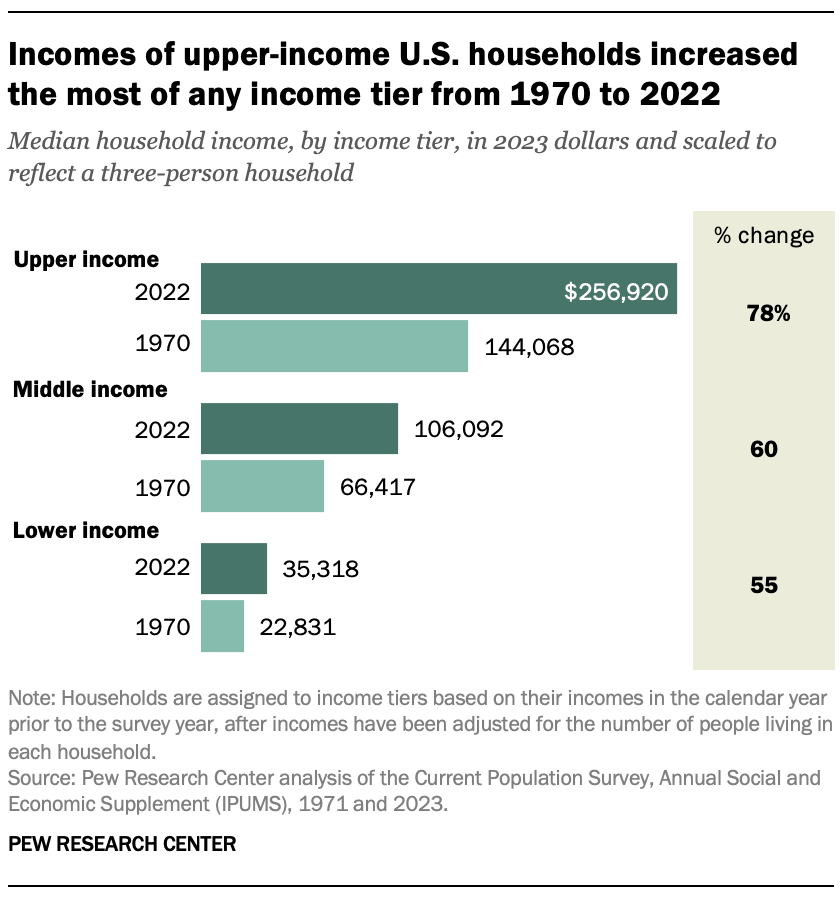
The most widely accepted definition of the middle class comes from the Pew Research Center. Pew defines middle-income households as those with an income that is two-thirds to double the national median adjusted for household size.
The 2/3 to Double Median Rule
As of recent data, the national median household income in the United States hovers around $75,000. Applying the Pew formula, a middle-class income for a three-person household typically ranges from approximately $52,000 to $156,000 annually. However, this is a broad national average that does not account for the drastic differences in regional economies. For a single individual, the range may drop significantly, starting as low as $30,000, whereas a family of five may require $100,000 just to enter the lower bounds of the middle class.
Geographic Variations: State-by-State Realities
Location is perhaps the most critical factor in determining whether a specific income places you in the middle class. In high-cost states like California, New York, or Massachusetts, an income of $150,000 might only provide a standard middle-class lifestyle, with much of that income consumed by housing and taxes. Conversely, in states with a lower cost of living, such as Mississippi, West Virginia, or Arkansas, a $100,000 income could comfortably place a household in the upper-middle class or even the upper class.
Urban centers create another layer of complexity. Living in San Francisco or New York City requires a much higher income to maintain the same quality of life as someone living in a rural or suburban area. In these “superstar cities,” the threshold for the middle class is pushed upward, often requiring six-figure salaries just to manage basic necessities like rent and childcare.
Factors Influencing Your Financial Status
While income is the primary metric, it is not the only one. Being middle class is as much about your financial obligations and household structure as it is about your gross earnings.
Household Size and Composition
A salary of $80,000 means something very different for a single professional than it does for a family of four. The “per capita” income within a household dictates the actual standard of living. Larger families face higher costs for groceries, healthcare, education, and transportation, meaning their income must be significantly higher to achieve the same level of financial freedom.
Furthermore, the “dual-income” phenomenon has redefined the middle class. In previous decades, a single earner could often support a family and achieve middle-class status. Today, it frequently takes two professional incomes to reach the same milestones, such as owning a home in a safe neighborhood with quality schools.
Cost of Living and Purchasing Power
Purchasing power is the true measure of income. This refers to how much your money can actually buy in your specific market. Inflation has a direct impact on the middle-class income range. If wages grow by 3% but the cost of housing and food grows by 6%, a household may remain within the statistical “middle class” income bracket while simultaneously experiencing a decline in their standard of living.
For many, the “middle-class squeeze” is a reality where income remains stagnant or grows slowly while the costs of the three most significant pillars of middle-class life—housing, healthcare, and higher education—continue to soar. This discrepancy means that today’s middle class must be more strategic with their personal finance and budgeting than previous generations.
Debt-to-Income Ratios
High income does not always equate to middle-class stability. A household earning $200,000 but carrying $500,000 in student loans and $50,000 in credit card debt may actually have less financial security than a household earning $70,000 with no debt. In personal finance, the “net” matters more than the “gross.” High debt-to-income (DTI) ratios can trap families in a cycle of living paycheck to paycheck, regardless of their income bracket.
The Wealth Gap and the “Squeezed” Middle Class

The middle class is often described as the backbone of the economy, but data shows that this segment of the population has been shrinking over the last several decades. The gap between the middle class and the upper class has widened, while the lower-middle class finds it increasingly difficult to move upward.
Inflation and Asset Growth
One of the primary drivers of the widening wealth gap is the difference between earned income and asset growth. The upper class often derives a significant portion of their wealth from investments, such as stocks and real estate, which have historically outpaced wage growth. The middle class, which relies more heavily on salary income, has seen its share of total national wealth decline.
To maintain middle-class status in the current economy, it is no longer enough to simply earn a good salary. One must also participate in asset growth through retirement accounts (401ks, IRAs) and homeownership. Without these vehicles for wealth accumulation, the “income range” of the middle class provides only temporary security rather than long-term stability.
The Decline of the Traditional Middle Class
In the mid-20th century, the middle class was defined by manufacturing jobs and strong labor protections. Today, the middle class is increasingly composed of service-oriented and knowledge-work professionals. This shift has changed the requirements for entry. Higher education is now almost a mandatory prerequisite for middle-class earnings, yet the cost of that education often saddles young professionals with debt, delaying their ability to purchase homes or start families—the very markers of middle-class life.
Moving Beyond Income: Wealth and Financial Security
If we define the middle class solely by income, we miss the bigger picture of financial health. True middle-class status is often defined by “financial resilience”—the ability to withstand an unexpected expense without falling into poverty.
Net Worth vs. Cash Flow
Income is a measure of cash flow, but net worth is a measure of wealth. A household’s net worth—the sum of all assets minus all liabilities—is a more accurate indicator of economic class. Many financial planners argue that to be truly middle class, a household should have a positive net worth that includes some equity in a home and a growing retirement fund.
The “mass affluent” or upper-middle class are those who have not only high incomes but also significant liquid assets. For those in the middle-income range, building net worth is often a slow process of paying down debt and consistently investing in the market.
Savings and Emergency Funds
A hallmark of the middle class used to be the ability to save. However, recent surveys suggest that a significant percentage of middle-income earners would struggle to cover a $1,000 emergency. This lack of a financial cushion suggests that while many households fall into the middle-class income range, they lack the financial security historically associated with the term.
To bridge this gap, personal finance experts emphasize the importance of the “emergency fund”—three to six months of living expenses held in a high-yield savings account. Achieving this level of liquidity is a key milestone in moving from the “struggling” middle class to the “secure” middle class.
Strategies to Climb the Financial Ladder
For those who find themselves at the lower end of the middle-class income range or those looking to move into the upper-middle class, the path forward involves a combination of increasing income and optimizing existing resources.
Investing for Long-Term Growth
The most effective way to outpace inflation and move up the economic ladder is through consistent investing. Utilizing tax-advantaged accounts like a 401(k) or a Roth IRA allows middle-class earners to build wealth over time through the power of compounding. Even modest contributions, when started early, can transform an income-dependent household into a wealth-sustained household.
Diversifying Income Streams
In the modern economy, relying on a single source of income can be risky. Many in the middle class are turning to side hustles, freelance work, or passive income streams (like rental properties or dividend-paying stocks) to supplement their primary salary. Diversification not only increases the total income range of the household but also provides a safety net in the event of job loss or economic downturns.
Strategic Career Management
The income range for the middle class is wide, and moving from the bottom to the top often requires strategic career shifts. This may include upskilling through certifications, pursuing advanced degrees, or relocating to markets with a better balance of salary and cost of living. In the digital age, remote work has also opened up opportunities for individuals to earn “high-city” salaries while living in “low-cost” areas, effectively hacking the middle-class income range to their advantage.
Ultimately, while the income range of the middle class can be defined by numbers—typically between $50,000 and $150,000 for most American households—the reality is far more nuanced. It is a combination of what you earn, where you live, what you own, and how much you owe. By focusing on net worth and financial resilience rather than just the number on a paycheck, individuals can navigate the complexities of the modern economy and achieve lasting financial stability.
aViewFromTheCave is a participant in the Amazon Services LLC Associates Program, an affiliate advertising program designed to provide a means for sites to earn advertising fees by advertising and linking to Amazon.com. Amazon, the Amazon logo, AmazonSupply, and the AmazonSupply logo are trademarks of Amazon.com, Inc. or its affiliates. As an Amazon Associate we earn affiliate commissions from qualifying purchases.