
In its most fundamental form, the definition of barter is the exchange of goods or services for other goods or services without the use of a medium of exchange, such as money. While often relegated to the chapters of history books describing ancient civilizations, bartering remains a sophisticated and vital component of the modern financial world. From small-scale side hustles to multi-billion dollar corporate trade agreements, understanding the mechanics, tax implications, and strategic advantages of bartering is essential for anyone looking to optimize their financial position or business cash flow.
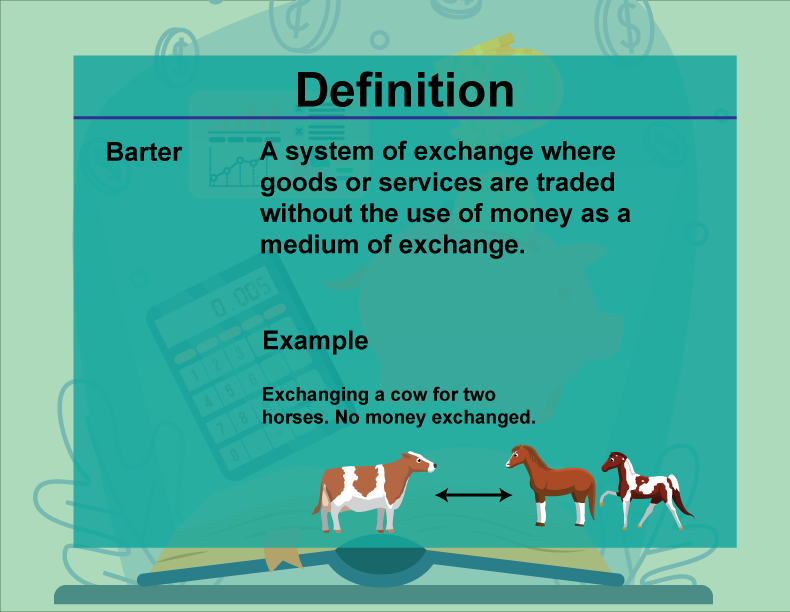
At its core, a barter transaction bypasses the traditional liquidity requirement. Instead of converting value into currency and then back into a different asset, two parties agree on a direct value-for-value swap. In a contemporary context, this is less about trading a goat for a sack of grain and more about a marketing agency trading digital services for office space or a consultant trading expertise for legal advice. This “cashless” economy allows for the preservation of liquid capital, making it a powerful tool for startups, freelancers, and businesses looking to leverage underutilized capacity.
The Mechanics of Modern Barter and Trade Exchanges
The primary challenge of traditional bartering is what economists call the “double coincidence of wants.” For a trade to occur, Party A must have what Party B desires, and Party B must simultaneously possess what Party A needs. In a primitive setting, this was difficult to coordinate. However, the modern financial landscape has solved this through the creation of organized barter exchanges and trade networks.
The Rise of Corporate Trade and Barter Exchanges
Modern barter is often facilitated through third-party exchanges that function similarly to a bank. In these networks, businesses do not have to find a direct partner for a one-to-one swap. Instead, they sell their goods or services to any member of the exchange in return for “trade credits” or “barter dollars.” These credits are then held in an account and can be spent with any other member of the network.
This evolution transforms bartering from a localized, coincidental event into a scalable financial strategy. For a business, this creates a secondary economy where they can acquire essential services—such as printing, travel, advertising, or maintenance—without depleting their cash reserves. These exchanges typically charge a membership fee and a commission on each transaction, but the savings realized by using wholesale-cost goods to buy retail-value services often far outweigh these costs.
Service-for-Service: The Freelancer’s Edge
For those engaged in side hustles or solo professional services, bartering is a strategy for rapid growth with low overhead. A graphic designer might need a professional website, while a web developer might need a brand identity. By bartering, both parties receive a high-value asset without a single dollar leaving their bank accounts. This allows professionals to “upgrade” their business infrastructure during the early stages when cash flow might be tight, essentially reinvesting their time and talent directly into their business growth.
Barter as a Strategic Business Finance Tool
From a business finance perspective, bartering is not merely a fallback for when cash is scarce; it is a proactive strategy used to manage inventory, utilize idle capacity, and improve the bottom line. When used correctly, it functions as a form of non-cash financing.
Optimizing Inventory and Excess Capacity
One of the most effective uses of bartering in business is the disposal of excess inventory or the utilization of “perishable” capacity. For example, a hotel with unbooked rooms or a restaurant with empty tables during a slow week is losing potential revenue that can never be recovered. By trading those empty rooms or tables through a barter exchange for advertising or linens, the business recovers the value of that “wasted” capacity.
Similarly, manufacturers often face seasonal fluctuations where they have surplus stock taking up warehouse space. Selling this stock at a deep discount for cash can hurt the brand’s price integrity and result in low margins. Bartering that stock for necessary business services at its full retail value allows the company to move inventory while maintaining a higher perceived value on their balance sheet.
Preserving Liquid Capital
In the world of personal finance and small business, cash is king. Maintaining a healthy cash reserve is vital for handling emergencies, paying taxes, and funding capital expenditures that cannot be bartered (like rent or utility bills). By using barter for discretionary spending or standard operational costs—such as staff retreats, office furniture, or marketing—a business owner keeps their hard currency in the bank. This improves the debt-to-equity ratio and provides a larger safety net for the enterprise.
The Financial and Tax Realities of Barter Transactions
A common misconception is that barter transactions are “off the books” or exempt from taxation because no cash changed hands. In the eyes of the Internal Revenue Service (IRS) and most international tax authorities, bartering is a taxable event. Understanding the accounting side of trade is crucial to avoid legal complications and ensure accurate financial reporting.
Determining Fair Market Value (FMV)
For tax purposes, the value of a barter transaction must be recorded based on the Fair Market Value (FMV) of the goods or services received. If you trade $1,000 worth of consulting services for $1,000 worth of computer equipment, you must report that $1,000 as income, just as if you had been paid in cash.
This requires diligent record-keeping. Every barter transaction should be documented with an invoice that clearly states the FMV of the exchange. For businesses using a formal barter exchange, the exchange will typically provide a Form 1099-B (in the U.S.) at the end of the year, reporting the total value of trade credits earned. For informal trades, the burden of documentation falls on the individuals involved.
Deductions and Business Expenses
The silver lining of the taxable nature of bartering is that it also allows for business deductions. If you barter for a service that is a legitimate business expense—such as legal fees or office repairs—you can deduct the FMV of that service from your taxable income. The net result often balances out: the income recognized from the trade is offset by the deduction of the expense, resulting in a neutral tax impact while still providing the business with a necessary service without a cash outlay.
However, if you barter for personal items—such as a vacation or a personal trainer—using your business services, the value of what you received is considered taxable business income, but you cannot claim a deduction because it was a personal expense. This distinction is vital for personal branding and small business owners to understand to avoid inflating their tax liability without a corresponding write-off.
Strategic Advantages and Potential Pitfalls
While the definition of barter is simple, its execution requires a nuanced understanding of value and timing. Like any financial instrument, trade carries both significant benefits and notable risks.
The Benefits: Networking and New Market Entry
Beyond the financial savings, bartering is a powerful networking tool. It opens doors to business relationships that might not have started if a cash payment was required upfront. Often, a barter client eventually becomes a cash-paying client once they have experienced the quality of your work. Furthermore, being part of a barter exchange introduces your brand to a closed ecosystem of potential customers who are incentivized to do business with you specifically because you accept trade credits. This can lead to increased market share and brand awareness in niches you might not have otherwise reached.
The Pitfalls: Valuation and Liquidity Issues
The most significant risk in bartering is the misvaluation of services. It is easy to overvalue what you are receiving or undervalue what you are giving up, especially when no physical money is changing hands. This “mental accounting” error can lead to a situation where a business is working harder for less real value.
Additionally, while trade credits are useful, they are inherently illiquid. You cannot pay your mortgage, your employees’ salaries, or your federal taxes with barter dollars. A business that becomes “barter heavy” may find itself with a healthy balance of trade credits but a dangerous shortage of cash to meet its fixed obligations. Strategic bartering should always be a supplement to a cash-based business model, never a total replacement.
Scaling Challenges
Bartering is inherently more difficult to scale than cash transactions. While a trade exchange helps, the variety of goods and services available for trade is always more limited than what is available in the global cash market. As a business grows, its needs become more specialized, and it may find that the specific high-end software or industrial machinery it requires cannot be acquired through trade. At this stage, the role of barter usually shifts from a primary procurement strategy to a secondary tool for managing smaller operational expenses and employee perks.

Integrating Barter into a Modern Financial Strategy
To truly leverage the definition of barter in a financial context, one must view it as a sophisticated asset management strategy. It is about maximizing the value of every hour worked and every unit produced. By identifying areas of “slack” in a business—whether that is unsold inventory, empty billable hours, or underutilized equipment—and converting that slack into tradeable value, an individual or company can significantly enhance their economic efficiency.
In the modern era, bartering has moved far beyond the simple swap. It is a calculated move used by savvy investors, entrepreneurs, and corporations to protect margins, expand networks, and optimize tax positions. Whether you are a freelancer trading a logo for a laptop or a corporation trading millions in media airtime for hotel points, the principles remain the same: value is subjective, cash is a tool, and trade is a timeless method of building wealth. Understanding how to navigate this cashless frontier is a hallmark of financial literacy in the 21st century.
aViewFromTheCave is a participant in the Amazon Services LLC Associates Program, an affiliate advertising program designed to provide a means for sites to earn advertising fees by advertising and linking to Amazon.com. Amazon, the Amazon logo, AmazonSupply, and the AmazonSupply logo are trademarks of Amazon.com, Inc. or its affiliates. As an Amazon Associate we earn affiliate commissions from qualifying purchases.