
Navigating the landscape of automotive finance has become increasingly complex over the last few years. For many consumers, the question of what constitutes a “good” interest rate on a used car is no longer as straightforward as it once was. As the global economy grapples with shifting monetary policies and fluctuating inflation, the cost of borrowing to purchase a pre-owned vehicle has reached levels not seen in over a decade.
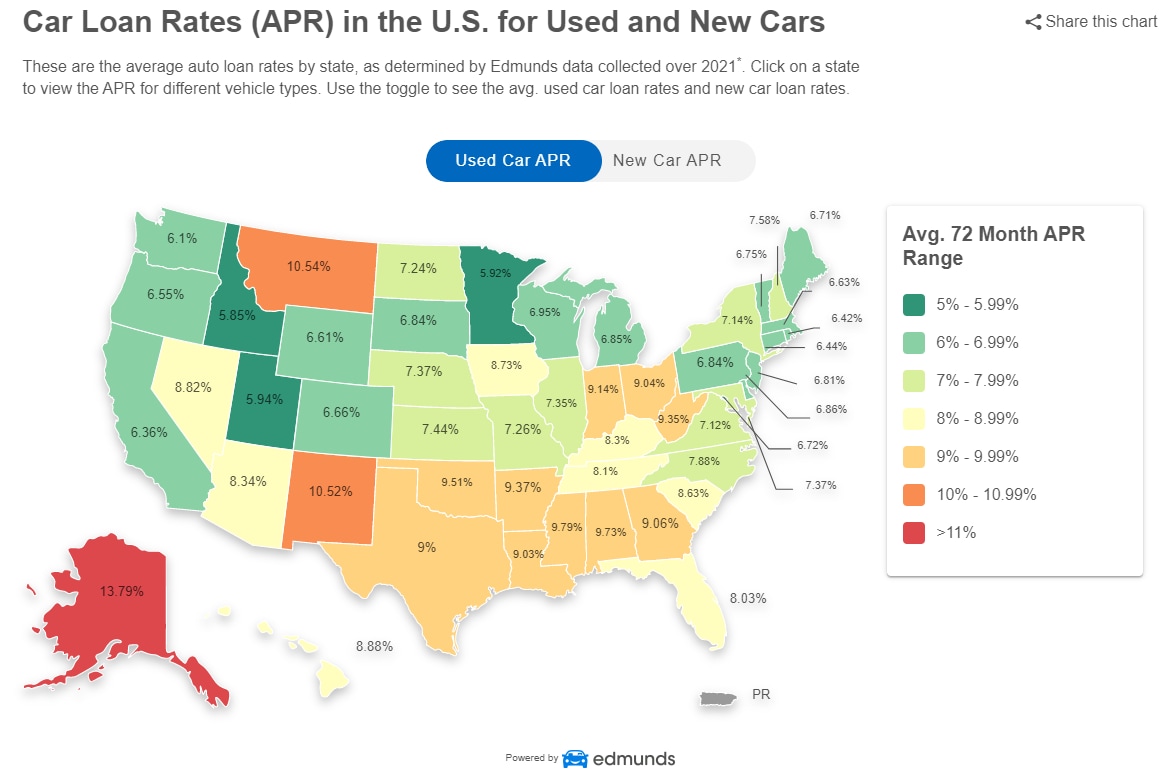
Understanding the current used car interest rate requires a deep dive into the financial mechanisms that drive lending, the tiered systems of creditworthiness, and the strategic choices borrowers must make to minimize their total cost of ownership. In the current market, used car rates generally hover between 7% and 21%, depending heavily on the borrower’s credit profile and the specific age of the vehicle.
The Economic Drivers Behind Today’s Auto Loan Rates
Interest rates do not exist in a vacuum. The rates offered by local banks, credit unions, and online lenders are directly influenced by the broader macroeconomic environment. To understand where rates stand today, one must look at the foundational elements of the financial sector.
The Federal Reserve and the Prime Rate
The most significant factor influencing auto loan rates is the Federal Reserve’s federal funds rate. When the Fed raises rates to combat inflation, the cost for banks to borrow money increases. This cost is invariably passed down to the consumer in the form of higher Annual Percentage Rates (APRs). While auto loans do not track the federal funds rate as closely as mortgages or credit cards, they are nonetheless sensitive to these shifts. In a high-rate environment, even borrowers with “Super Prime” credit will see rates significantly higher than the 3% or 4% marks that were common several years ago.
The Risk Premium of Used Vehicles
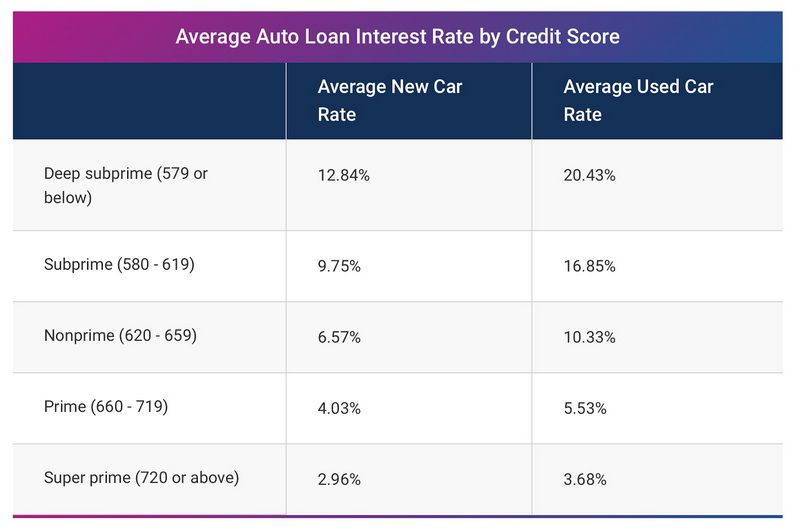
There is a fundamental reason why used car interest rates are consistently higher than those for new cars. Lenders view used vehicles as higher-risk collateral. A used car is more likely to experience mechanical failure, and its resale value is less predictable than a brand-new model. If a borrower defaults, the lender must recover their loss by selling the vehicle; because a used car’s value can depreciate rapidly or vary based on condition, lenders charge a “risk premium” on the interest rate to offset this uncertainty. Currently, the spread between new and used car rates typically ranges from 2% to 5%.
Key Factors That Determine Your Personalized Rate
While national averages provide a benchmark, the interest rate you are offered is highly individualized. Lenders utilize complex algorithms to assess the risk of a potential borrower, focusing on three primary pillars.
The Credit Score Tier System
Your credit score is the single most influential factor in determining your interest rate. Lenders generally categorize borrowers into five distinct tiers:
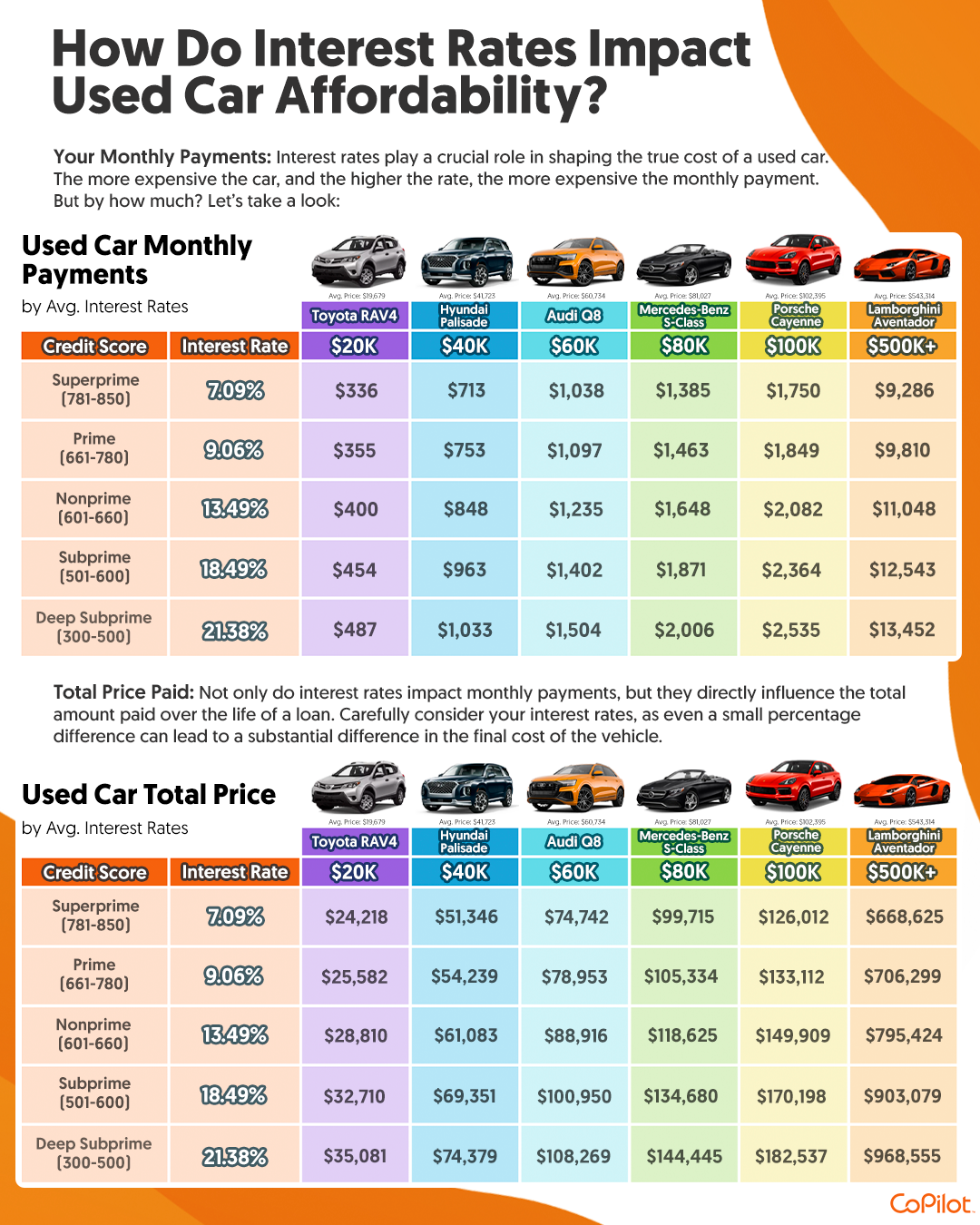
- Super Prime (781–850): These borrowers receive the lowest available rates. In the current market, Super Prime borrowers might see used car rates in the 7% to 8.5% range.
- Prime (661–780): This is the most common tier. Rates here typically range from 9% to 11%.
- Nonprime (601–660): Borrowers in this tier are considered “near-prime” and may face rates between 12% and 15%.
- Subprime (501–600): Financing becomes significantly more expensive here, with rates often climbing to 17% or 18%.
- Deep Subprime (300–500): Borrowers in this category may face rates exceeding 20%, often making the total interest paid over the life of the loan nearly equal to the car’s purchase price.
Loan Term Length and Debt-to-Income Ratio
The duration of the loan also plays a critical role. While 72-month or 84-month loans have become popular because they offer lower monthly payments, they almost always come with higher interest rates. Lenders prefer shorter terms (36 to 48 months) because the vehicle’s value is more likely to stay “above water”—meaning the car is worth more than the remaining loan balance. Additionally, your Debt-to-Income (DTI) ratio tells the lender how much of your monthly earnings are already committed to other obligations. A lower DTI often results in more favorable rate offers.
Vehicle Age and Mileage
Not all used cars are treated equally by financial institutions. A “certified pre-owned” (CPO) vehicle that is only two years old will typically qualify for a much lower rate than a ten-year-old vehicle with 100,000 miles. Many banks have strict limits on the age of the vehicles they will finance, and those that do finance older cars often apply a “high-mileage premium” to the interest rate.
Comparing Lenders: Where to Find the Best Rates
Where you choose to finance your vehicle can be just as important as the car you choose. The market is divided into several types of lending institutions, each with its own advantages and pricing structures.
Credit Unions vs. Traditional Banks
Credit unions are member-owned, non-profit organizations, which often allows them to offer lower interest rates on used car loans compared to commercial banks. Because they are not beholden to shareholders, credit unions can return profits to members through more competitive loan pricing. Traditional national banks, while sometimes more convenient, often have more rigid underwriting standards and may charge a premium for their brand and accessibility.
Captive Lenders and Dealership Financing
Captive lenders are the financial arms of major manufacturers (e.g., Ford Credit, Toyota Financial Services). While they primarily focus on new car sales, they often offer aggressive rates on certified pre-owned vehicles to help move inventory. Dealerships also act as intermediaries, sending your application to multiple lenders. While this is convenient, it is important to be aware of “rate markup.” Dealerships may be approved for a 7% rate for you but present it to you as 8%, pocketing the difference as a commission.
Online Lenders and Fintech Platforms
In recent years, online-only lenders have disrupted the auto finance market. These platforms often use alternative data to assess creditworthiness beyond just a FICO score. For tech-savvy borrowers or those with unique financial situations, online lenders can provide quick approvals and competitive rates that bypass the overhead costs of physical bank branches.
Strategies to Secure a Lower Rate in a High-Interest Market
Despite the current upward trend in interest rates, there are several strategic moves borrowers can make to secure the most favorable terms possible.
The Power of the Pre-approval
One of the biggest mistakes a car buyer can make is walking into a dealership without a pre-approval from an independent lender. By obtaining a pre-approval from your bank or credit union, you establish a “ceiling” for your interest rate. If the dealership wants your financing business, they must beat the rate you already have in hand. This shifts the power from the lender to the consumer.
Improving Your Credit Profile Before Purchase
If your car purchase is not an emergency, taking six months to polish your credit score can save you thousands of dollars in interest. Paying down credit card balances to lower your credit utilization ratio is the fastest way to boost a score. Moving from the “Nonprime” tier to the “Prime” tier can often result in a 3% to 5% reduction in your interest rate, which, on a $25,000 loan, translates to significant savings over 60 months.
Considering a Larger Down Payment
In the current high-rate environment, “buying down” the loan is a highly effective strategy. By putting more money down upfront, you reduce the Loan-to-Value (LTV) ratio. A lower LTV reduces the lender’s risk, which can sometimes trigger a lower interest rate offer. Furthermore, because you are borrowing a smaller principal amount, the total interest accrued over the life of the loan will be substantially lower.
The Future Outlook for Used Car Financing
Looking ahead, the trajectory of used car interest rates will likely remain tied to the Federal Reserve’s stance on inflation. If the economy cools and the Fed begins to cut rates, we may see used car APRs begin to drift back toward the 5% to 7% range for prime borrowers. However, as long as vehicle prices remain elevated and the labor market stays tight, lenders are likely to remain cautious.
For the modern consumer, staying informed about the current used car interest rate is not just about finding a monthly payment that fits a budget; it is about understanding the cost of capital. By monitoring market trends, maintaining a strong credit profile, and shopping across various lending institutions, borrowers can navigate this high-interest era with confidence, ensuring that their next vehicle purchase is a sound financial decision rather than a long-term debt burden.
aViewFromTheCave is a participant in the Amazon Services LLC Associates Program, an affiliate advertising program designed to provide a means for sites to earn advertising fees by advertising and linking to Amazon.com. Amazon, the Amazon logo, AmazonSupply, and the AmazonSupply logo are trademarks of Amazon.com, Inc. or its affiliates. As an Amazon Associate we earn affiliate commissions from qualifying purchases.