
The American real estate market has undergone a seismic shift over the last few years, evolving from a period of historical stability into one of the most volatile and debated sectors of the national economy. For prospective homeowners, seasoned investors, and financial analysts alike, understanding the average house price in the United States is no longer a simple matter of looking at a single figure. It involves a complex interplay of interest rates, regional supply-demand imbalances, and the evolving definition of homeownership as a pillar of personal finance. As of the current fiscal landscape, the cost of entry into the housing market has reached heights that challenge traditional affordability metrics, making a deep dive into the data essential for anyone looking to navigate the modern financial world.
Current National Averages and the Statistical Reality
When discussing the average house price in the US, it is vital to distinguish between the “average” and the “median” sales price. While the average price represents the sum of all sales divided by the number of transactions, it can often be skewed by ultra-luxury sales in markets like Malibu or Manhattan. Financial experts generally prefer the median sales price—the midpoint where half of the homes sold for more and half sold for less—as a more accurate reflection of what the typical American family encounters.
The Median Sales Price Trajectory
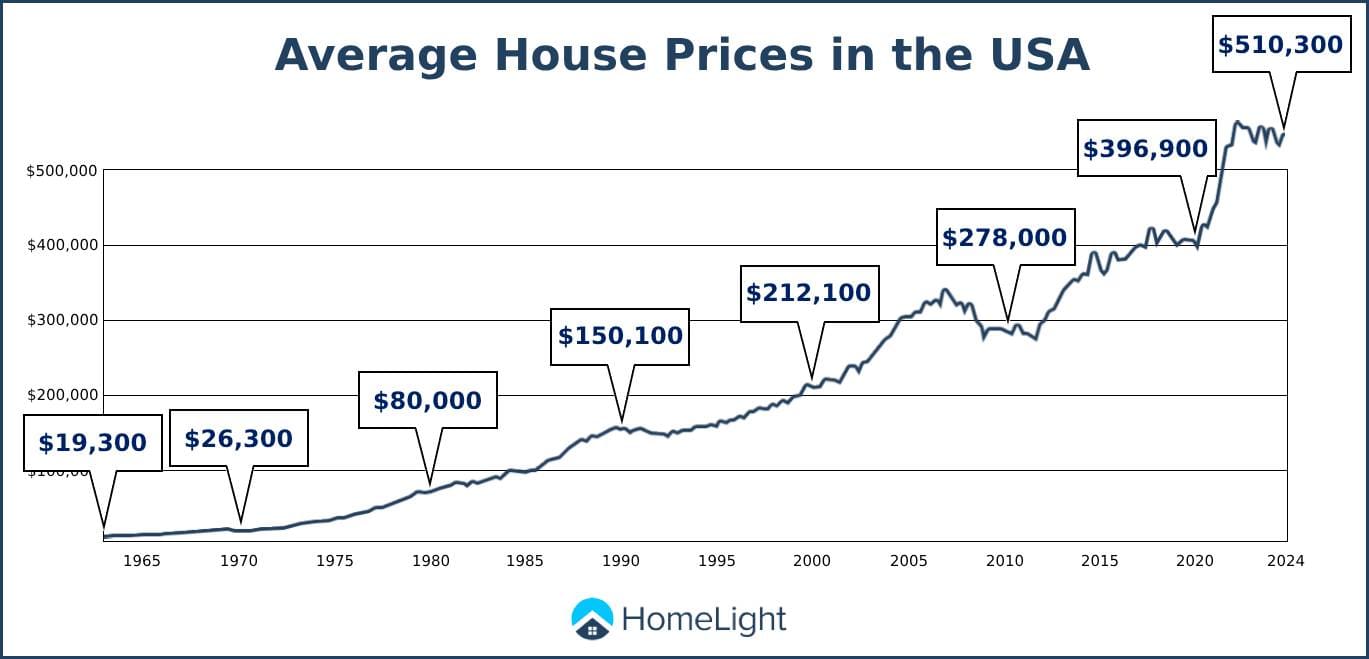
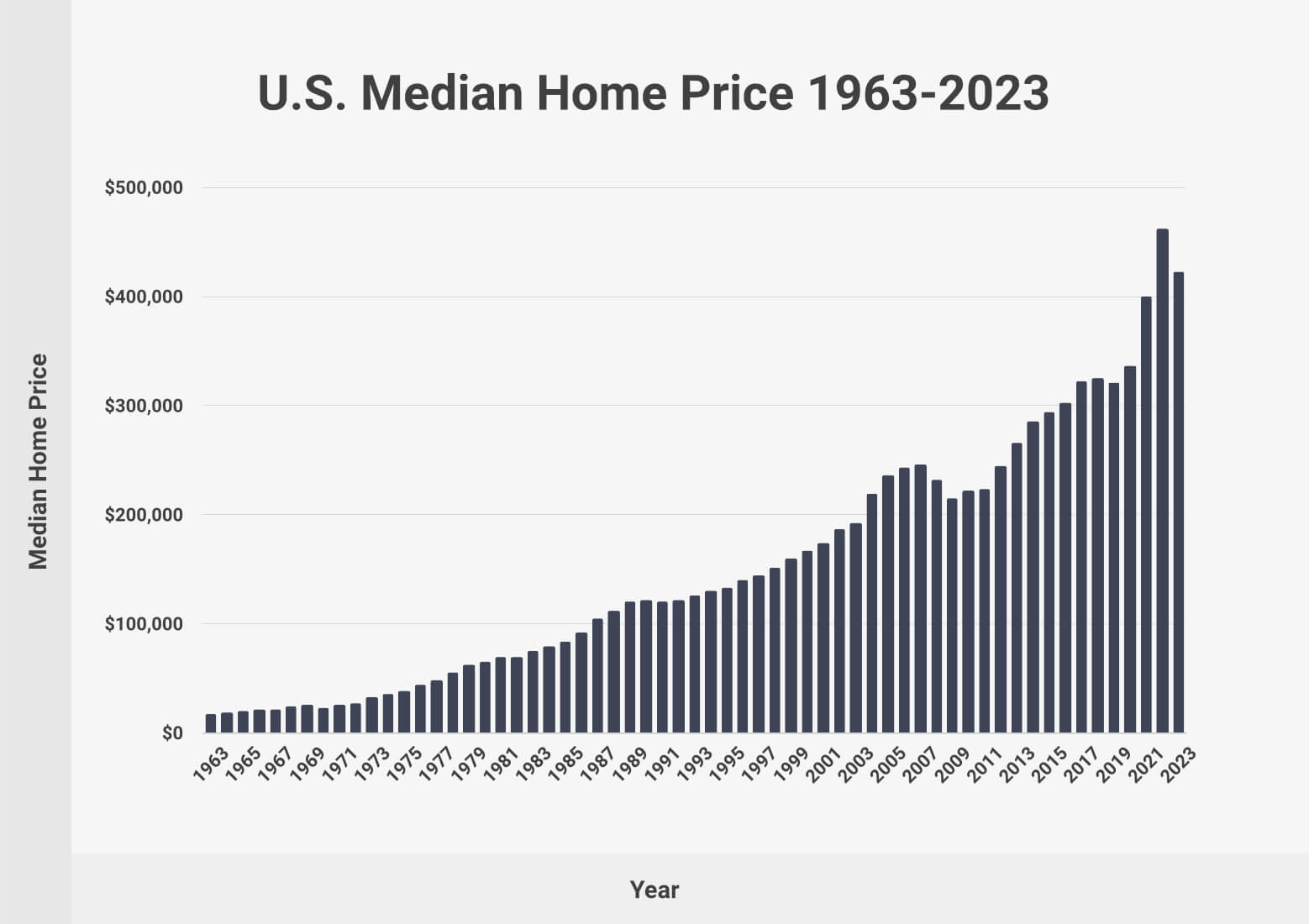
In recent years, the median sales price for existing homes in the United States has fluctuated between $380,000 and $420,000, depending on the quarter and seasonal demand. This represents a staggering increase from the pre-2020 era, where the median price often hovered closer to the $280,000 mark. The rapid appreciation witnessed during the early 2020s was fueled by a unique “perfect storm” of low interest rates, a shift toward remote work, and a chronic undersupply of new construction. Even as the market has cooled in response to higher borrowing costs, prices have remained remarkably resilient, largely due to the “lock-in effect” where current homeowners are reluctant to sell and trade their low-interest mortgages for more expensive ones.
New Construction vs. Existing Homes
There is also a notable price gap between newly constructed homes and existing inventory. The average price for a new build often exceeds $500,000, reflecting the rising costs of labor, materials, and land development. Builders have recently pivoted toward offering smaller footprints or mortgage rate buy-downs to make these prices more palatable to buyers, but the premium for “never-lived-in” property remains a significant factor in the national average. For a personal finance strategist, this gap highlights the importance of weighing the maintenance-free benefits of new construction against the lower entry price of an established property.
Regional Disparities: A Tale of Fifty Markets
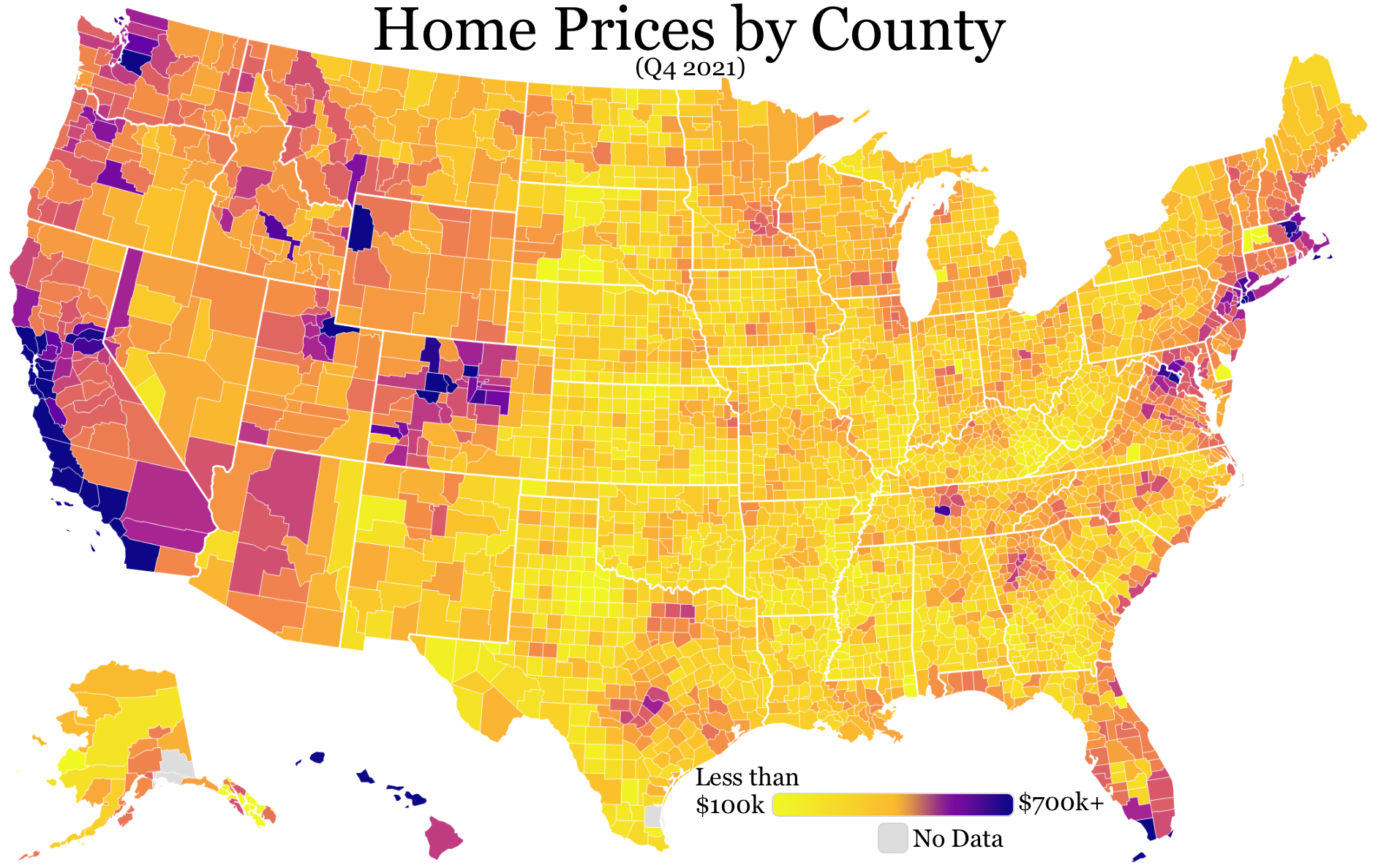
One of the most critical aspects of US real estate is that there is no singular “national market.” Instead, the US is a collection of thousands of hyper-local markets, each influenced by local employment rates, tax structures, and migration patterns. The average house price in a Midwestern town can be a fraction of the cost of a similar structure on the West Coast, creating a landscape of vast geographic inequality.
The High-Cost Coastal Corridors
In states like California, Washington, and Massachusetts, average house prices frequently exceed $700,000, with metropolitan areas like San Francisco and San Jose regularly seeing medians above $1.3 million. These markets are driven by high-income tech and finance sectors, coupled with strict zoning laws that limit new supply. For investors, these areas represent high-barrier-to-entry markets with potential for significant long-term appreciation, though the “cash flow” on rental properties in these regions is often negative or razor-thin due to the high initial acquisition costs.
The Rise of the Sun Belt and the Rust Belt
Conversely, the “Sun Belt”—encompassing states like Texas, Florida, and Arizona—has seen some of the fastest price growth in the country. While still more affordable than the coasts, the average house price in cities like Phoenix or Austin has surged as people migrate toward warmer climates and business-friendly environments. Meanwhile, the Rust Belt and parts of the Midwest, including cities like Cleveland, Detroit, and St. Louis, offer some of the lowest average house prices in the nation, often falling well below the $250,000 mark. For the budget-conscious buyer or the “yield-seeking” investor, these regions provide the most accessible path to homeownership and the highest potential for rental cash flow relative to the purchase price.
Economic Drivers Influencing Home Valuations
The average price of a home is not determined in a vacuum; it is a reflection of broader macroeconomic forces. Understanding these drivers is essential for timing a purchase or predicting future market corrections.
The Role of Mortgage Rates
Perhaps no factor influences the “effective” price of a home more than the prevailing mortgage interest rates set by the Federal Reserve’s monetary policy. When rates were at 3%, a buyer could afford a $500,000 home with a monthly payment comparable to what they would pay for a $350,000 home at 7% interest. As rates have risen to combat inflation, the “purchasing power” of the average consumer has eroded. Paradoxically, this has not led to a massive crash in prices because the lack of supply has kept competition high for the few homes that do hit the market.
Inventory Shortages and the Supply Chain
The US has been facing a housing deficit for over a decade, with some estimates suggesting the country is short by 4 to 7 million housing units. This shortage is the primary floor beneath current average prices. High costs for lumber, concrete, and skilled labor have slowed the pace of new developments. Furthermore, institutional investors—such as hedge funds and private equity firms—have entered the residential market in force, purchasing thousands of single-family homes to convert into rentals, further tightening the available inventory for individual buyers.
Real Estate as a Component of Personal Wealth
From a personal finance perspective, the average house price is more than just a cost; it is a benchmark for the largest asset in most Americans’ portfolios. Home equity remains the primary driver of net worth for the middle class, making the stability of these prices a matter of national economic security.
Homeownership as an Inflation Hedge
Historically, real estate has served as an excellent hedge against inflation. As the value of the dollar decreases, tangible assets like land and housing tend to maintain or increase their value. For many, buying a home at the current average price is seen as a way to “lock in” their housing costs for the next 30 years, protecting them from the volatility of the rental market. Even if a buyer enters at a peak, the long-term historical trend of US real estate has been upward, averaging an annual appreciation of approximately 3% to 5% over several decades.
The Affordability Crisis and Debt-to-Income Ratios
The widening gap between the average house price and the average household income has created a significant affordability crisis. Traditionally, financial advisors suggested that a home should cost no more than 2.5 to 3 times a household’s annual income. Today, in many markets, that ratio has stretched to 5 or 6 times income. This has led to a rise in creative financing, multi-generational living arrangements, and an increase in the age of the average first-time homebuyer. For many, the path to homeownership now requires aggressive saving strategies, side hustles, or assistance from the “bank of mom and dad.”
Strategic Approaches to the Current Market
Navigating a market where the average price is at or near all-time highs requires a sophisticated financial strategy. Buyers can no longer afford to be passive; they must be calculated in their approach to acquisition and financing.
Geographic Arbitrage and Remote Work
The rise of remote work has enabled “geographic arbitrage,” where individuals earn high salaries from companies based in expensive cities while living in regions where the average house price is significantly lower. This trend has redistributed wealth across the country but has also contributed to price inflation in previously affordable rural and suburban areas. For those with the flexibility, moving to a lower-cost-of-living (LCOL) area remains the most effective way to secure a high-quality home without taking on excessive debt.
House Hacking and Alternative Income
To combat high prices, many modern buyers are turning to “house hacking.” This involves purchasing a property—often a multi-family unit or a home with a basement suite—and renting out a portion of it to cover the mortgage. By treating a primary residence as a business asset, homeowners can offset the high average entry prices and build equity faster. Additionally, focusing on “fixer-uppers” allows buyers to enter the market below the average price point, using sweat equity to build value that would otherwise be unaffordable in a move-in-ready home.
The Future Outlook for US Housing Prices
Looking forward, the trajectory of the average house price in the US will likely be characterized by “normalization” rather than a dramatic collapse. As the economy adjusts to a higher-interest-rate environment, the rapid double-digit appreciation seen in previous years is expected to give way to more modest, sustainable growth.
Government intervention, through tax incentives for first-time buyers or zoning reforms to encourage high-density building, may eventually help alleviate the supply crunch. However, until the fundamental imbalance between high demand and low inventory is addressed, the average house price is likely to remain a significant hurdle for many. For the savvy investor and the disciplined saver, the goal remains the same: treat real estate not just as a place to live, but as a critical, long-term component of a diversified financial life. Understanding the nuances behind the average price is the first step in turning a daunting market into a manageable opportunity.
aViewFromTheCave is a participant in the Amazon Services LLC Associates Program, an affiliate advertising program designed to provide a means for sites to earn advertising fees by advertising and linking to Amazon.com. Amazon, the Amazon logo, AmazonSupply, and the AmazonSupply logo are trademarks of Amazon.com, Inc. or its affiliates. As an Amazon Associate we earn affiliate commissions from qualifying purchases.