
Understanding the average federal income tax rate is a fundamental component of personal finance management. For many Americans, tax season is a source of confusion and anxiety, often fueled by a misunderstanding of how the progressive tax system actually works. While you may see headlines about high-income earners being taxed at 37%, or hear debates about the “fair share” of taxes paid by different demographics, your personal financial reality is dictated by your effective tax rate—not just the bracket you fall into.
The average federal income tax rate is the actual percentage of your total income that goes to the Internal Revenue Service (IRS) after all deductions, credits, and adjustments are accounted for. This is distinct from your marginal tax rate, which applies only to the last dollar you earned. Navigating these nuances is essential for effective budgeting, retirement planning, and investment strategy.
Understanding the Difference Between Marginal and Effective Tax Rates
To grasp the concept of an average federal tax rate, one must first distinguish between marginal and effective rates. The United States uses a progressive tax system, meaning that as your income rises, the rate at which you are taxed on additional layers of income also increases.
The Progressive Tax System
In a progressive system, income is divided into “buckets” or brackets. For the 2023 and 2024 tax years, these brackets range from 10% to 37%. However, entering a higher bracket does not mean your entire income is taxed at that higher rate. For example, if you move from the 12% bracket into the 22% bracket, only the portion of your income that exceeds the threshold for the 22% bracket is taxed at that higher rate. The income below that threshold is still taxed at the 10% and 12% rates respectively.
Calculating Your Effective Rate
Your effective tax rate is your “true” average tax rate. It is calculated by taking your total federal income tax liability and dividing it by your total taxable income. For instance, if an individual earns $100,000 in taxable income and owes $15,000 in federal taxes, their effective tax rate is 15%, even if their highest marginal bracket is 22% or 24%.
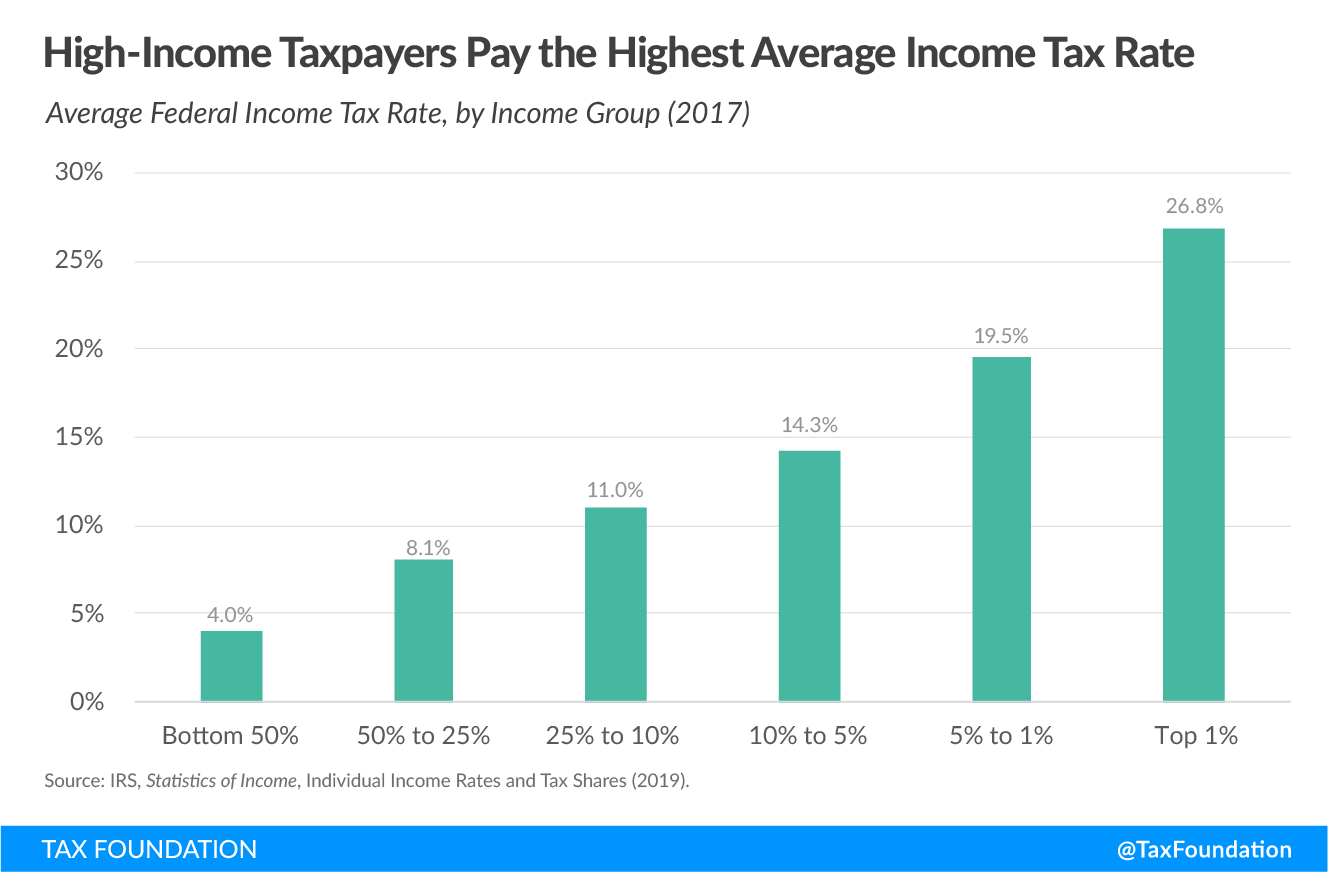
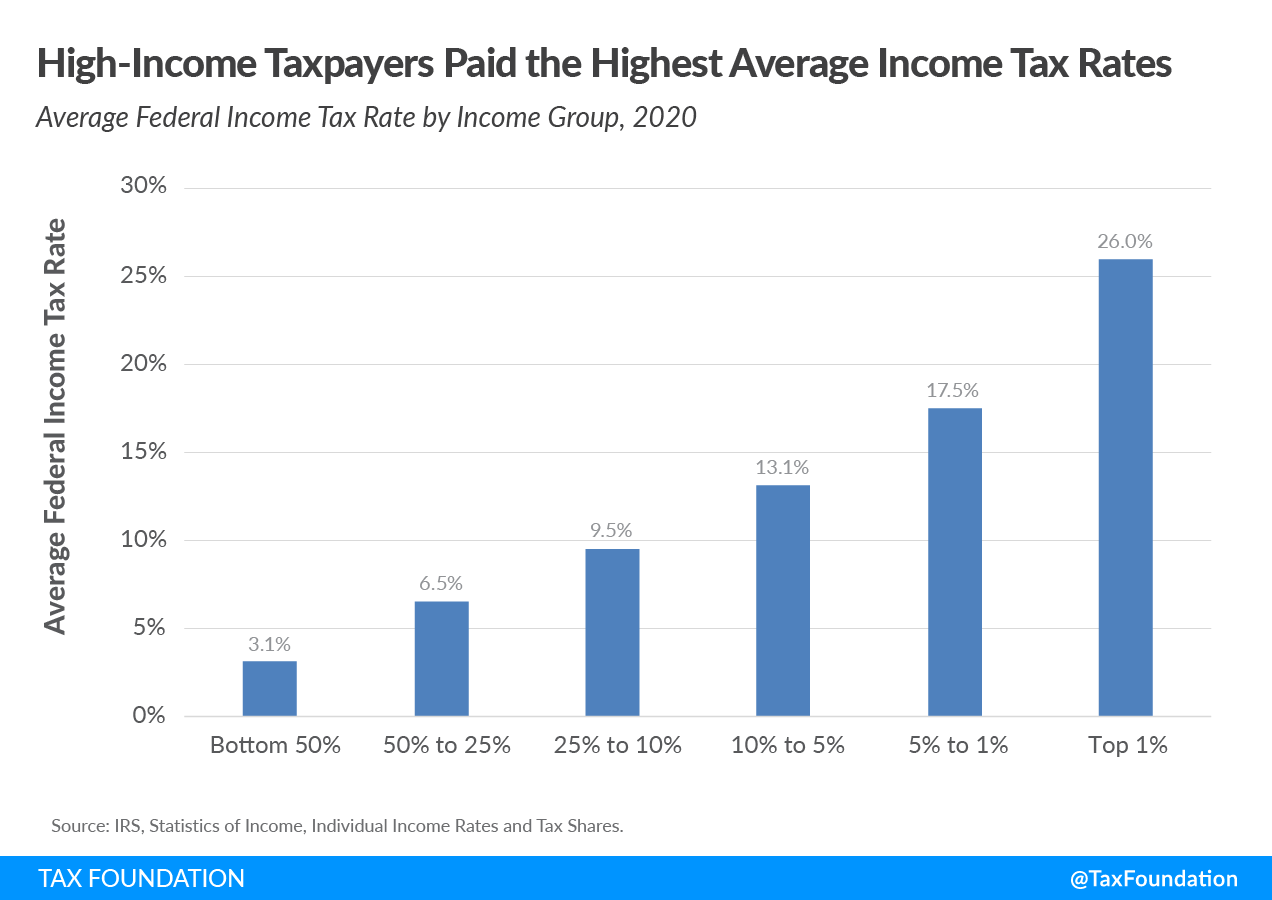
For the average American household, the effective federal income tax rate is significantly lower than the top marginal rate. According to historical data from the IRS and the Tax Foundation, the average effective tax rate for all taxpayers typically hovers between 13% and 15%. However, this number fluctuates wildly depending on income level, filing status, and available tax breaks.
Average Tax Rates Across Different Income Brackets
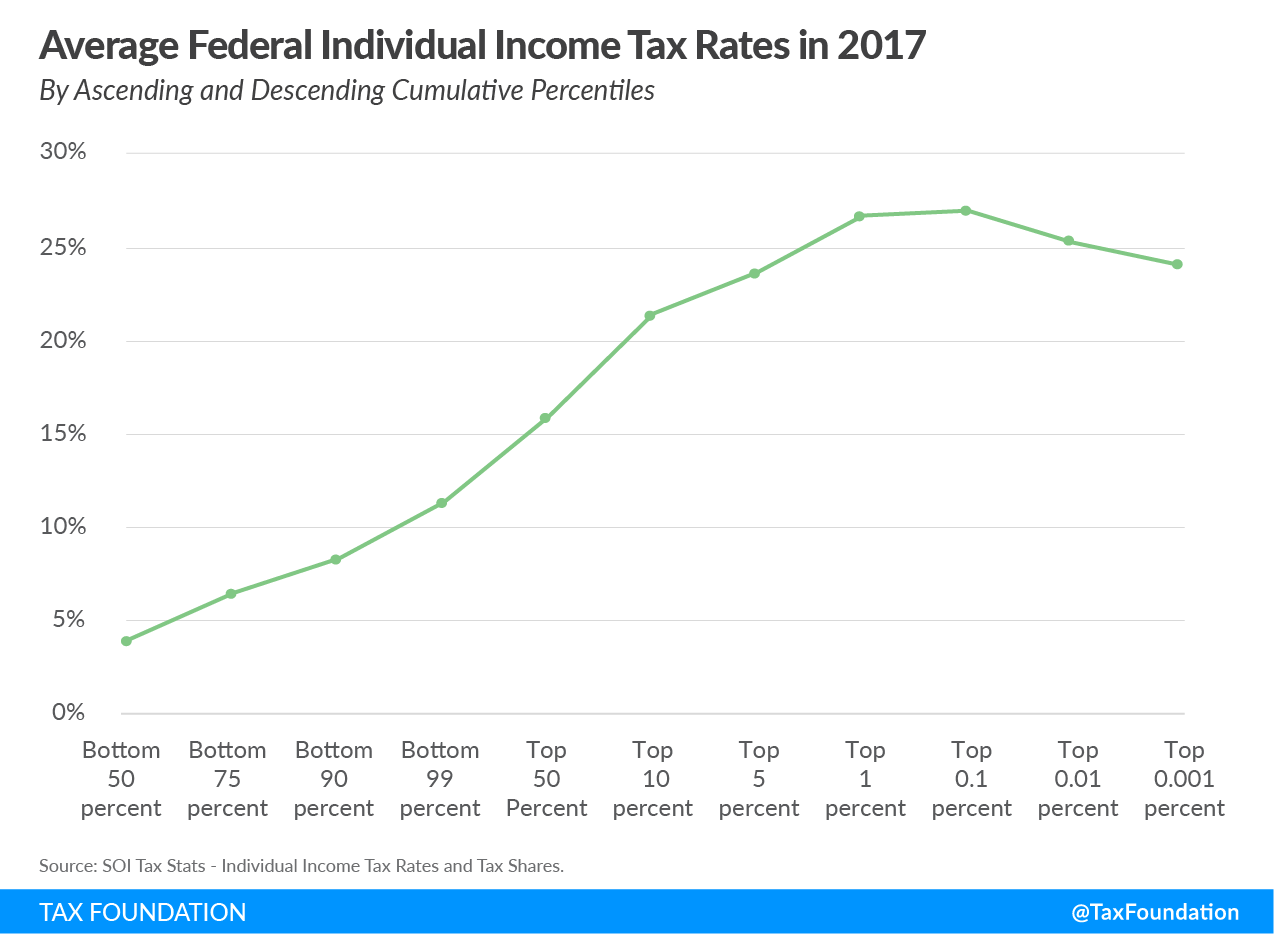
The average federal income tax rate varies dramatically across the economic spectrum. The U.S. tax code is designed to place a heavier burden on those with a greater “ability to pay,” while providing relief to low- and middle-income earners through various mechanisms.
Data Trends for Low-to-Middle Income Earners
For the bottom 50% of earners, the average federal income tax rate is often remarkably low—sometimes even reaching 0% or becoming negative once refundable tax credits are factored in. Refundable credits like the Earned Income Tax Credit (EITC) and the Child Tax Credit (CTC) can result in the government sending a check to the taxpayer that exceeds the amount of tax they owed.
Middle-income earners, typically those in the third and fourth quintiles of income distribution, often see average effective rates ranging from 7% to 12%. At this level, the standard deduction plays a massive role in reducing the overall tax burden, shielding a significant portion of income from being taxed at all.
The Tax Burden of High-Income Earners
As income increases, so does the effective rate. The top 1% of earners pay an average effective federal income tax rate of approximately 25% to 26%. While this is much higher than the average citizen, it is still well below the top marginal rate of 37%. This discrepancy exists because high-income individuals often derive a significant portion of their wealth from long-term capital gains and qualified dividends, which are taxed at preferential rates (0%, 15%, or 20%) rather than as ordinary income.
Despite the lower rates on investments, the top 1% of taxpayers contribute roughly 40% of all federal income tax revenue. This highlights the concentrated nature of the U.S. tax system, where a small percentage of the population provides the majority of the funding for federal operations.
Factors That Lower Your Average Federal Tax Rate
The gap between a taxpayer’s marginal bracket and their average tax rate is created by several legal mechanisms within the tax code. These tools are designed to encourage certain behaviors, such as homeownership, charitable giving, or raising children.
Standard vs. Itemized Deductions
The first major reduction in tax liability comes from deductions. The standard deduction is a flat amount that reduces your taxable income, and most Americans (around 90%) choose this option. For the 2024 tax year, the standard deduction is $14,600 for individuals and $29,200 for married couples filing jointly.
Taxpayers with significant expenses—such as mortgage interest, high state and local taxes (SALT), or large charitable contributions—may choose to itemize their deductions if the total exceeds the standard deduction. By lowering the total amount of income subject to tax, deductions effectively lower the average tax rate.
The Power of Tax Credits
Unlike deductions, which reduce the amount of income you are taxed on, tax credits provide a dollar-for-dollar reduction in the actual tax you owe. This makes credits significantly more valuable.
- Child Tax Credit: Provides up to $2,000 per qualifying child, helping families lower their effective rate.
- Education Credits: The American Opportunity Tax Credit (AOTC) and the Lifetime Learning Credit (LLC) help offset the costs of higher education.
- Energy Credits: Incentives for installing solar panels or purchasing electric vehicles can slash thousands off a final tax bill.
Investment Income and Preferential Rates
For many investors and business owners, the average tax rate is kept low by the way different types of income are treated. If you hold an asset for more than a year before selling it, the profit is considered a long-term capital gain. These gains are taxed at lower rates than your salary. For many middle-class investors, the capital gains rate is 15%, and for those with lower total incomes, it can even be 0%. This is why an investor living off dividends might pay a lower average tax rate than a professional earning the same amount through a W-2 salary.
Historical Trends in U.S. Federal Income Taxation
The average federal income tax rate has not remained static. It has been shaped by decades of legislative changes, economic shifts, and evolving political philosophies.
From the Post-War Era to Modern Reform
In the mid-20th century, particularly during the 1950s, the top marginal tax rate was as high as 91%. However, the effective tax rate for the wealthy was not nearly that high due to a vast array of loopholes and deductions that no longer exist today. Over time, tax reform acts (most notably in 1981 and 1986) sought to lower the top rates while broadening the tax base by eliminating many of those loopholes.
The Impact of the Tax Cuts and Jobs Act (TCJA)
The most significant recent change occurred with the 2017 Tax Cuts and Jobs Act. This legislation lowered individual tax rates across almost all brackets, nearly doubled the standard deduction, and capped the SALT deduction. These changes generally resulted in a lower average federal income tax rate for the vast majority of Americans. However, many of the individual provisions of the TCJA are set to expire at the end of 2025, which could lead to a significant rise in average tax rates unless Congress takes further action.
Strategies to Manage and Optimize Your Effective Tax Rate
Wealth management is not just about how much you earn, but how much you keep. Reducing your average federal tax rate is a legal and essential part of a sound financial plan.
Utilizing Tax-Advantaged Retirement Accounts
One of the most effective ways to lower your average tax rate is to contribute to “pre-tax” retirement accounts like a traditional 401(k) or a Traditional IRA. Contributions to these accounts are deducted from your gross income, meaning you aren’t taxed on that money in the year you earn it. This lowers your taxable income and, consequently, your effective tax rate. Furthermore, health savings accounts (HSAs) offer a “triple tax advantage” by allowing tax-deductible contributions, tax-free growth, and tax-free withdrawals for medical expenses.
Strategic Filing and Timing
For business owners and freelancers, the timing of income and expenses can drastically alter the average tax rate from year to year. By “bunching” deductions into a single year or deferring income into a year where you expect to be in a lower bracket, you can optimize your multi-year tax liability.
Tax-Loss Harvesting
In the world of investing, tax-loss harvesting involves selling securities at a loss to offset capital gains in other parts of your portfolio. If your losses exceed your gains, you can use up to $3,000 of excess loss to offset ordinary income, directly lowering your average tax rate for that year.
The average federal income tax rate is a dynamic figure that reflects the intersection of your earning power, your life choices, and the current political landscape. By understanding that your “tax bracket” is only one part of the story, you can take proactive steps to utilize deductions, credits, and smart investment vehicles to ensure your effective tax rate remains as efficient as possible. Whether you are a high-income professional or just starting your career, mastering the mechanics of the federal tax system is a vital step toward long-term financial security.
aViewFromTheCave is a participant in the Amazon Services LLC Associates Program, an affiliate advertising program designed to provide a means for sites to earn advertising fees by advertising and linking to Amazon.com. Amazon, the Amazon logo, AmazonSupply, and the AmazonSupply logo are trademarks of Amazon.com, Inc. or its affiliates. As an Amazon Associate we earn affiliate commissions from qualifying purchases.