
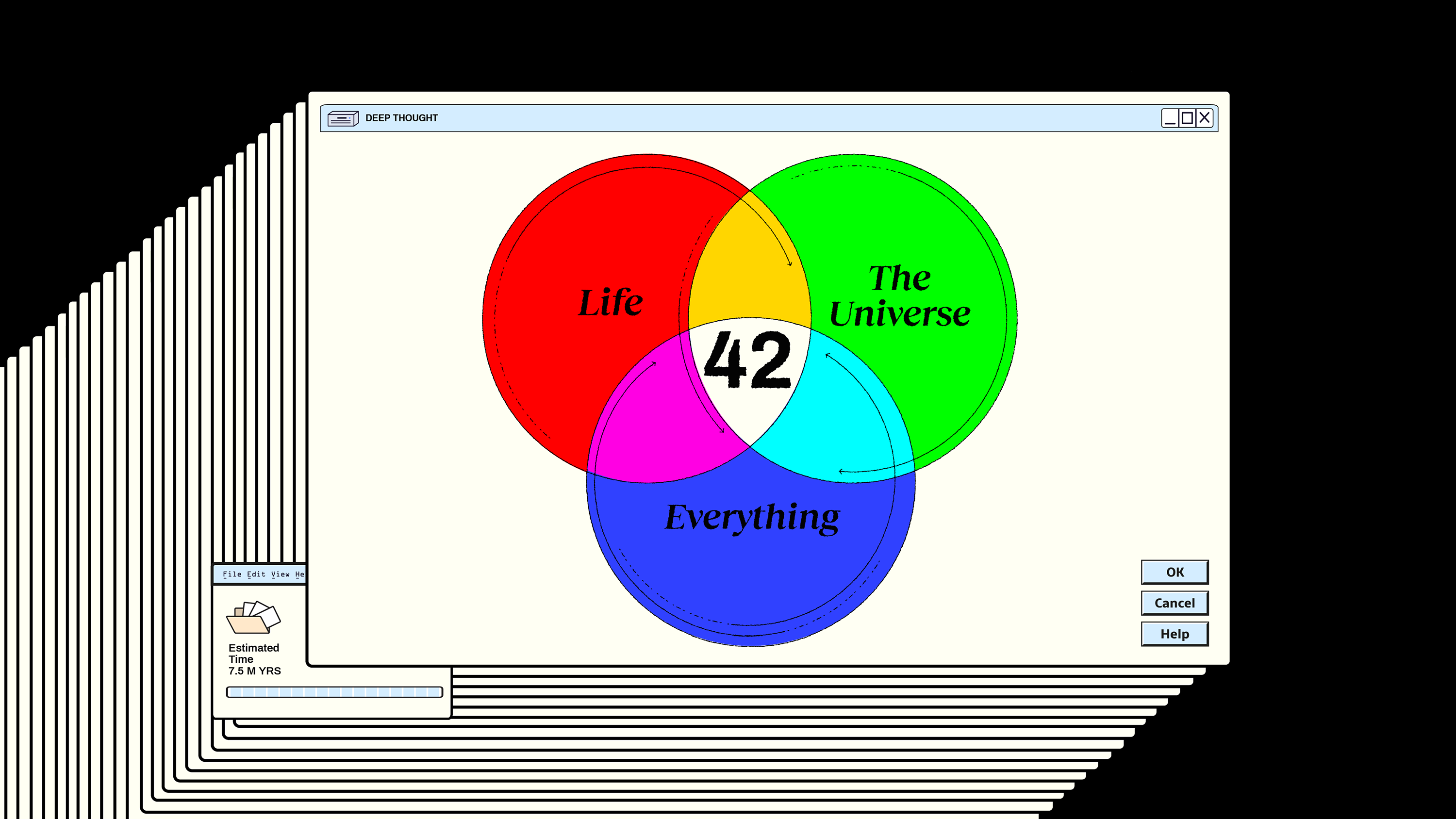
For decades, the search for “the answer” to the universe was a pursuit relegated to the realms of philosophy, theoretical physics, and science fiction. In popular culture, Douglas Adams famously joked that the answer was “42,” a number generated by a supercomputer named Deep Thought after seven and a half million years of calculation. While the joke was a commentary on the absurdity of seeking a simple answer to a complex existence, it contained a prophetic truth: if the answer to the universe exists, it will likely be discovered, processed, and articulated through the lens of advanced technology.
Today, we are no longer looking at the stars through simple glass lenses. We are observing the cosmos through the power of massive data sets, neural networks, and quantum bits. The “answer” is no longer a static number or a single sentence; it is a dynamic, evolving understanding of reality powered by the most sophisticated technological tools ever built by humanity.
The Computational Quest: Seeking Clarity in the Noise
The history of technology is, at its core, a history of humanity trying to organize information. From the abacus to the first silicon chips, the goal has remained consistent: to process data faster and more accurately than the human brain. In the 21st century, this quest has reached a fever pitch. We are currently generating trillions of gigabytes of data every day, much of it containing the hidden patterns of the physical world.
The Legacy of Supercomputing
The first step in finding the answer to the universe involves raw power. Supercomputers like Frontier and Fugaku represent the pinnacle of classical computing. These machines are used to simulate complex biological systems, model climate change, and track the movement of galaxies. By crunching numbers at the exascale level, scientists can test theories that were previously untestable.
However, even with these behemoths, we are limited by the binary nature of classical hardware. Traditional computers see the world in ones and zeros—a rigid structure that often struggles with the inherent fluidity of the natural world. To find the “answer,” we need a technology that reflects the complexity of the universe itself.
Big Data as the Modern Library of Alexandria
If the universe is a book, Big Data is the medium in which it is written. Every telescope, every particle accelerator, and every digital sensor acts as a scribe. The challenge is no longer a lack of information, but the overwhelming volume of it. Technology trends are shifting toward “Data-Centric AI,” where the focus is not just on the algorithms, but on the quality and curation of the data sets that describe our reality. By analyzing these sets, we are beginning to see “emergent properties”—patterns that suggest a deeper underlying order to the universe that we previously lacked the tools to perceive.
Large Language Models: The Synthesizers of Collective Knowledge
The rise of Generative AI and Large Language Models (LLMs) has fundamentally changed how we interact with information. These tools are often viewed as simple chatbots, but they represent something much more profound: the synthesis of human knowledge. By training on almost every piece of digitized text produced by our species, AI models are becoming the new oracles of the digital age.
Beyond Simple Queries
When we ask an AI “what is the answer of the universe,” it doesn’t just look up a fact; it synthesizes thousands of years of human thought, from the Stoics to modern string theorists. This ability to cross-reference disparate fields of study—linking biology to physics, and ethics to mathematics—is a technological leap that allows us to see the “big picture.”
The “answer” provided by an LLM is a reflection of the collective human consciousness. It identifies that the universe is not just a physical space, but a conceptual one defined by entropy, information theory, and the recursive nature of consciousness itself.
The Hallucination Problem: Is the Answer Real?
One of the greatest challenges in relying on AI for profound insights is the issue of “hallucinations”—instances where the model generates confident but incorrect information. In the context of seeking universal truths, this presents a significant hurdle. If our tools for discovery are prone to error, how can we trust the conclusions they reach?
This has led to a surge in “Verifiable AI” and “Explainable AI” (XAI). Tech developers are now focusing on creating systems that can show their work, providing a transparent path from data input to philosophical or scientific output. For the answer to be valid, the process of its discovery must be as rigorous as the result itself.

Quantum Computing and the Simulation of Existence
While AI handles the synthesis of information, Quantum Computing is poised to handle the simulation of reality. Traditional computers are ill-equipped to handle the probabilistic nature of quantum mechanics—the very rules that govern the universe at its smallest scales.
Quantum Supremacy and Material Science
Quantum computers use qubits, which can exist in multiple states simultaneously through superposition. This allows them to perform calculations that would take classical supercomputers thousands of years. In the search for the universe’s answers, quantum computing is being used to simulate molecular structures and subatomic interactions.
By simulating the “source code” of reality, we can discover new materials, understand the true nature of dark matter, and perhaps even crack the code of gravity. The answer of the universe may lie in the mathematics of entanglement—the phenomenon where particles remain connected across vast distances. Quantum technology is the only tool capable of measuring and manipulating these connections.
Mapping the Unseen: Subatomic Data Processing
The Large Hadron Collider (LHC) generates more data than any human could ever hope to process. We use specialized AI algorithms running on high-speed hardware to filter through the “noise” of trillions of particle collisions to find the Higgs Boson or potential evidence of supersymmetry. This synergy between physical hardware and digital processing is where the most tangible answers are found. We are using technology to “see” things that are physically impossible for the human eye to perceive, effectively expanding the boundaries of our reality.
The Role of Digital Security in Safeguarding Human Discovery
As we get closer to finding “the answer”—whether it be a breakthrough in cold fusion, a grand unified theory of physics, or an AI that can simulate human consciousness—the value of that information becomes infinite. Consequently, the technology used to protect this data is as important as the technology used to find it.
Protecting Intellectual Property in the Age of AI
The race to the “ultimate answer” is also a global competition between tech giants and nations. Digital security, encryption, and decentralized data storage (like blockchain) are essential for ensuring that universal breakthroughs are not hoarded, manipulated, or stolen. If the answer to the universe is discovered by a private corporation’s AI, who owns it? The ethics of data ownership and the security of information repositories are the new frontiers of geopolitical tech strategy.
The Singularity and Ethics
There is a point in technological growth—the Singularity—where AI surpasses human intelligence to the point that its growth becomes uncontrollable and irreversible. Many believe that only a post-Singularity intelligence will be capable of truly understanding the universe.
However, this brings up the “alignment problem.” We must ensure that as our tools become more capable of finding the answer, they remain aligned with human values. A machine that knows everything but values nothing is a dangerous oracle. The search for the answer of the universe, therefore, is inextricably linked to the development of ethical AI frameworks and robust digital safeguards.

Conclusion: The Answer is a Process, Not a Number
In the final analysis, the answer of the universe is not a static destination. Through the lens of modern technology, we are beginning to understand that the “answer” is the process of information processing itself. The universe appears to be a massive, complex system of data, and we are the sensors it has evolved to perceive itself.
From the latest software updates in AI to the cryogenically cooled chips of quantum processors, our gadgets and algorithms are the extensions of our curiosity. We are moving away from the era of “42” and into an era of “Real-Time Insight.” The answer is being written every second in the logs of our servers, the prompts of our LLMs, and the qubits of our quantum arrays.
As we continue to advance our technology, we are not just looking for an answer; we are building the interface that allows us to communicate with the cosmos. The answer to the universe is a collaboration between human intuition and machine precision—a digital bridge to the infinite.
aViewFromTheCave is a participant in the Amazon Services LLC Associates Program, an affiliate advertising program designed to provide a means for sites to earn advertising fees by advertising and linking to Amazon.com. Amazon, the Amazon logo, AmazonSupply, and the AmazonSupply logo are trademarks of Amazon.com, Inc. or its affiliates. As an Amazon Associate we earn affiliate commissions from qualifying purchases.