
Social Security is often described as the foundation of the American retirement system. For millions of workers, it represents the culmination of decades of labor and a primary source of guaranteed income during their later years. However, despite its ubiquity, many people view Social Security as a black box—a complex government program with opaque rules and uncertain futures. In the context of personal finance and wealth management, understanding what a Social Security benefit is, how it is calculated, and how to optimize it is essential for achieving long-term financial independence.

At its core, a Social Security benefit is a monthly payment made by the Social Security Administration (SSA) to eligible individuals who have paid into the system through payroll taxes. It functions as a social insurance program rather than a traditional welfare system or a personal savings account. The benefits are designed to replace a portion of your pre-retirement income based on your lifetime earnings. Whether you are decades away from retirement or approaching the finish line, mastering the nuances of this benefit is a critical component of a robust financial strategy.
How Social Security Benefits Are Calculated: The Mechanics of Your Monthly Check
The amount of money you receive from Social Security is not arbitrary. It is the result of a specific formula designed to reward consistent work while providing a higher “replacement rate” for lower-income earners. To manage your money effectively, you must understand the two primary variables in this equation: your earnings history and the age at which you choose to claim.
The Role of AIME (Average Indexed Monthly Earnings)
The journey to your monthly check begins with your work history. The SSA looks at your entire career and selects the 35 years in which you earned the most money. These earnings are “indexed” to account for changes in average wages over time, ensuring that $20,000 earned in 1990 is weighted fairly against $60,000 earned in 2023. If you have fewer than 35 years of work, the remaining years are averaged in as zeros, which can significantly drag down your benefit amount. This makes the “35-year rule” a vital benchmark for anyone looking to maximize their future income.
The Primary Insurance Amount (PIA) Formula
Once your Average Indexed Monthly Earnings (AIME) is determined, the SSA applies a formula to find your Primary Insurance Amount (PIA). This formula uses “bend points”—thresholds that determine how much of your AIME is replaced. For example, in current calculations, the system replaces 90% of the first portion of your earnings, 32% of the middle portion, and 15% of the highest portion. This progressive structure ensures a safety net for all workers while still providing higher absolute dollar amounts to those who contributed more to the system.
Credits and the Threshold for Eligibility
You cannot simply claim Social Security because you have reached a certain age; you must earn the right to it. This is done through “credits.” In 2024, you earn one credit for every $1,730 in covered earnings, up to a maximum of four credits per year. To qualify for retirement benefits, most workers need 40 credits, which translates to roughly 10 years of work. Understanding this threshold is vital for side-hustlers, freelancers, and those with non-traditional career paths who may need to track their “quarters of coverage” to ensure future eligibility.
Strategic Timing: When to Claim for Maximum Value
One of the most significant financial decisions an individual will ever make is choosing when to flip the switch on Social Security benefits. While the eligibility age begins at 62, the system is designed with incentives for those who can afford to wait. This is a classic exercise in “time value of money” and longevity risk management.
Early Filing at Age 62
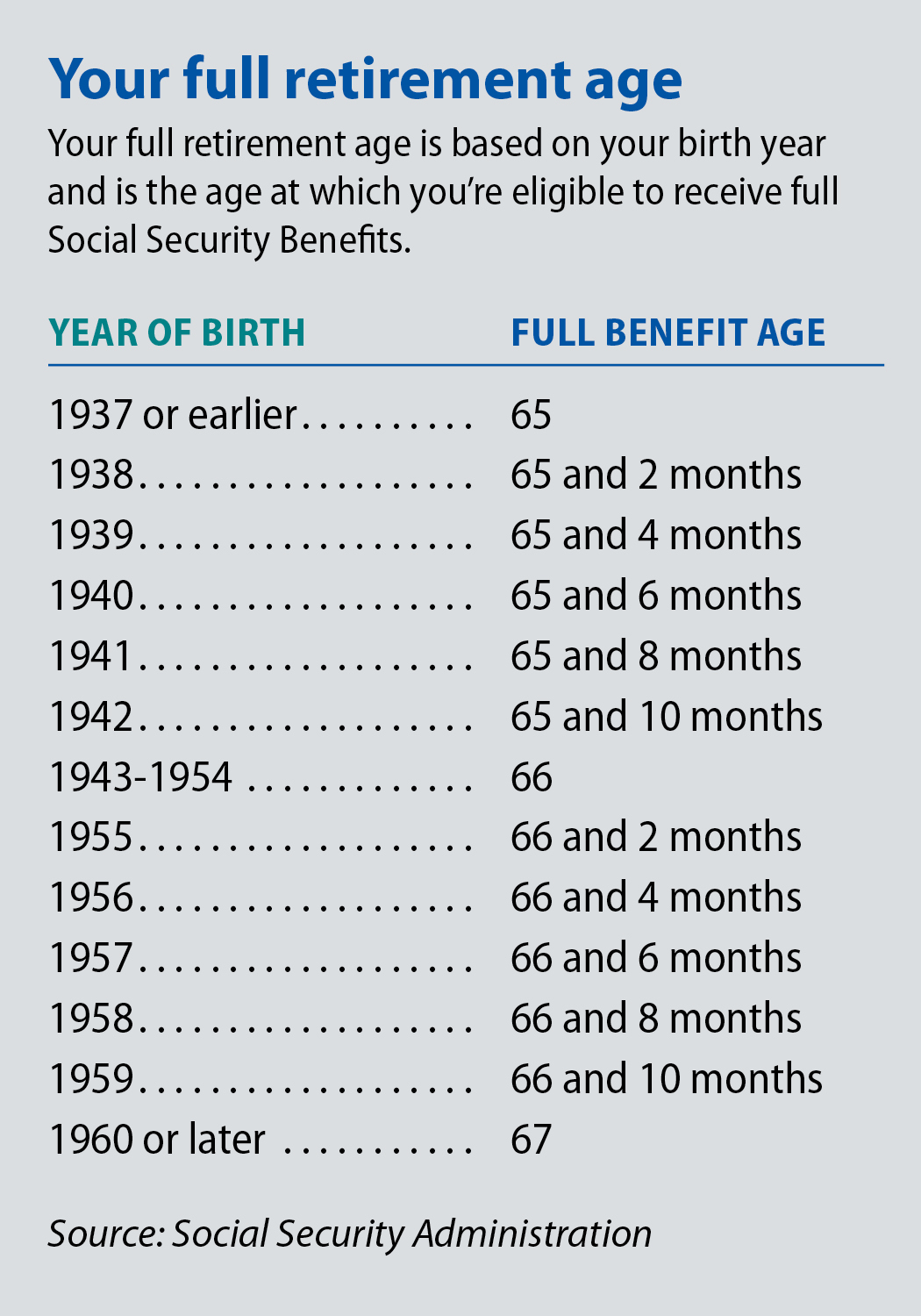
You can begin taking benefits as early as age 62, but there is a permanent cost. If your Full Retirement Age (FRA) is 67 and you claim at 62, your monthly check will be reduced by as much as 30%. For many, the decision to claim early is driven by necessity—job loss, health issues, or a lack of other assets. From a strategic finance perspective, however, claiming at 62 is often discouraged unless the individual has a shortened life expectancy or can achieve an investment return on those early payments that exceeds the “guaranteed” growth offered by waiting.
Full Retirement Age (FRA)
Your Full Retirement Age is the point at which you are entitled to 100% of your calculated PIA. For those born in 1960 or later, the FRA is 67. Reaching this milestone is a major turning point because it eliminates the “earnings test.” Before FRA, if you work while receiving benefits, the SSA may withhold a portion of your check if you earn above a certain limit. Once you hit FRA, you can earn an unlimited amount of income without any reduction in your Social Security benefits.
Delayed Retirement Credits: The 8% Advantage
For every year you delay claiming Social Security past your FRA up until age 70, your benefit increases by approximately 8% per year in “delayed retirement credits.” There is no financial instrument in the market today that offers a guaranteed, inflation-adjusted 8% annual return. For individuals with sufficient retirement savings in 401(k)s or IRAs, it often makes sense to spend down those assets first to allow the Social Security benefit to grow to its maximum possible level. At age 70, the benefit stops growing, making it the definitive deadline for claiming.
Types of Social Security Benefits Beyond Retirement
While “Social Security” is synonymous with retirement for many, the program is actually a multi-faceted insurance umbrella. It provides financial protection against various life events that could otherwise derail a family’s financial stability.
Spousal and Survivor Benefits
Married couples have access to unique strategic opportunities. A spouse can claim a benefit based on their partner’s earnings record, even if they have never worked themselves. This “spousal benefit” can be up to 50% of the worker’s PIA. More importantly, “survivor benefits” allow a widow or widower to inherit the higher of the two checks if their spouse passes away. This makes Social Security a critical component of estate and legacy planning, as it provides a life-long income stream for the surviving partner.
Social Security Disability Insurance (SSDI)
Disability can be more financially devastating than death, as it often involves high medical costs combined with a loss of income. SSDI provides monthly benefits to people who have a physical or mental impairment that prevents them from engaging in “substantial gainful activity.” Because the eligibility requirements for SSDI are stringent, it serves as a high-stakes safety net for the workforce.
Benefits for Children and Dependents
In certain circumstances, the children of retired, disabled, or deceased workers may also receive benefits. This is generally available to unmarried children under 18 (or 19 if still in high school). For a family managing a sudden loss of income, these dependent benefits can bridge the gap in educational savings or daily living expenses.
Tax Implications and Sustainability of the Program
A common mistake in financial planning is failing to account for the “net” benefit. Just because the SSA sends you $3,000 doesn’t mean you keep the full $3,000. Understanding the tax landscape of Social Security is essential for effective cash flow management.
Taxation of Benefits and “Combined Income”
Depending on your total income, up to 85% of your Social Security benefits may be subject to federal income tax. The IRS uses a metric called “combined income,” which is your Adjusted Gross Income (AGI) plus tax-exempt interest plus 50% of your Social Security benefit. If this total exceeds $34,000 for individuals or $44,000 for joint filers, a significant portion of the benefit becomes taxable. Savvy investors use strategies like Roth conversions or managing capital gains distributions to keep their combined income below these thresholds.
The Future of the Social Security Trust Fund
There is a persistent myth that Social Security will “run out” by the time younger generations retire. While the Trust Funds are projected to be depleted by the mid-2030s, this does not mean benefits disappear. Even if the reserves are exhausted, incoming payroll taxes are projected to cover roughly 77% to 80% of scheduled benefits. From a personal finance standpoint, it is wise to plan for a potential reduction in future benefits, but it is equally unwise to ignore Social Security entirely in your long-term projections.
Integrating Social Security into a Modern Investment Portfolio
Social Security should not be viewed in isolation; it is a vital asset class within your broader financial portfolio. It possesses characteristics that most traditional investments lack, making it a powerful tool for risk mitigation.
The “Bond-Like” Nature of Social Security
Financial advisors often view Social Security as a “proxy” for a fixed-income investment. Because it provides a steady, government-backed stream of income, it allows retirees to take more calculated risks with their equity portfolios. If you know your basic living expenses are covered by Social Security, you may feel more comfortable maintaining a higher allocation of stocks, which can help combat the long-term effects of inflation on your other assets.

Inflation Protection (COLA)
Perhaps the most valuable feature of Social Security is the Cost-of-Living Adjustment (COLA). Most private annuities and corporate pensions are fixed; their purchasing power erodes as the cost of goods rises. Social Security, however, is adjusted annually based on the Consumer Price Index. In periods of high inflation, this feature is an indispensable hedge, ensuring that your standard of living does not plummet as the price of healthcare and housing increases.
In conclusion, a Social Security benefit is far more than just a government handout. It is a sophisticated financial product that requires careful management. By understanding the math behind the credits, the strategy behind the timing, and the tax implications of the income, you can transform Social Security from a passive benefit into a powerful engine for retirement success. In the realm of personal finance, knowledge of this system is not just helpful—it is the difference between a precarious retirement and a secure one.
aViewFromTheCave is a participant in the Amazon Services LLC Associates Program, an affiliate advertising program designed to provide a means for sites to earn advertising fees by advertising and linking to Amazon.com. Amazon, the Amazon logo, AmazonSupply, and the AmazonSupply logo are trademarks of Amazon.com, Inc. or its affiliates. As an Amazon Associate we earn affiliate commissions from qualifying purchases.