
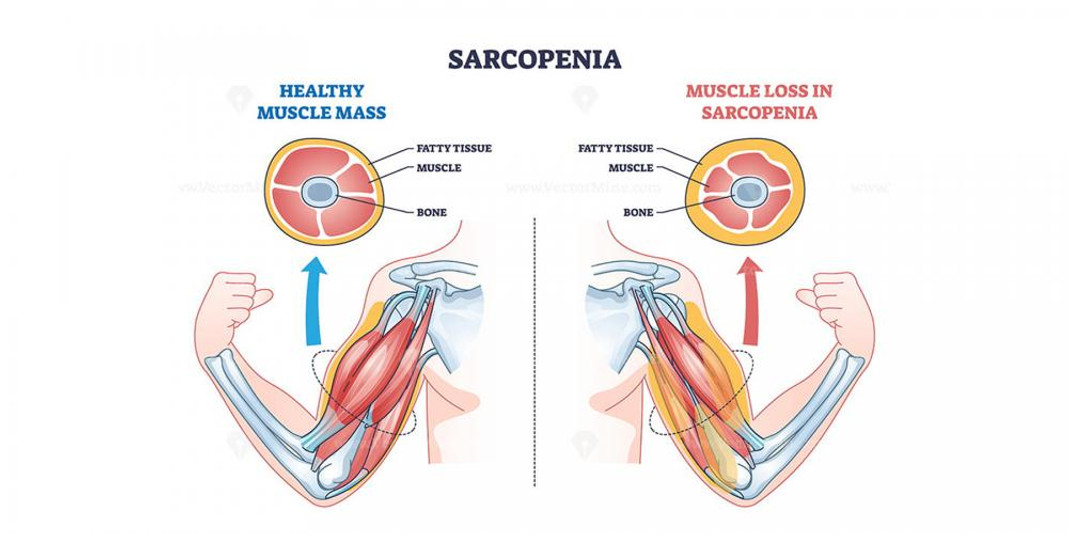
Sarcopenia, the progressive and generalized loss of skeletal muscle mass and strength, has long been viewed as an inevitable consequence of aging. However, in the rapidly evolving landscape of health technology, this condition is being reframed not as a certainty, but as a data problem. As we enter an era where longevity is the new frontier of the tech industry, sarcopenia has emerged as a primary target for digital health innovators, AI developers, and hardware engineers.
Historically, the diagnosis of muscle loss was reactive, often identified only after a fall or a significant decline in mobility. Today, the intersection of biotechnology and information technology is transforming sarcopenia management into a proactive, high-precision field. By leveraging artificial intelligence, wearable sensors, and advanced imaging software, the tech sector is providing the tools necessary to detect, monitor, and treat muscle degradation long before physical symptoms manifest.
Precision Diagnostics: The AI and Imaging Revolution
The first challenge in addressing sarcopenia is the “invisibility” of early muscle loss. Traditional methods of measurement, such as the Body Mass Index (BMI), are notoriously unreliable as they do not distinguish between fat mass and lean muscle tissue. The tech industry has responded by integrating sophisticated software layers onto existing hardware to provide a granular view of body composition.
AI-Enhanced DXA and MRI Analysis
Dual-energy X-ray Absorptiometry (DXA) has long been the gold standard for measuring body composition. However, the raw data provided by these scans can be complex to interpret. New AI-driven platforms are now being utilized to automate the analysis of DXA scans, using machine learning algorithms to segment muscle tissue from fat with surgical precision. These software tools can identify intramuscular adipose tissue—often referred to as “marbling”—which is a key indicator of poor muscle quality and a precursor to clinical sarcopenia.
Furthermore, MRI analysis is being revolutionized by computer vision. Deep learning models can now process cross-sectional images of the thigh or trunk to calculate “Muscle Cross-Sectional Area” (CSA) in seconds. This allows clinicians to track the rate of atrophy over time with a level of accuracy that was previously impossible. By turning static images into longitudinal data points, tech companies are enabling a more dynamic understanding of how muscle health changes in response to lifestyle and digital therapeutics.
The Rise of Digital Bioimpedance 2.0
Bioelectrical Impedance Analysis (BIA), once relegated to high-end bathroom scales, has undergone a technological overhaul. Advanced BIA devices now utilize multi-frequency currents and complex algorithms to measure cellular health and fluid distribution. The newest generation of these devices connects to cloud-based ecosystems, allowing users to track “Phase Angle”—a biometric marker that indicates cellular integrity and muscle quality. This data-driven approach moves the needle from “weight tracking” to “functional mass monitoring,” providing a consumer-grade tech solution to a complex medical issue.
Wearable Technology and the Quantified Muscle
While clinical diagnostics provide a snapshot in time, wearable technology offers a continuous stream of data regarding muscle function and physical activity. The “Quantified Self” movement is expanding beyond step counts to include sophisticated metrics related to sarcopenia prevention.
Electromyography (EMG) and Smart Apparel
One of the most exciting developments in the tech-led fight against sarcopenia is the integration of surface electromyography (EMG) into wearable clothing. Smart leggings and compression shirts embedded with textile sensors can now monitor muscle activation patterns in real-time. This technology provides insights into “motor unit recruitment”—how effectively the nervous system communicates with muscle fibers.
For individuals at risk of sarcopenia, this data is invaluable. Wearable tech can detect imbalances in muscle firing or a decrease in power output during daily activities. By syncing this data to a smartphone app, users receive haptic feedback or digital coaching to optimize their movement, ensuring that the muscle they have is being used efficiently and maintained through proper mechanical loading.
Inertial Measurement Units (IMUs) and Gait Analysis
Modern smartwatches and dedicated gait-tracking sensors utilize Inertial Measurement Units—combinations of accelerometers and gyroscopes—to analyze the nuances of a user’s walk. Sarcopenia is often characterized by a decrease in gait speed and stability. AI algorithms can now analyze these “digital biomarkers” to predict the risk of frailty.
If the software detects a subtle decrease in stride length or an increase in “sit-to-stand” time, it can trigger an early intervention protocol. This shift toward “ambient sensing” allows for a non-invasive monitoring system where the technology acts as an early-warning system for muscle degradation, effectively turning a common gadget into a powerful diagnostic tool for longevity.

Digital Therapeutics and Gamified Rehabilitation
Identifying sarcopenia is only half the battle; the other half is intervention. The tech sector is leading the charge in “Digital Therapeutics” (DTx), creating software-based treatments that are as effective as traditional physical therapy but far more scalable and data-rich.
VR and AR for Functional Strength
Virtual Reality (VR) and Augmented Reality (AR) are moving beyond entertainment into the realm of sarcopenia treatment. For many aging individuals, traditional resistance training can be monotonous or intimidating. VR platforms solve this by gamifying hypertrophy-focused exercises.
Through immersive environments, users are guided through resistance movements that are calibrated to their specific strength levels. The hardware tracks their range of motion and velocity, while the software adjusts the difficulty in real-time based on performance. This ensures that the user is always working within the “hypertrophy zone” necessary to build muscle mass, while the immersive nature of the tech increases adherence to the program.
Computer Vision for Remote Coaching
The rise of home-based fitness technology has birthed a new category of AI-driven coaching. Using the camera on a tablet or smartphone, computer vision algorithms can perform real-time skeletal tracking. As a user performs squats or lunges, the software analyzes their form, counting repetitions and ensuring that the movements are performed safely to prevent injury.
For the sarcopenic patient, this tech provides a bridge between the clinic and the home. It allows for high-frequency, high-quality muscle loading without the need for constant in-person supervision. The data from these sessions is then funneled back to healthcare providers, creating a closed-loop system of care powered entirely by software.
The Future: Robotics and the Integration of Biotech
As we look toward the next decade, the technology used to combat sarcopenia will become even more integrated with the human body. We are moving from external monitoring to internal enhancement and external support systems.
Soft Exoskeletons and Assistive Tech
For those who have already reached an advanced stage of muscle loss, “soft robotics” offers a tech-based lifeline. Unlike the bulky, rigid exoskeletons of the past, modern soft exosuits are made of lightweight fabrics and powered by small, efficient motors. These suits use sensors to detect the user’s intent to move and provide a “power boost” to the muscles. This not only restores mobility but also allows the user to engage in more physical activity, which in turn helps to slow the progression of further muscle atrophy. It is a harmonious marriage of mechanical engineering and human biology.
Big Data and Predictive Longevity Models
The ultimate goal of the tech industry in the context of sarcopenia is the creation of predictive models. By aggregating data from millions of wearables, electronic health records, and genetic testing, big data platforms are beginning to identify the “signatures” of muscle aging decades before they become a clinical problem.
Machine learning models are being trained to recognize how certain lifestyle patterns, digital biomarkers, and even sleep data correlate with muscle retention. This will eventually lead to personalized “Longevity Maps,” where an individual’s tech stack—their watch, their smart clothes, and their digital health apps—works in concert to provide a bespoke roadmap for maintaining muscle mass throughout their entire lifespan.

Conclusion: A Tech-Driven Paradigm Shift
Sarcopenia is no longer a biological mystery that we must simply accept. It has become a focal point for technological innovation. By transforming the human body into a readable data set, we are gaining the ability to intervene in the aging process with unprecedented precision. From the AI that analyzes our scans to the sensors that track our gait and the VR that powers our workouts, technology is providing the framework to defeat muscle loss.
In this new era, “what is sarcopenia?” is a question answered not just by biology, but by the hardware and software that allow us to monitor, maintain, and reclaim our physical vitality. The digital revolution is not just about our devices; it is about the very muscle and bone that move us through the world.
aViewFromTheCave is a participant in the Amazon Services LLC Associates Program, an affiliate advertising program designed to provide a means for sites to earn advertising fees by advertising and linking to Amazon.com. Amazon, the Amazon logo, AmazonSupply, and the AmazonSupply logo are trademarks of Amazon.com, Inc. or its affiliates. As an Amazon Associate we earn affiliate commissions from qualifying purchases.