
The term “middle class” is one of the most frequently used descriptors in the American economic lexicon, yet it remains one of the most difficult to define with precision. For some, being middle class is a state of mind—a sense of stability, the ability to own a home, and the security of knowing that a single emergency won’t lead to financial ruin. For others, it is a rigid mathematical calculation based on annual household income and local cost-of-living indices.
Understanding the middle-class range is not merely an exercise in sociology; it is a critical component of personal finance. Knowing where you stand relative to the median allows for better benchmarking of retirement goals, tax planning, and lifestyle expectations. As inflation fluctuates and the gap between the ultra-wealthy and the working class shifts, the boundaries of the middle class continue to evolve, requiring a nuanced look at what it truly takes to reside in this economic tier.

The Mathematical Definition: Understanding the Income Brackets
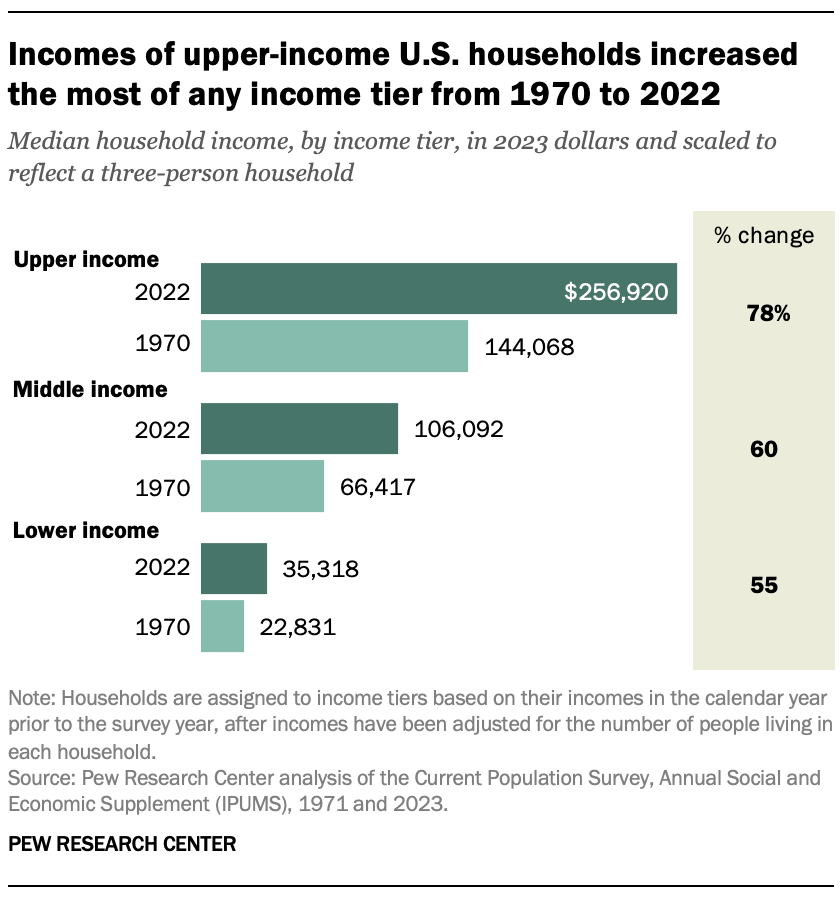
At its most fundamental level, economists define the middle class through income deciles. The most widely accepted benchmark comes from the Pew Research Center, which defines middle-class households as those earning between two-thirds and double the national median adjusted household income.
The Pew Research Model
Using this two-thirds to double rule, the range becomes a moving target that adjusts with the national economy. If the national median income for a household sits around $75,000, the middle-class range would theoretically span from approximately $50,000 to $150,000. However, this range shifts significantly depending on the number of people living in a household. A single individual earning $60,000 may live a solidly middle-class lifestyle, whereas a family of five earning the same amount might find themselves below the threshold of financial comfort.
Household Size and Its Impact on the Range
Income alone does not determine class; the “per capita” distribution within the home does. A dual-income household without children has a much higher discretionary spending capacity than a single-income household with multiple dependents, even if the total gross income is identical. Financial planners often suggest that for every additional dependent, the “middle class” entry point rises by approximately 15% to 20% to account for the increased costs of healthcare, education, and basic necessities.
The Geographical Divide: Why $100,000 Isn’t the Same Everywhere
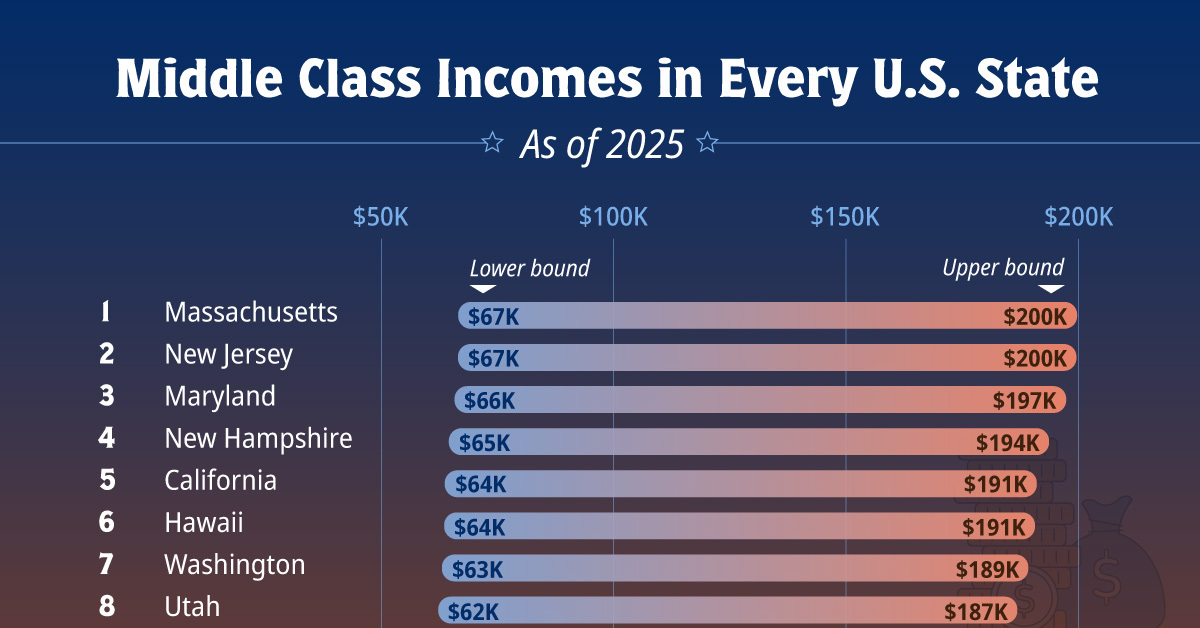
One of the greatest fallacies in personal finance is the idea of a “national” middle-class income. In reality, the middle-class range is hyper-local. The purchasing power of a dollar in a rural Midwestern town is vastly different from its power in a coastal metropolitan hub.
High-Cost vs. Low-Cost Areas
In cities like San Francisco, New York, or Seattle, an annual income of $100,000 might barely cover the basics of rent, transportation, and taxes, placing a household at the lower end of the middle-class spectrum. Conversely, in cities like Memphis, Tennessee, or Wichita, Kansas, that same $100,000 income could afford a large home, multiple vehicles, and significant annual investments, effectively placing the household in the “upper-middle” or even “upper” class for that specific region.
This disparity creates the “geographic trap” where individuals feel “income rich but lifestyle poor.” When assessing your middle-class status, it is vital to utilize a cost-of-living calculator that adjusts for housing costs, which typically account for the largest discrepancy in regional spending.
The “Middle-Class Squeeze” in Major Metros
In high-growth tech hubs and financial centers, the middle class faces what economists call the “squeeze.” This occurs when income growth fails to keep pace with the hyper-inflation of “essential” middle-class markers: housing, childcare, and healthcare. In these areas, the “range” is forced upward. To maintain a traditional middle-class standard of living—defined by homeownership and the ability to save for the future—households in these zones often need to earn 30% to 50% more than the national average.
Asset-Based Middle Class: Wealth vs. Income
While income is the primary metric for the middle-class range, true financial status is often better measured by assets and net worth. A household can have a high income but zero net worth due to debt, while another could have a modest income but significant wealth through inheritance or savvy long-term investing.
Homeownership and Equity
For decades, the hallmark of the middle class was homeownership. Equity in a primary residence serves as a forced savings vehicle and a hedge against inflation. In the modern definition of the middle class, the “range” is increasingly defined by those who own their dwelling versus those who are permanent renters. Renting by choice is a lifestyle preference; renting because of an inability to enter the housing market is often a sign that a household is on the fringe of the middle-class range, regardless of their annual salary.
Retirement Readiness and Emergency Funds
A middle-class household is generally expected to have a level of “financial resilience.” This includes having a liquid emergency fund covering three to six months of expenses and active participation in retirement vehicles like a 401(k) or an IRA. If a household earns $120,000 but has no savings and lives paycheck-to-paycheck, they are technically “income middle class” but “asset poor.” True middle-class status implies a trajectory toward financial independence, not just the ability to service current debt.
Challenges Facing the Modern Middle Class
The boundaries of the middle class are currently under pressure from several systemic economic shifts. These factors have made the “middle-class range” more difficult to enter and harder to maintain than in previous generations.
Rising Costs of Healthcare and Education
In the mid-20th century, a middle-class income easily covered the cost of a state college education and comprehensive healthcare. Today, these two expenses have outpaced general inflation by a wide margin. Many households that fall within the middle-class income range find themselves burdened by student loan debt well into their 40s. This debt acts as a “tax” on their middle-class status, reducing the capital available for investing or home improvements.
The Role of Consumer Debt
The middle-class range is also obscured by the prevalence of credit. It is possible to “look” middle class—driving new cars, vacationing, and living in a desirable neighborhood—while being functionally insolvent. The proliferation of high-interest consumer debt has created a “hollow middle class” where the lifestyle is maintained through leverage rather than earnings. From a financial tools perspective, maintaining middle-class status requires a debt-to-income ratio that remains below 36%, a benchmark often ignored in favor of lifestyle inflation.
Strategic Financial Planning for Middle-Class Growth
If you find yourself within the middle-class range, the goal is often to solidify your position or move toward the upper-middle-class tier. This requires a shift from “earning to spend” to “earning to build.”
Maximizing Employer Benefits and Tax Shelters
One of the primary advantages of middle-class employment is access to institutional financial tools. Maximizing a 401(k) match is effectively a 100% return on investment that many fail to fully utilize. Furthermore, utilizing Health Savings Accounts (HSAs) and Flexible Spending Accounts (FSAs) allows middle-class earners to shield their income from taxes, effectively widening their “disposable” range.
Diversifying Income Streams
The modern middle class is increasingly reliant on more than just a 9-to-5 salary. Side hustles, rental income, and dividend-paying stocks have become essential for those looking to stay at the top of the middle-class range. By diversifying income, a household reduces its vulnerability to economic downturns or industry-specific layoffs. In today’s economy, being “middle class” is as much about the variety of your income sources as it is about the total amount.
Tactical Budgeting: The 50/30/20 Rule
To stay within and grow out of the middle-class range, financial discipline is paramount. The 50/30/20 rule is a gold standard for this demographic: 50% of income goes to needs (housing, groceries, utilities), 30% to wants (dining out, hobbies), and 20% to savings and debt repayment. For those in high-cost areas, the “needs” category often swells to 60%, requiring a corresponding contraction in “wants” to ensure the 20% savings rate remains intact.
The middle-class range is more than a set of numbers on a tax return; it is a complex intersection of geography, household composition, and financial habits. While the mathematical range provides a baseline, true middle-class status is defined by the ability to balance current consumption with future security. By understanding the regional and asset-based nuances of this category, individuals can better navigate their personal finance journey, moving beyond a simple income bracket toward genuine wealth and stability.
aViewFromTheCave is a participant in the Amazon Services LLC Associates Program, an affiliate advertising program designed to provide a means for sites to earn advertising fees by advertising and linking to Amazon.com. Amazon, the Amazon logo, AmazonSupply, and the AmazonSupply logo are trademarks of Amazon.com, Inc. or its affiliates. As an Amazon Associate we earn affiliate commissions from qualifying purchases.