
In the complex landscape of macroeconomics, few indicators carry as much weight or provoke as much debate as the debt-to-GDP ratio. It is a metric that acts as a financial thermometer for a nation, signaling the health, stability, and long-term sustainability of a country’s fiscal policy. While headlines often focus on the absolute dollar amount of a government’s debt, economists know that raw numbers lack context. To understand whether a nation is living beyond its means, we must look at the debt-to-GDP ratio: a figure that measures a country’s total public debt relative to its annual economic output.

Deciphering the Metric: How It Works
At its simplest level, the debt-to-GDP ratio is a comparison of what a country owes against what a country produces. The formula is straightforward: divide the total national debt by the Gross Domestic Product (GDP). The resulting percentage serves as a benchmark for gauging a country’s ability to pay back its debts without incurring further default risks.
The Components of the Ratio
To understand the ratio, one must understand its two moving parts. The numerator—total national debt—represents the accumulation of all past government borrowing, including Treasury bonds and other sovereign debt instruments held by domestic and international investors. The denominator—GDP—is the total market value of all finished goods and services produced within a country’s borders during a specific period.
When the economy grows (the denominator increases) faster than the government accumulates debt (the numerator increases), the ratio falls, signaling an improving fiscal position. Conversely, when debt accumulates at a rate that outpaces economic expansion, the ratio rises, which is often perceived as a signal of fiscal distress.
Why Context Matters
Comparing countries solely by the size of their debt is akin to comparing a college student’s credit card balance to that of a billionaire. A large economy with a high GDP can carry a significantly larger debt load than a smaller, developing economy before feeling the pressure of interest payments. The debt-to-GDP ratio levels the playing field, allowing analysts to compare the fiscal burden of a small island nation against a global superpower in a meaningful way.
Interpreting Thresholds: Is There a “Safe” Level?
The million-dollar question for policymakers and investors alike is whether there exists a specific tipping point where high debt becomes inherently dangerous. While there is no universally agreed-upon magic number, historical economic theory and international standards provide some guideposts.
The 60 Percent Benchmark
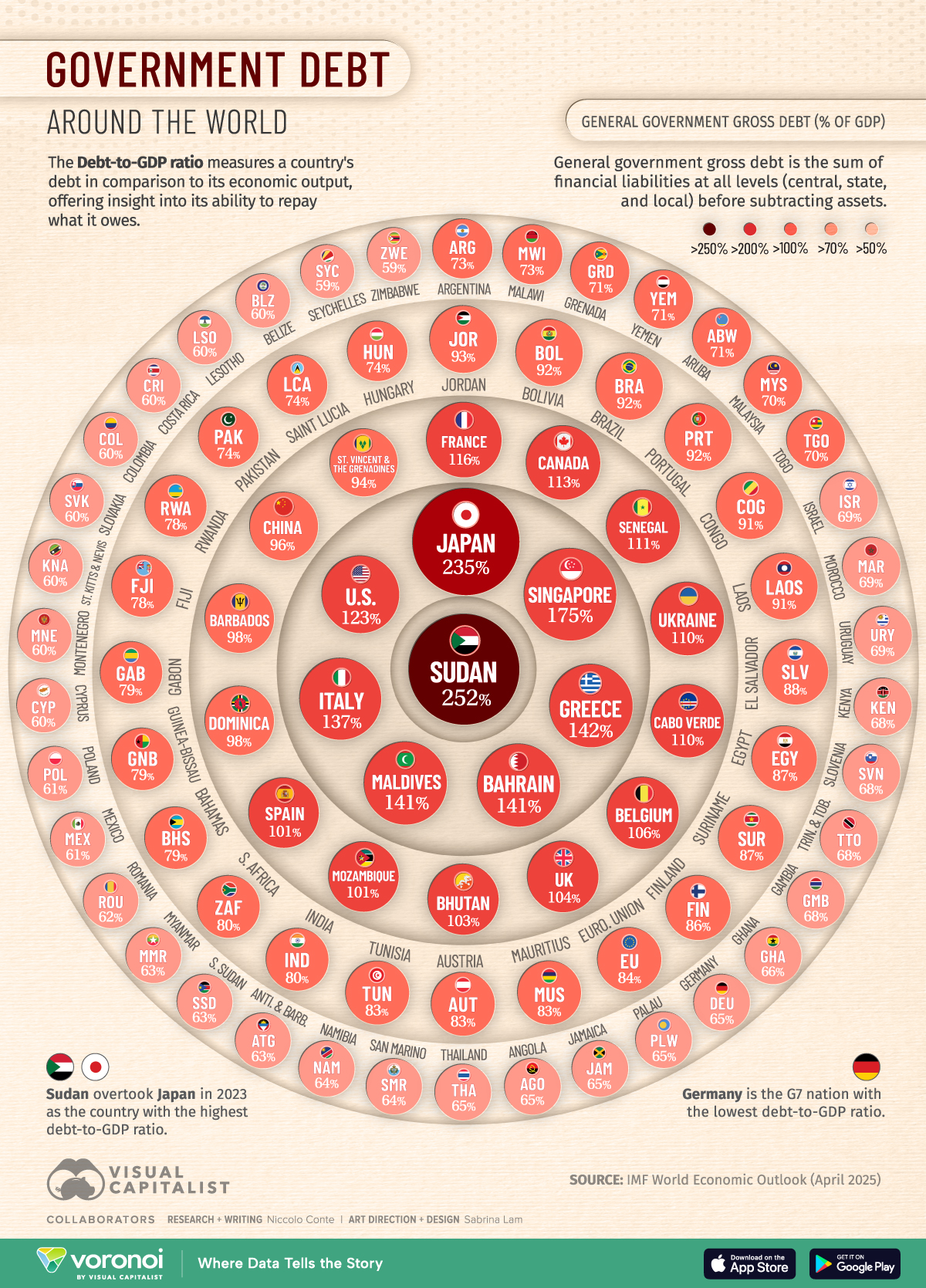
For decades, the European Union utilized the 60 percent debt-to-GDP ratio as a benchmark for its member states under the Stability and Growth Pact. This figure became embedded in the public consciousness as a “safe” limit. However, modern economic history has challenged this assumption. Countries like Japan operate with debt-to-GDP levels well exceeding 200 percent, yet they maintain stability due to low interest rates and a high proportion of debt held domestically.
The Concept of Sustainability
Instead of focusing on a rigid percentage, modern economists prioritize “debt sustainability.” This refers to a government’s ability to continue servicing its debt obligations without needing to restructure or default, and without requiring excessive tax hikes or dramatic spending cuts that could stifle economic growth. A ratio becomes “dangerous” when the cost of servicing that debt—the interest payments—begins to crowd out essential government spending on infrastructure, education, and social safety nets.
The Factors Influencing Debt-to-GDP
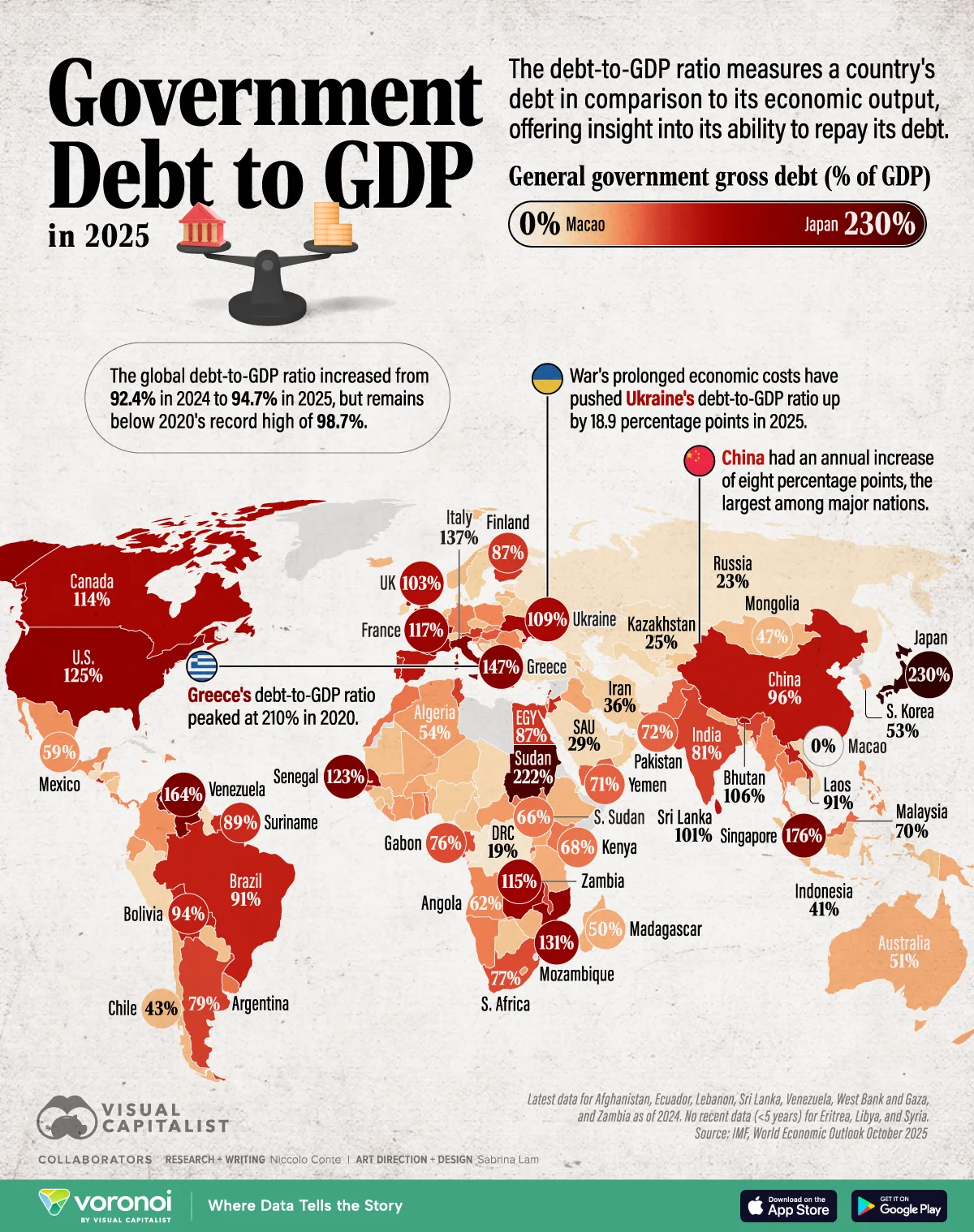
A country’s debt-to-GDP ratio is not static; it is a reflection of government choices, cyclical economic shifts, and global market conditions. Understanding why the ratio moves requires analyzing the primary drivers of both debt accumulation and economic productivity.
Government Fiscal Policy and Deficit Spending
The most direct driver of the numerator is the annual budget deficit. When a government spends more than it collects in tax revenue, it must borrow the difference. During crises—such as a global pandemic, a war, or a financial recession—governments often engage in massive stimulus spending. This leads to a rapid increase in debt. If that stimulus successfully prevents a deeper economic collapse, it can eventually help stabilize the ratio by supporting the denominator (GDP).
Interest Rates and Debt Service
The cost of borrowing is a critical variable. When interest rates are low, governments can manage higher debt levels because the “carrying cost” of that debt is minimal. However, in a rising interest rate environment, the debt-to-GDP ratio becomes much more volatile. As older, low-interest debt matures and must be refinanced at higher market rates, the government’s interest expenditure increases, potentially ballooning the total debt without any new government services being provided.
Economic Growth: The Best Debt Repayment Strategy
The healthiest way to lower a debt-to-GDP ratio is through economic growth. If the GDP expands significantly, the country’s tax base grows, allowing for higher revenue without necessarily increasing tax rates. This increased revenue can be used to pay down principal or simply make the existing debt load appear smaller in proportion to the size of the economy. This is why economists frequently argue that austerity measures—which cut government spending during a recession—can sometimes be counterproductive if they further shrink the GDP, thereby keeping the debt-to-GDP ratio high despite the spending cuts.
Implications for Investors and Global Markets
For investors, the debt-to-GDP ratio serves as a vital component of sovereign risk assessment. Credit rating agencies, such as Moody’s, S&P, and Fitch, include this metric when determining the creditworthiness of a nation.
Sovereign Credit Ratings
A nation with a rapidly rising debt-to-GDP ratio may face a downgrade in its credit rating. A lower credit rating suggests that the country is a riskier borrower, which forces the government to offer higher interest rates to attract investors. This creates a vicious cycle: higher interest rates lead to higher debt servicing costs, which lead to even larger deficits, which further drive up the debt-to-GDP ratio.
Currency Strength and Inflation
High levels of debt can also influence a country’s currency value. If international investors fear that a government will attempt to “inflate away” its debt—by printing more currency to pay off obligations, thereby devaluing the currency—they may move their capital elsewhere. This capital flight can weaken the national currency, leading to imported inflation and lower standards of living for the domestic population.
Long-Term Planning
For individuals building a personal financial portfolio, monitoring the debt-to-GDP ratios of the countries in which they hold investments is essential. A country with a stable or declining ratio suggests a disciplined fiscal environment that is conducive to long-term investment. Conversely, a country with an exploding ratio may be a red flag for those invested in government bonds or currency-denominated assets, signaling the potential for future tax hikes or fiscal instability.
Conclusion
The debt-to-GDP ratio is a nuanced tool that captures the delicate tension between borrowing for growth and the limits of fiscal endurance. While it is not the only metric that matters, it remains the primary lens through which the world assesses whether a nation is managing its house effectively.
A high ratio is not an automatic death sentence for an economy, nor is a low ratio an absolute guarantee of prosperity. Instead, the ratio tells a story about the trajectory of a nation: whether it is investing in its future through sustainable expansion, or whether it is mortgaging its long-term health to satisfy current demands. As global markets become increasingly interconnected, the ability to read and understand this ratio has moved beyond the halls of academia and into the portfolios of informed citizens everywhere. By monitoring this balance of debt and production, one gains a clearer view of the structural health of the global financial system and the nations that power it.
aViewFromTheCave is a participant in the Amazon Services LLC Associates Program, an affiliate advertising program designed to provide a means for sites to earn advertising fees by advertising and linking to Amazon.com. Amazon, the Amazon logo, AmazonSupply, and the AmazonSupply logo are trademarks of Amazon.com, Inc. or its affiliates. As an Amazon Associate we earn affiliate commissions from qualifying purchases.