
Defining the “middle class” in the United States has become increasingly complex. What once functioned as a straightforward benchmark for financial stability—a suburban home, two cars, and the ability to save for retirement—is now a moving target influenced by geography, household size, and the rapidly rising cost of living. To understand where you stand, it is essential to look beyond raw salary numbers and examine the interplay between purchasing power, regional economic conditions, and the shifting definitions used by financial institutions.
The Quantitative Landscape: Defining the Middle Income Bracket
Economists often define the middle class as households earning between two-thirds and double the national median household income. According to the most recent data from the U.S. Census Bureau, the national median household income hovers around $75,000. Under this traditional “67% to 200%” framework, a household earning anywhere from $50,000 to $150,000 would generally fall into the middle-class category.
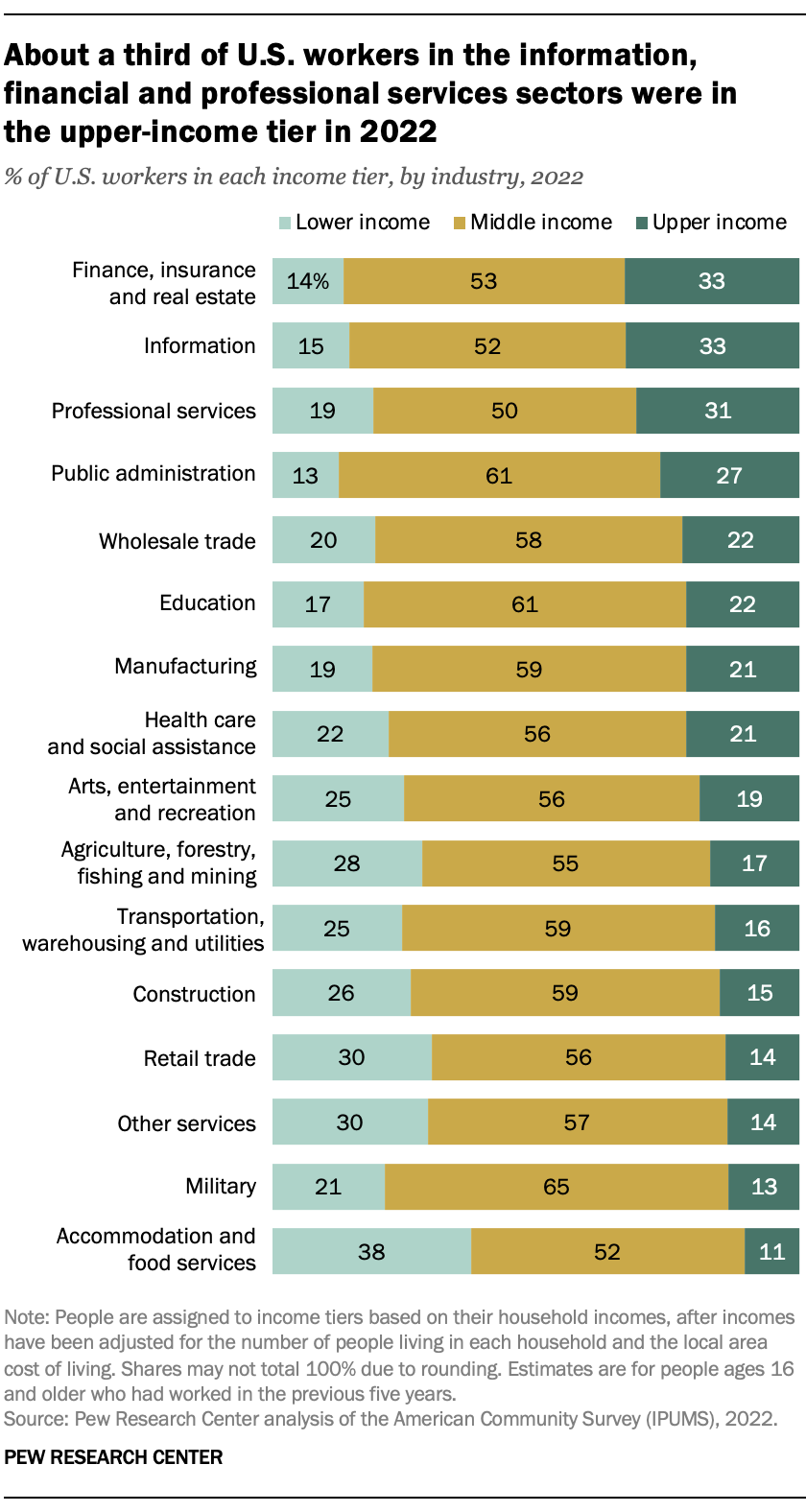
However, this broad range can be misleading. A family of four living in a rural town in the Midwest on $75,000 experiences a significantly higher standard of living than a single professional living in a major coastal city on the same salary. Because of this, the Pew Research Center and other analytical bodies have moved toward “cost-of-living adjusted” income brackets. In high-cost urban centers like San Francisco or New York, a household might need to earn well into the six-figure range—sometimes exceeding $200,000—to maintain a lifestyle that mirrors the traditional middle-class experience.
The Impact of Household Size
Income thresholds must be adjusted for the number of people in the household. A single person earning $60,000 has a vastly different disposable income profile than a family of five earning the same amount. When calculating your position, financial experts suggest using the “equivalent income” method, which accounts for the economies of scale that come with living in a larger household. As a rule of thumb, you divide your household income by the square root of the number of people in the household to get a more accurate picture of your relative economic standing.
Regional Disparities and Purchasing Power
The most significant variable in the middle-class equation is geography. The “middle-class experience” is geographically tethered to local housing markets, property taxes, and the cost of essential services.
The Cost-of-Living Adjustment
In many parts of the United States, housing costs consume 30% to 50% of the median household income. In regions where home prices have decoupled from local wage growth, the middle class has been hollowed out. A household that qualifies as “middle income” on paper may find itself struggling to maintain a “middle-class lifestyle”—characterized by homeownership, health insurance, and debt-free education funding—because the cost of those foundational assets has outpaced earnings.
Metropolitan vs. Rural Dynamics
Urban centers offer higher average wages, but the “middle class” in these cities is often redefined by the necessity of high-earning dual-income households. In contrast, rural middle-class status is often defined by lower debt-to-income ratios and home equity. Understanding your local median income is more important than tracking national averages. If your household income is within 10% to 15% of your local median, you are functionally middle class within your specific economic ecosystem, regardless of what national reports suggest.
The Shifting Definition: Assets vs. Income
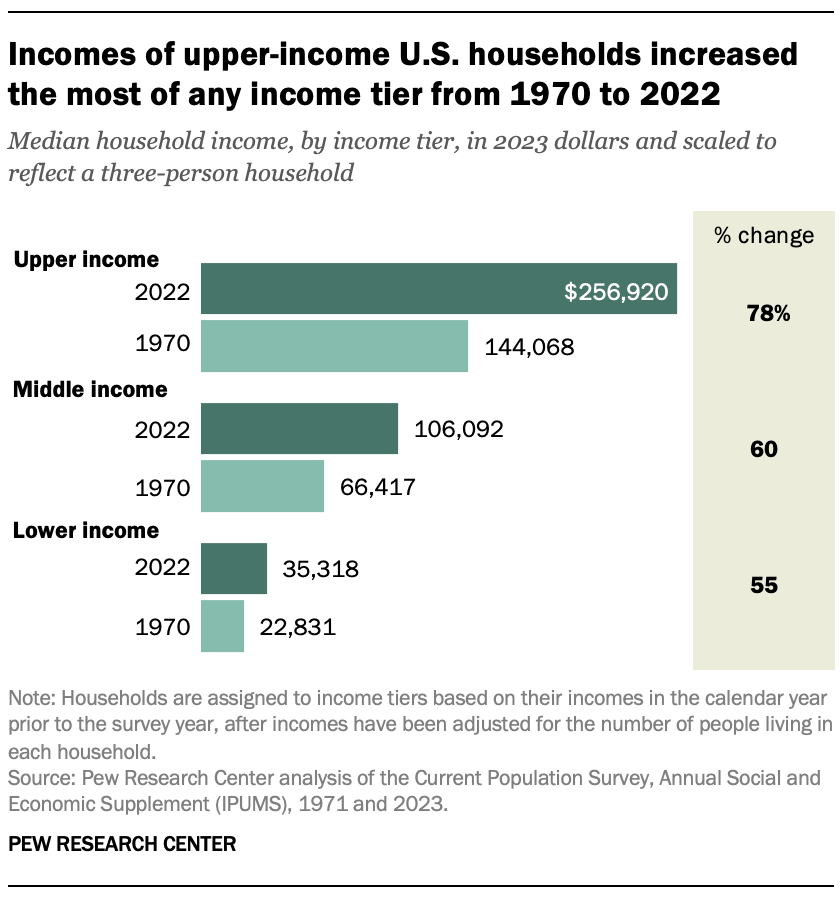
One of the most persistent errors in evaluating middle-class status is focusing exclusively on annual income. True middle-class stability is as much about balance sheets as it is about paychecks. A household earning $100,000 with $200,000 in high-interest consumer debt is in a fundamentally weaker position than a household earning $70,000 with a paid-off mortgage and a robust retirement account.
The Role of Net Worth
Middle-class status has historically been defined by asset accumulation. While income dictates your monthly cash flow, net worth dictates your long-term security. The “middle class” is often characterized by the ability to weather a financial shock—such as a job loss or medical emergency—without falling into poverty. If your income places you in the middle bracket, but your liquid savings are non-existent, your status is precarious.
Debt-to-Income Ratio as a Metric
Financial planners often use the Debt-to-Income (DTI) ratio to define the “true” middle class. A healthy middle-class profile typically involves a total DTI ratio of 36% or less, including mortgage or rent payments. When a household’s income pushes them into a higher tax bracket, but their debt service consumes the majority of that increase, they suffer from “lifestyle creep” or “income stagnation.” Consequently, many Americans who earn high middle-class salaries feel financially constrained because the debt required to attain that lifestyle has eroded their monthly surplus.
Challenges to Maintaining Middle-Class Stability
Being middle class in the 21st century comes with unique pressures that did not exist for previous generations. The primary drivers of these pressures are the rising costs of “big-ticket” necessities.
The Three-Legged Stool: Healthcare, Housing, and Education
The cost of college tuition, healthcare premiums, and residential real estate has risen significantly faster than the Consumer Price Index (CPI) over the last three decades. These three categories represent the “middle-class squeeze.” For many families, the income required to cover these three items effectively requires an income level that far exceeds the historical definition of middle class.
Retirement Readiness
Another metric for identifying middle-class status is the ability to maintain current standards of living into retirement. The traditional middle-class model relied on defined-benefit pensions. Today, the onus of retirement savings has shifted to individual households. If your income level allows for consistent contributions to tax-advantaged accounts like 401(k)s or IRAs, you are participating in the traditional middle-class wealth-building cycle. If your income is fully consumed by current consumption, you are likely part of the “vulnerable” middle class, which is at risk of downward mobility.

Conclusion: How to Assess Your Position
Ultimately, there is no single dollar figure that defines the middle class. Instead, it is a spectrum defined by three primary factors: your relative income compared to your specific geographic median, your ability to meet current obligations without excessive debt, and your capacity to build long-term assets.
To determine where you stand, look beyond the national media headlines. Research the median household income for your specific zip code. Calculate your household’s DTI ratio and assess your net worth growth. If you are earning within the median range for your area, carrying a manageable debt load, and consistently saving at least 10–15% of your gross income, you are effectively occupying the middle-class space.
While the definition may feel increasingly fluid, the core principles of middle-class identity remain rooted in financial autonomy and the ability to plan for a secure future. By focusing on asset management rather than just gross income, you can better navigate the economic realities of modern America and define your own stability regardless of national trends.
aViewFromTheCave is a participant in the Amazon Services LLC Associates Program, an affiliate advertising program designed to provide a means for sites to earn advertising fees by advertising and linking to Amazon.com. Amazon, the Amazon logo, AmazonSupply, and the AmazonSupply logo are trademarks of Amazon.com, Inc. or its affiliates. As an Amazon Associate we earn affiliate commissions from qualifying purchases.