
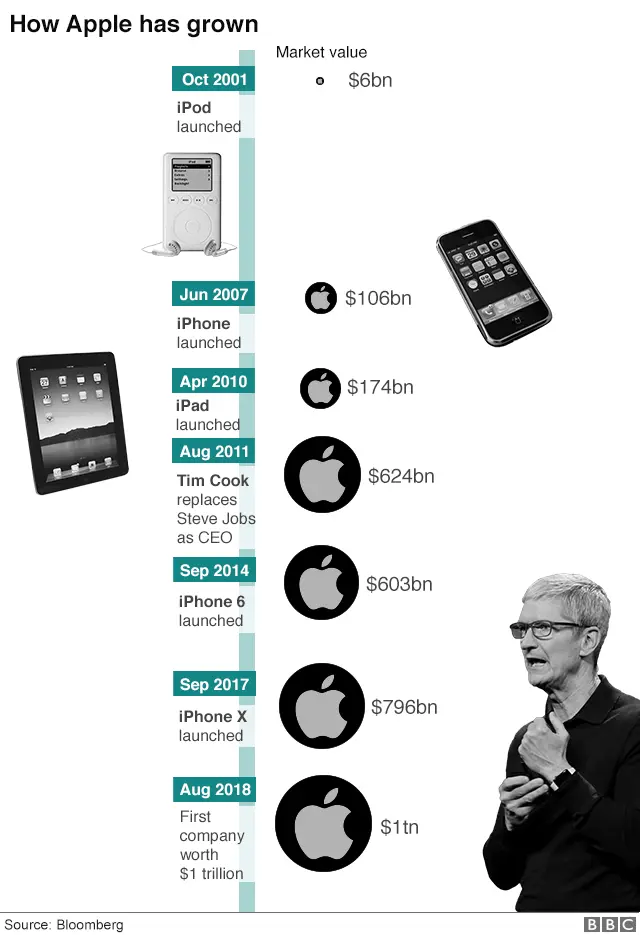
The question of what Apple Inc. (AAPL) is “worth” extends far beyond a simple number on a stock ticker. For investors, analysts, and financial historians, Apple represents the pinnacle of modern corporate finance. From its humble beginnings in a California garage to becoming the first publicly traded U.S. company to hit a $1 trillion, $2 trillion, and subsequently a $3 trillion market capitalization, Apple’s valuation is a testament to disciplined capital allocation and unparalleled operational efficiency.
To understand Apple’s worth, one must look at the intersection of its massive market capitalization, its robust balance sheet, and its evolving revenue streams. In the world of finance, worth is a moving target influenced by quarterly earnings, macroeconomic headwinds, and investor sentiment regarding the company’s future growth prospects.

Market Capitalization and Shareholder Value
Market capitalization is the most common metric used to determine a company’s “worth.” It is calculated by multiplying the total number of outstanding shares by the current share price. For Apple, this figure has become a benchmark for the health of the broader technology sector and the S&P 500 index.
Defining Market Cap in the Context of Apple
Apple’s market cap is not just a vanity metric; it reflects the aggregate market’s confidence in the company’s ability to generate future cash flows. Unlike many high-growth tech firms that trade on potential, Apple’s valuation is grounded in massive, realized profits. At various points over the last few years, Apple’s market cap has fluctuated between $2.5 trillion and over $3 trillion. To put this in perspective, if Apple were a country, its market capitalization would rank it among the top ten largest economies in the world by GDP, rivaling nations like France or the United Kingdom.
The Journey to the $3 Trillion Milestone
The ascent to a $3 trillion valuation was a historic moment in financial history. It signaled that investors were willing to pay a premium for Apple’s stability and its “ecosystem” lock-in. This growth was fueled by a transition in investor perception: Apple moved from being viewed as a cyclical hardware manufacturer—where “worth” depended on the next iPhone launch—to being viewed as a consumer staples/services powerhouse with recurring, predictable revenue. This shift allowed for “multiple expansion,” where the market was willing to pay more for every dollar of Apple’s earnings.
Share Buybacks and Dividend Yields
A critical component of Apple’s financial worth to its shareholders is its aggressive capital return program. Apple is famously “cash flow positive” to an extreme degree, and it uses this cash to reduce its share count. By buying back hundreds of billions of dollars of its own stock, Apple increases the “worth” of each remaining share. This financial engineering helps boost earnings per share (EPS) even in quarters where net income growth might be modest. Combined with a consistent, albeit low-yield, dividend, Apple has positioned itself as a defensive growth stock that prioritizes shareholder equity.
Revenue Streams and Profitability Margins
To determine how much Apple is worth today, one must analyze the engines that drive its top-line revenue and bottom-line profit. Apple’s financial structure is divided into several key segments, each contributing differently to the company’s overall valuation.
The Hardware Moat: iPhone, Mac, and Wearables
The iPhone remains the primary driver of Apple’s financial engine, often accounting for approximately 50% or more of total revenue. However, the “worth” of the iPhone segment isn’t just in unit sales; it’s in the Average Selling Price (ASP). By successfully pushing consumers toward “Pro” and “Pro Max” models, Apple has maintained high margins despite a maturing global smartphone market. Meanwhile, the Wearables, Home, and Accessories segment (including Apple Watch and AirPods) has grown into a business the size of a Fortune 100 company on its own, adding significant layers to Apple’s total enterprise value.
Services: The High-Margin Growth Engine
If hardware is the hook, Services are the “moat.” This segment includes the App Store, iCloud, Apple Music, Apple Pay, and advertising. From a financial perspective, the Services segment is highly attractive because it carries gross margins often exceeding 70%, compared to the roughly 35-40% margins seen in hardware. As the Services segment grows as a percentage of total revenue, Apple’s overall profitability improves. Analysts often value the Services arm at a much higher multiple than the hardware arm, suggesting that much of Apple’s $3 trillion+ “worth” is actually tied to its digital ecosystem.
Gross Margin Evolution and Net Income Stability
Apple’s ability to maintain a total gross margin in the 43% to 45% range is nearly unprecedented for a company of its scale. This is achieved through masterful supply chain management and “vertical integration”—controlling both the software and the custom silicon (M-series and A-series chips). By reducing reliance on third-party chipmakers, Apple has lowered its cost of goods sold while increasing the performance and value of its products, directly padding its net income and, consequently, its market valuation.
The Balance Sheet: Cash Reserves and Asset Allocation
A company’s worth is also measured by what it keeps in the bank. Apple is known for maintaining one of the most formidable balance sheets in corporate history, characterized by vast cash reserves and strategic debt management.
Managing the World’s Largest Corporate Cash Pile
At its peak, Apple held over $250 billion in cash and marketable securities. While this provides an incredible safety net, holding too much cash can be inefficient for a company of Apple’s size due to inflation and taxes. Consequently, Apple moved toward a “cash-neutral” goal, where it aims to return its excess cash to shareholders over time. Nevertheless, its massive liquidity allows the company to weather economic downturns, invest heavily in research and development (R&D), and pivot into new categories like spatial computing or artificial intelligence without needing external financing.
Debt Structure and Capital Expenditures
Interestingly, Apple carries significant debt (often exceeding $100 billion), but this is a strategic financial choice rather than a necessity. Because of its high credit rating, Apple can borrow money at very low interest rates. It often uses this borrowed capital to fund its share buyback program while keeping its overseas cash for other operations, optimizing its tax burden. This sophisticated use of leverage is a key reason why institutional investors value Apple so highly; it is a masterclass in capital efficiency.
Strategic Acquisitions vs. Internal R&D Investment
Unlike many of its peers in the “Magnificent Seven,” Apple rarely engages in “mega-mergers.” Instead of buying huge companies for billions of dollars, Apple’s strategy is to acquire small startups for their talent or specific technology (acqui-hires) and then integrate them into the Apple ecosystem. This disciplined approach to M&A prevents the “goodwill” bloat often seen on the balance sheets of other tech giants, ensuring that Apple’s worth is built on organic innovation and integrated products rather than a patchwork of disjointed acquisitions.
Valuation Metrics and Comparative Analysis
To truly answer “how much is Apple worth,” we must look at how the market prices the stock relative to its earnings and its competitors. Financial analysts use several ratios to determine if the company is undervalued or overvalued.
Price-to-Earnings (P/E) Ratio and Growth Expectations
Apple typically trades at a P/E ratio between 25x and 32x. For many years, it traded at a lower multiple (around 12x-15x) because it was viewed as a hardware company. The current higher multiple reflects the market’s belief in the “stickiness” of the Apple ecosystem. When investors pay 30 times earnings for Apple, they are betting that the company will not only maintain its current profits but will successfully expand into new high-margin territories, such as AI-driven services or health-tech.
Enterprise Value vs. Equity Value
While market cap tells us the equity value, Enterprise Value (EV) provides a more holistic view by accounting for the company’s debt and subtracting its cash. Because Apple has such high cash reserves, its EV is often quite close to its market cap, despite its debt. This low “net debt” position makes Apple one of the safest bets in the financial world, contributing to its “worth” as a premier “flight-to-safety” asset during times of market volatility.
How Apple Compares to Other “Magnificent Seven” Stocks
Compared to peers like Microsoft, Alphabet, or Nvidia, Apple’s valuation is often seen as more “stable.” While Nvidia may see massive swings based on AI infrastructure demand, or Alphabet may face regulatory scrutiny over search dominance, Apple’s worth is anchored in its massive installed base of over 2 billion active devices. This installed base represents a captive audience that provides a “floor” for the company’s valuation, as even in lean years, the replacement cycle and subscription revenue provide a consistent stream of billions in free cash flow.

The Long-Term Financial Outlook
In conclusion, the “worth” of Apple is a composite of its dominant market position, its unparalleled ability to generate cash, and its fortress-like balance sheet. As of the mid-2020s, Apple sits at a crossroads where its valuation is increasingly tied to its ability to integrate Artificial Intelligence into its ecosystem and continue the expansion of its Services division.
For the value investor, Apple’s worth lies in its dividends and buybacks. For the growth investor, it lies in the potential of new product categories and the monetization of its massive user data. Regardless of the lens used, Apple remains a cornerstone of the global financial system. Its trillion-dollar valuation is not merely a reflection of high-end gadgets, but a testament to one of the most efficient and profitable business models ever conceived in the history of capitalism. As long as Apple can maintain its high margins and ecosystem lock-in, its financial worth is likely to remain at the vanguard of the global economy.
aViewFromTheCave is a participant in the Amazon Services LLC Associates Program, an affiliate advertising program designed to provide a means for sites to earn advertising fees by advertising and linking to Amazon.com. Amazon, the Amazon logo, AmazonSupply, and the AmazonSupply logo are trademarks of Amazon.com, Inc. or its affiliates. As an Amazon Associate we earn affiliate commissions from qualifying purchases.