
In the modern financial landscape, the phrase “Venmo me” has become as ubiquitous as “Google it.” Since its inception in 2009 and subsequent acquisition by PayPal, Venmo has transformed from a simple peer-to-peer (P2P) payment experiment into a cultural phenomenon and a cornerstone of the American digital economy. For the average user, Venmo is a free, convenient tool for splitting dinner bills, paying rent, or sending a birthday gift. However, behind the seamless user interface and social feed lies a complex, multi-layered business engine designed to generate billions in annual revenue.

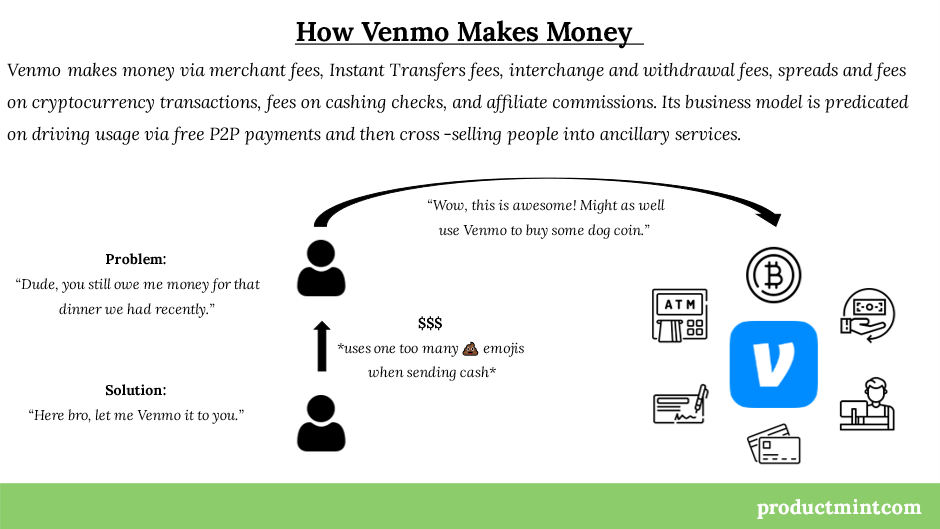
To understand how Venmo makes money, one must look past the free transactions that define its public image. The company utilizes a “freemium” ecosystem where the core service is free to attract a massive user base, while specialized financial products, merchant services, and convenience features provide the profit margins. As Venmo evolves from a simple wallet into a comprehensive financial super-app, its revenue streams have diversified into four primary pillars: transaction convenience, merchant services, banking products, and digital asset trading.
The Monetization of Velocity: Instant Transfers and Transaction Fees
The foundational layer of Venmo’s revenue model is built on the concept of financial velocity. While sending money from one Venmo balance to another is free, moving that money out of the “Venmo ecosystem” and into a traditional bank account presents a primary monetization opportunity.
The Cost of Speed: Breaking Down Instant Transfers
For years, Venmo users were accustomed to the “Standard Transfer,” which takes one to three business days and remains free of charge. However, as the demand for immediate liquidity grew, Venmo introduced the “Instant Transfer” feature. This service allows users to move their funds to a linked debit card or bank account within minutes for a fee—currently 1.75% of the transfer amount, with a minimum fee of $0.25 and a maximum fee of $25.
While 1.75% might seem negligible on a $20 lunch split, the sheer volume of transactions processed by Venmo—which exceeded $270 billion in total payment volume (TPV) in recent years—means these micro-fees aggregate into hundreds of millions of dollars. This revenue stream is particularly effective because it targets a psychological pain point: the desire for immediate access to one’s own money.
Credit Card Processing Fees
Another direct revenue source within the P2P space involves credit card transactions. While Venmo allows users to fund payments via bank accounts, debit cards, or their Venmo balance for free, it charges a 3% fee when a user sends money using a linked credit card. This fee is not entirely profit; it primarily covers the interchange fees Venmo must pay to credit card issuers (like Visa or Mastercard) and banks. However, it ensures that Venmo does not lose money on these transactions while providing a convenience for users who prefer to utilize credit lines or earn card-specific rewards.
Scaling Through Commerce: Venmo for Business and Merchant Services
As the P2P market became saturated, Venmo pivoted toward the much more lucrative “Business-to-Consumer” (B2C) and “Consumer-to-Business” (C2B) sectors. This shift transformed Venmo from a social utility into a robust payment processor competing with the likes of Square and Stripe.
Pay with Venmo: Integrating with Third-Party Apps
The most significant leap in Venmo’s profitability came with the “Pay with Venmo” integration. By leveraging PayPal’s massive network of merchants, Venmo allowed users to use their balances or linked accounts to pay for goods and services on external platforms such as Uber, Grubhub, Hulu, and DoorDash.
When a user selects Venmo as their payment method at checkout, the merchant pays a transaction fee. This is typically a standard percentage plus a fixed cent-per-transaction fee (often around 1.9% to 2.9% plus $0.30). For Venmo, this is “high-margin” revenue. Unlike P2P transfers, which are often a net loss due to operational costs, merchant fees represent a direct injection of capital from the commercial sector.
Business Profiles: Empowering the Gig Economy
Recognizing the rise of the “side hustle” and the gig economy, Venmo introduced “Business Profiles.” This feature allows freelancers, small business owners, and casual sellers to accept payments for goods and services with a professional veneer.
Venmo charges these business profiles a flat fee of 1.9% plus $0.10 for every payment received over $1. This is a strategic middle ground: it is cheaper than many traditional point-of-sale systems but provides Venmo with a steady stream of income from millions of micro-entrepreneurs. Furthermore, payments made to business profiles are covered by “Purchase Protection,” providing a value-add that justifies the fee for both the buyer and the seller.

The Card Ecosystem: Leveraging Interchange and Interest Income
To further entrench users in its ecosystem, Venmo has transitioned into physical and virtual hardware by offering debit and credit cards. These products allow Venmo to tap into traditional banking revenue streams that were previously unavailable to a software-only platform.
The Venmo Debit Card and Interchange Revenue
The Venmo Debit Card, issued by The Bancorp Bank, allows users to spend their Venmo balance anywhere Mastercard is accepted. Every time a user swipes this card, the merchant pays an interchange fee. A portion of this fee is passed back to Venmo.
Beyond the interchange fees, the debit card serves a dual purpose. It encourages users to keep their money within the Venmo ecosystem rather than transferring it to a traditional bank. This “sticky” behavior is vital for Venmo’s secondary revenue source: interest on the “float.” While Venmo is not a bank, the aggregate balance held by millions of users is deposited into interest-bearing accounts. Venmo (and its parent, PayPal) earns interest on these pooled funds, a practice common among digital wallets and gift card providers.
The Venmo Credit Card and Interest Income
The Venmo Credit Card represents a more aggressive move into business finance. Issued through Synchrony Bank, this card offers a tiered cashback system tailored to the user’s spending habits. Venmo earns money here through three primary channels:
- Interchange Fees: Higher than debit card fees, paid by merchants.
- Interest (APR): Users who carry a balance month-to-month pay interest, a portion of which contributes to Venmo’s bottom line through its partnership with the issuing bank.
- Marketing Value: The card provides Venmo with granular data on consumer spending habits, which can be used to refine its merchant partnership programs and targeted offers.
Emerging Markets: Cryptocurrency and Digital Assets
In late 2020, Venmo followed PayPal’s lead by allowing users to buy, hold, and sell cryptocurrencies like Bitcoin, Ethereum, and Litecoin directly within the app. This move was not just a technological upgrade; it was a calculated move to capture a slice of the booming digital asset market.
Crypto Transaction Fees and Spreads
Venmo’s crypto service is designed for the casual investor, emphasizing ease of use over technical depth. For this convenience, Venmo charges a fee for every crypto transaction. These fees are tiered, often starting at a minimum of $0.49 to $0.50 for small purchases and moving to a percentage-based model (around 1.5% to 2.3%) for larger transactions.
Additionally, Venmo generates revenue through the “spread”—the difference between the market price of the cryptocurrency and the price at which Venmo sells it to the user. By acting as the intermediary, Venmo captures a margin on the volatility of the crypto market without the user ever leaving the app.
The Role of Digital Assets in User Retention
While transaction fees are the immediate source of income, the inclusion of cryptocurrency serves a broader financial strategy. It increases the “Time Spent in App,” a key metric for digital platforms. Users who check crypto prices are more likely to engage with other revenue-generating features, such as the Venmo Credit Card or merchant offers. It positions Venmo as a comprehensive financial dashboard rather than just a tool for splitting a pizza.
Conclusion: The Synergy of a Diversified Model
Venmo’s journey from a free utility to a profitable powerhouse is a masterclass in modern business finance. By identifying friction points in traditional banking—such as slow transfer speeds and complex merchant accounts—Venmo has created a “toll-road” model where convenience has a clear, albeit small, price tag.
The company does not rely on a single “silver bullet” for revenue. Instead, it maintains a delicate balance: it keeps the social P2P experience free to ensure user growth, while aggressively monetizing the “Instant Transfer,” the “Business Profile,” and the “Venmo Card.” As the boundaries between social media, commerce, and banking continue to blur, Venmo’s ability to monetize the movement of money—rather than just the storage of it—ensures its place as a dominant force in the financial landscape. For the user, it remains a free app; for the business world, it is a sophisticated engine of transaction-based wealth.
aViewFromTheCave is a participant in the Amazon Services LLC Associates Program, an affiliate advertising program designed to provide a means for sites to earn advertising fees by advertising and linking to Amazon.com. Amazon, the Amazon logo, AmazonSupply, and the AmazonSupply logo are trademarks of Amazon.com, Inc. or its affiliates. As an Amazon Associate we earn affiliate commissions from qualifying purchases.