
Deciding to close a bank account is often a significant milestone in an individual’s personal finance journey. Whether you are moving toward a credit union with lower fees, consolidating your assets for better wealth management, or switching to a high-yield online savings platform, the process of closing a Chase account requires a strategic approach. JPMorgan Chase is one of the “Big Four” banks in the United States, and while its infrastructure is vast, navigating the administrative requirements of account closure demands precision to ensure your financial health remains intact.
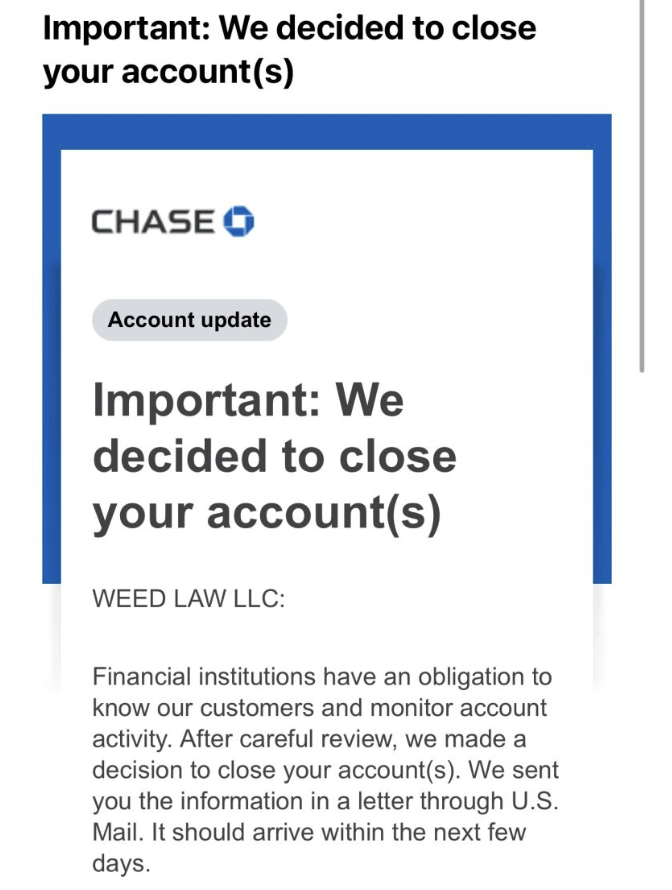
In this guide, we will explore the essential steps to closing your Chase checking or savings account, the financial implications of doing so, and how to transition your capital into new vehicles that better serve your long-term monetary goals.
Preparing Your Finances for the Transition
Before you initiate the closure of a Chase account, it is imperative to conduct a thorough audit of your current financial standing. Simply emptying an account and walking away can lead to a cascade of technical issues, including overdraft fees, missed payments, and potential hits to your internal banking score.
Auditing Recurring Payments and Direct Deposits
The modern financial life is built on automation. From monthly subscription services like Netflix to essential utility bills and insurance premiums, your Chase account likely serves as a hub for numerous outgoing transactions. Before closing the account, you must identify every recurring charge.
Take the time to review at least three to six months of bank statements. Look for “hidden” annual subscriptions that might hit the account months after you think it’s closed. Once identified, migrate these payments to your new financial institution. Similarly, notify your employer’s payroll department to redirect your direct deposit. Because payroll cycles can take one to two pay periods to update, it is wise to keep your Chase account open with a small buffer balance until you have confirmed that your first full paycheck has successfully landed in your new account.
Managing Outstanding Checks and Pending Transactions
One of the most common pitfalls in closing a bank account is the “zombie transaction”—a check or a debit that clears after you have initiated the closure. If a check you wrote three weeks ago is finally cashed after you’ve emptied the account, Chase may reopen the account to process the payment, triggering an overdraft fee and a negative balance.
Ensure that all outstanding checks have cleared. If you have pending “Pay Bill” transactions scheduled through Chase’s online portal, cancel them and reschedule them through your new bank. A clean slate is essential before you make the final call or click the final button.
Choosing a New Financial Home
The decision to leave Chase should be backed by a clear strategy for where your money will go next. Are you seeking higher interest rates? Digital-only banks often offer Annual Percentage Yields (APY) that significantly outperform traditional brick-and-mortar institutions. Are you looking for a more personalized experience? A local credit union might provide better loan rates and community reinvestment. By aligning your move with your specific financial goals—such as aggressive saving, debt reduction, or investment liquidity—you ensure that the closure of your Chase account is a step forward, not just a lateral move.
The Mechanics of Closing Your Chase Account
Once your “financial hygiene” is in order and your new account is operational, you can proceed with the actual closure. Chase offers several channels for this, allowing you to choose the method that best fits your schedule and security preferences.
Closing Your Account Online or via the Mobile App
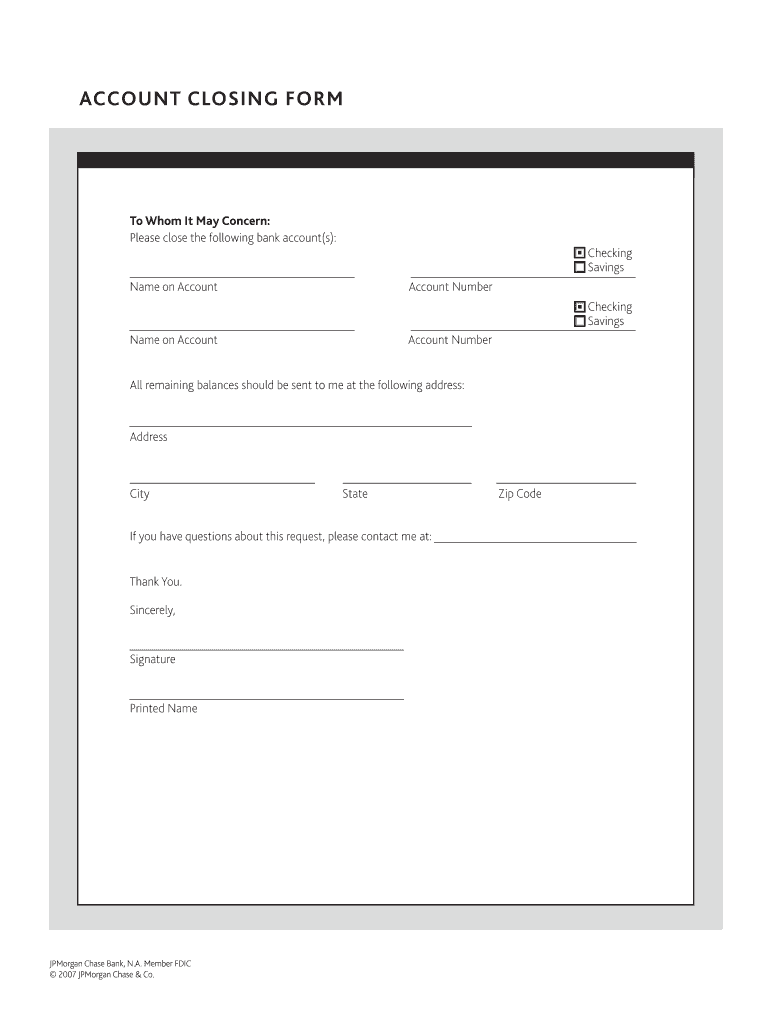
For many users, the digital route is the most convenient. Chase provides a secure messaging center within its online banking portal. To close your account this way, log in to your account, navigate to the “Secure Message Center,” and compose a new message requesting the closure of a specific account number.
While this method is efficient, it is not instantaneous. A customer service representative will review your request to ensure there are no pending holds or negative balances. It is important to be explicit in your message: state clearly that you wish to close the account and provide instructions on how to handle any remaining balance (usually via a check mailed to your address on file).
Closing via Phone or In-Person
If you prefer immediate confirmation, calling Chase customer service or visiting a local branch is the most direct route. Speaking with a banker allows you to settle any final interest calculations on the spot. If you visit a branch, bring a valid government-issued ID and your debit card.
The advantage of the in-person approach is the ability to receive a physical printout confirming the account status. If you choose to call, ensure you take down the name of the representative you spoke with and the date/time of the call. In the world of personal finance, documentation is your best defense against future disputes.
The Importance of the Written Confirmation
Regardless of the method used, your goal should be to obtain a “Certificate of Closure” or a final statement showing a zero balance and a status of “Closed.” Keep this document in your permanent financial records for at least seven years. This serves as proof should a credit reporting agency or a secondary reporting agency like ChexSystems ever claim the account was closed in bad standing.
Addressing Potential Fees and Credit Implications
Closing a bank account is generally a straightforward process, but there are nuances related to fees and credit that every savvy consumer should understand.
Avoiding Early Account Closure Fees
Like many major financial institutions, Chase may charge an “Early Account Disclosure Fee” if you close an account too soon after opening it. Typically, if an account is closed within 90 days of its opening date, a fee (often around $25) may be applied. If you recently opened the account to take advantage of a sign-up bonus, be sure to read the fine print. Most promotional offers require the account to remain open and active for six months or more. Closing it prematurely could result in the bank clawing back the bonus or charging additional administrative fees.
Impact on Credit Scores and Financial History
A common misconception is that closing a checking or savings account will negatively impact your FICO credit score. In reality, bank accounts are not credit instruments. Closing a Chase checking account will not affect your credit utilization or payment history.
However, there is a caveat: if you close an account with a negative balance that you fail to settle, Chase may sell that debt to a collection agency. At that point, the collection account will appear on your credit report and significantly damage your score. Furthermore, your history with ChexSystems—a specialized credit bureau for bank accounts—is affected by how you handle closures. Maintaining a history of accounts closed in good standing ensures you will have no trouble opening accounts at other institutions in the future.
Post-Closure Best Practices for Long-Term Wealth Management
Closing your Chase account is not just the end of a relationship; it is an opportunity to optimize your capital allocation. Once the funds are released, how you deploy them can dictate your financial trajectory for the coming years.
Reallocating Funds to High-Yield Savings
Many traditional Chase savings accounts offer nominal interest rates (often as low as 0.01%). In an environment where inflation can erode the purchasing power of cash, keeping large sums in a low-interest environment is a missed opportunity. Upon closing your account, consider moving the bulk of your liquid cash into a High-Yield Savings Account (HYSA) or a Money Market Account (MMA). By earning 4% or 5% APY instead of 0.01%, you are essentially giving yourself a passive raise, allowing your “emergency fund” to grow rather than stagnate.
Maintaining Financial Security During the Move
During the window of time between closing your Chase account and fully established operations at your new bank, you are at your most vulnerable to administrative errors. It is recommended to keep a “bridge” of cash—enough to cover one month of expenses—in a separate, already-established account if possible.
Furthermore, once the Chase account is closed, physically destroy your old debit cards and checks. This prevents accidental use and protects you from identity theft or fraudulent charges on a defunct account. Securely shredding these items is a final, symbolic act of your transition toward a more optimized financial future.
By following these steps, you transform a simple administrative task into a strategic financial move. Closing a Chase account is less about “leaving a bank” and more about taking proactive control over your money, ensuring that every dollar you earn is working in an environment that maximizes its value, security, and growth potential.
aViewFromTheCave is a participant in the Amazon Services LLC Associates Program, an affiliate advertising program designed to provide a means for sites to earn advertising fees by advertising and linking to Amazon.com. Amazon, the Amazon logo, AmazonSupply, and the AmazonSupply logo are trademarks of Amazon.com, Inc. or its affiliates. As an Amazon Associate we earn affiliate commissions from qualifying purchases.