
In the realm of finance, numbers are the language of progress. Whether you are tracking the growth of a retirement portfolio, determining the profitability of a side hustle, or simply trying to understand how much of your monthly income is consumed by housing costs, one mathematical concept stands above the rest: the percentage. Understanding how to work out the percentage of two numbers is not merely an academic exercise; it is a fundamental pillar of financial literacy. By mastering this simple calculation, you gain the ability to strip away the noise of raw data and see the underlying health of your financial life.
The Fundamentals of Percentage Calculation in Personal Finance
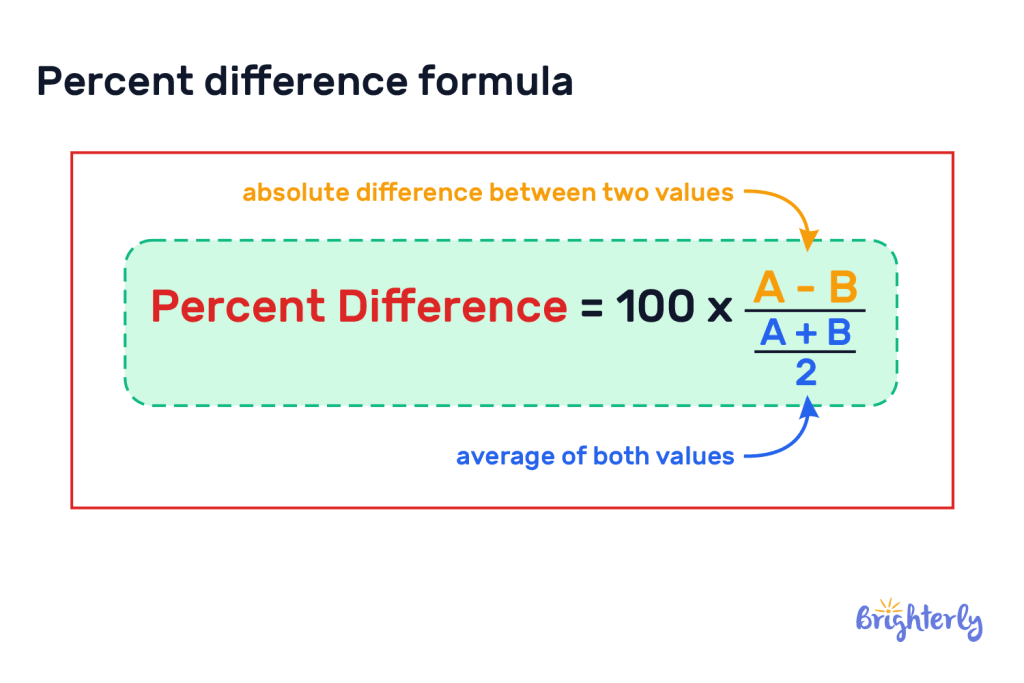
At its core, a percentage is a way of expressing a number as a fraction of 100. In the world of money, this translates to understanding what portion a specific expense or gain represents relative to a total sum. The basic formula to find what percentage one number ($x$) is of another number ($y$) is:
Percentage = (Value / Total Value) × 100
The Standard Formula in Action
Suppose you want to calculate your savings rate. If your net monthly income is $5,000 and you manage to save $750, you are comparing the part ($750) to the whole ($5,000). By dividing 750 by 5,000, you get 0.15. Multiplying this by 100 reveals a 15% savings rate. This single number tells you more about your financial discipline than the raw $750 figure ever could, as it provides context relative to your earning power.
Common Financial Use Cases
Percentages are used daily to evaluate “Value for Money.” When a financial advisor discusses your asset allocation, they are looking at the percentage of your total wealth held in stocks versus bonds. When you look at a credit card statement, the “Minimum Payment” is often calculated as a percentage of your total balance. Mastering this basic division and multiplication allows you to audit these figures yourself rather than relying solely on automated systems.
Evaluating Investment Performance and ROI
One of the most critical applications of percentage calculation is determining the success of an investment. In the world of investing, raw gains are deceptive. A profit of $1,000 sounds impressive, but if it required an initial investment of $100,000, it represents a mere 1% return. Conversely, if that $1,000 profit came from a $2,000 investment, it represents a staggering 50% return.
Calculating Return on Investment (ROI)
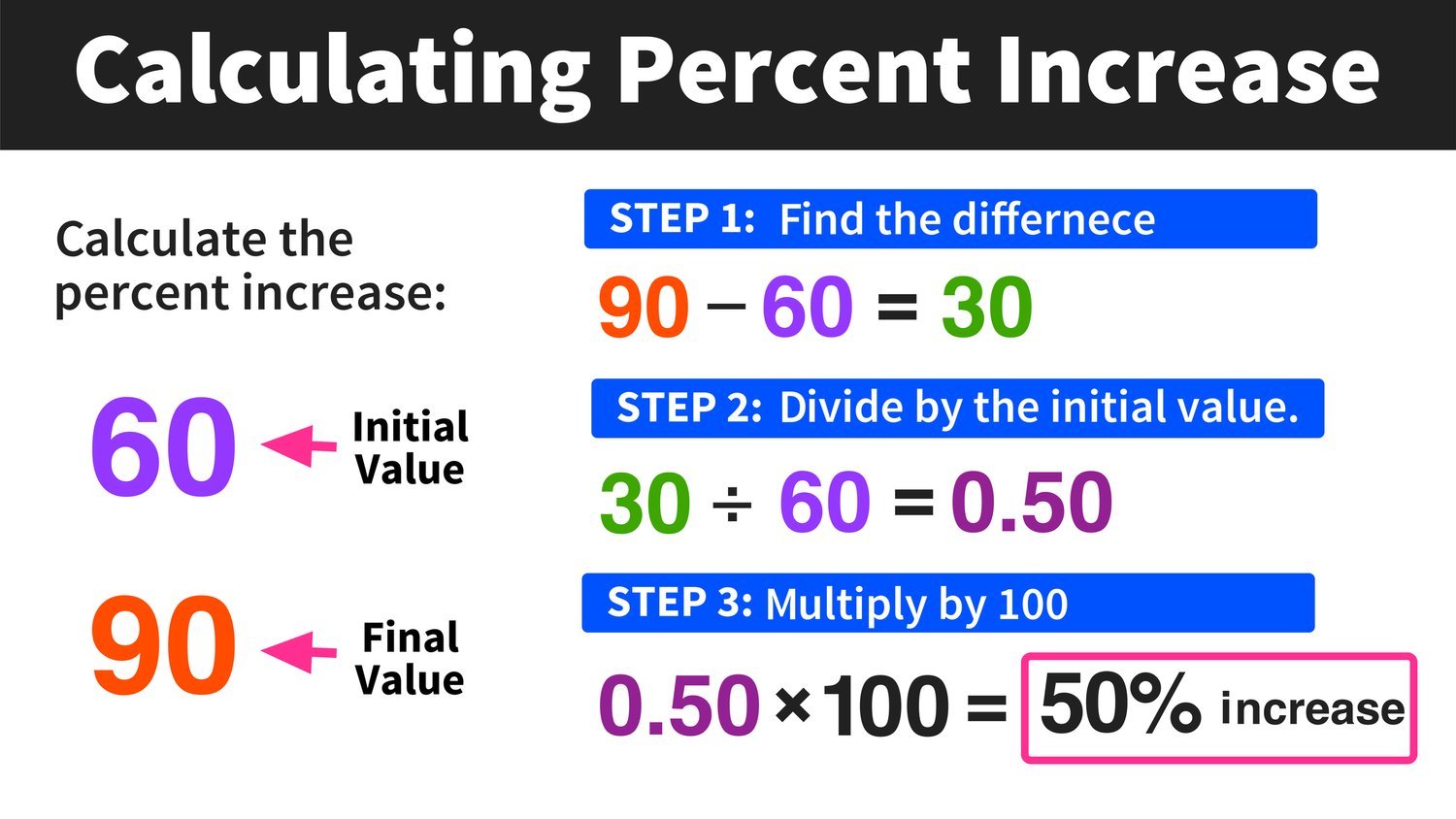
To calculate the Return on Investment, the formula shifts slightly to focus on the change between two numbers:
ROI = [(Current Value – Initial Cost) / Initial Cost] × 100
If you purchased shares in an index fund for $10,000 and they are now worth $12,500, your percentage gain is calculated by taking the $2,500 profit and dividing it by the $10,000 starting point. The result is 0.25, or a 25% ROI. This percentage allows you to compare the performance of your index fund against other benchmarks, such as the S&P 500 or the interest rate of a high-yield savings account.
Assessing Compound Annual Growth Rate (CAGR)
While simple percentage change is useful for a single period, sophisticated investors use percentages to understand growth over time. The Compound Annual Growth Rate (CAGR) is a specialized percentage that describes the rate at which an investment would have grown if it had grown at a steady rate of return each year. While the formula is more complex, it relies on the same foundational logic of comparing two numbers—the beginning and ending balances—across a specific time horizon.
Profit Margins and Business Profitability
For entrepreneurs and side-hustlers, the ability to calculate percentages is the difference between a thriving business and a failing one. Many new business owners confuse “markup” with “margin,” a mistake that can lead to significant financial distress.

Gross Profit Margin vs. Net Profit Margin
Profit margin is expressed as a percentage of revenue. To calculate your Gross Profit Margin, you take your total revenue, subtract the Cost of Goods Sold (COGS), and divide that number by the total revenue.
Margin = [(Revenue – COGS) / Revenue] × 100
If you sell a product for $100 and it costs you $60 to produce, your profit is $40. Your margin is 40%. This percentage is vital because it tells you how much “buffer” you have to cover other expenses like marketing, rent, and taxes. A low percentage margin indicates a high-risk business where even a small increase in costs could result in a net loss.
Understanding Price Markups
While margin is a percentage of the selling price, markup is a percentage of the cost. If a product costs $60 and you want a 50% markup, you add $30 to the price, selling it for $90. Note that a 50% markup results in only a 33.3% profit margin ($30 profit / $90 price). Understanding the interplay between these two percentage-based metrics is essential for setting prices that ensure long-term business sustainability.
Navigating Interest Rates, Debt, and Inflation
Percentages are the primary tool used by financial institutions to charge for their services. Whether it is the interest on a mortgage or the yield on a bond, the “price” of money is almost always expressed as a percentage.
Annual Percentage Rate (APR) and Effective Interest
When you take out a loan, the lender quotes an Annual Percentage Rate (APR). This is the percentage of the principal you will pay in interest over a year. However, because of compounding, the Effective Annual Rate (EAR) might be higher. By understanding how to calculate interest—taking the interest charged and dividing it by the principal—you can compare different loan offers. A 5% interest rate on a $300,000 mortgage is not just a number; it represents $15,000 in interest in the first year alone. Seeing the percentage in terms of real dollars helps in making more informed borrowing decisions.
The Impact of Inflation on Purchasing Power
Inflation is a percentage that represents the rate at which the general level of prices for goods and services is rising. If the inflation rate is 3%, the “real” value of your money is decreasing by that percentage every year. To work out how this affects you, you must subtract the inflation percentage from the interest rate you are earning on your savings. If your bank pays 1% interest but inflation is 3%, your “real” percentage return is -2%. Calculating this allows you to see that your purchasing power is actually shrinking, prompting a move toward more productive assets.
Smart Budgeting and the 50/30/20 Rule
Finally, the most practical application of percentage calculation is in daily budgeting. Percentages provide a framework that scales with your income. A fixed budget of $1,000 for rent might be perfect for someone earning $4,000, but it is disastrous for someone earning $1,500. Percentages solve this by creating relative benchmarks.
Allocating Income by Percentages
The 50/30/20 rule is a popular financial guideline that suggests:
- 50% of income goes to Needs (housing, utilities, groceries).
- 30% of income goes to Wants (dining out, hobbies, travel).
- 20% of income goes to Financial Goals (debt repayment, savings, investments).
To implement this, you take your total net income and multiply it by 0.50, 0.30, and 0.20 respectively. This allows you to see exactly how much “permission” you have to spend in each category. If your “Needs” are currently 65% of your income, the percentage calculation clearly signals that you are “house poor” or over-leveraged, and need to either increase your income or reduce fixed costs.
Tax Calculations and Withholding
Percentages are also the bedrock of the tax system. In a progressive tax system, different portions of your income are taxed at different percentages (brackets). Understanding your “Effective Tax Rate”—which is your total tax paid divided by your total income—is a crucial metric for financial planning. If you earn $100,000 and pay $15,000 in taxes, your effective tax rate is 15%. This percentage is what you should use when calculating the “after-tax” return of a potential investment or a new job offer.
Conclusion: The Power of Relative Thinking
Learning how to work out the percentage of two numbers is more than just a math trick; it is a shift in perspective. It moves you from “absolute thinking” (I have $500) to “relative thinking” (This $500 represents 10% of my emergency fund goal). In the world of money, relative thinking is what leads to better decision-making.
By applying these formulas to your ROI, your profit margins, your interest rates, and your budget, you transform raw data into actionable intelligence. You begin to see patterns, identify risks, and recognize opportunities that were previously hidden. Whether you are managing a multi-million dollar portfolio or simply trying to get out of debt, the percentage remains the most powerful tool in your financial toolkit. Professional wealth management starts with the mastery of these simple, yet profound, calculations.
aViewFromTheCave is a participant in the Amazon Services LLC Associates Program, an affiliate advertising program designed to provide a means for sites to earn advertising fees by advertising and linking to Amazon.com. Amazon, the Amazon logo, AmazonSupply, and the AmazonSupply logo are trademarks of Amazon.com, Inc. or its affiliates. As an Amazon Associate we earn affiliate commissions from qualifying purchases.