
The sight of a crimson dashboard is an experience that every investor, from the seasoned hedge fund manager to the novice retail trader, finds inherently unsettling. When the “markets are down,” it is rarely the result of a single isolated event. Instead, it is typically the culmination of a complex interplay between macroeconomic data, corporate performance, and the fickle nature of human psychology. Understanding why markets dip is not just about identifying the “bad news” of the day; it is about recognizing the structural shifts in the global economy that dictate the flow of capital.
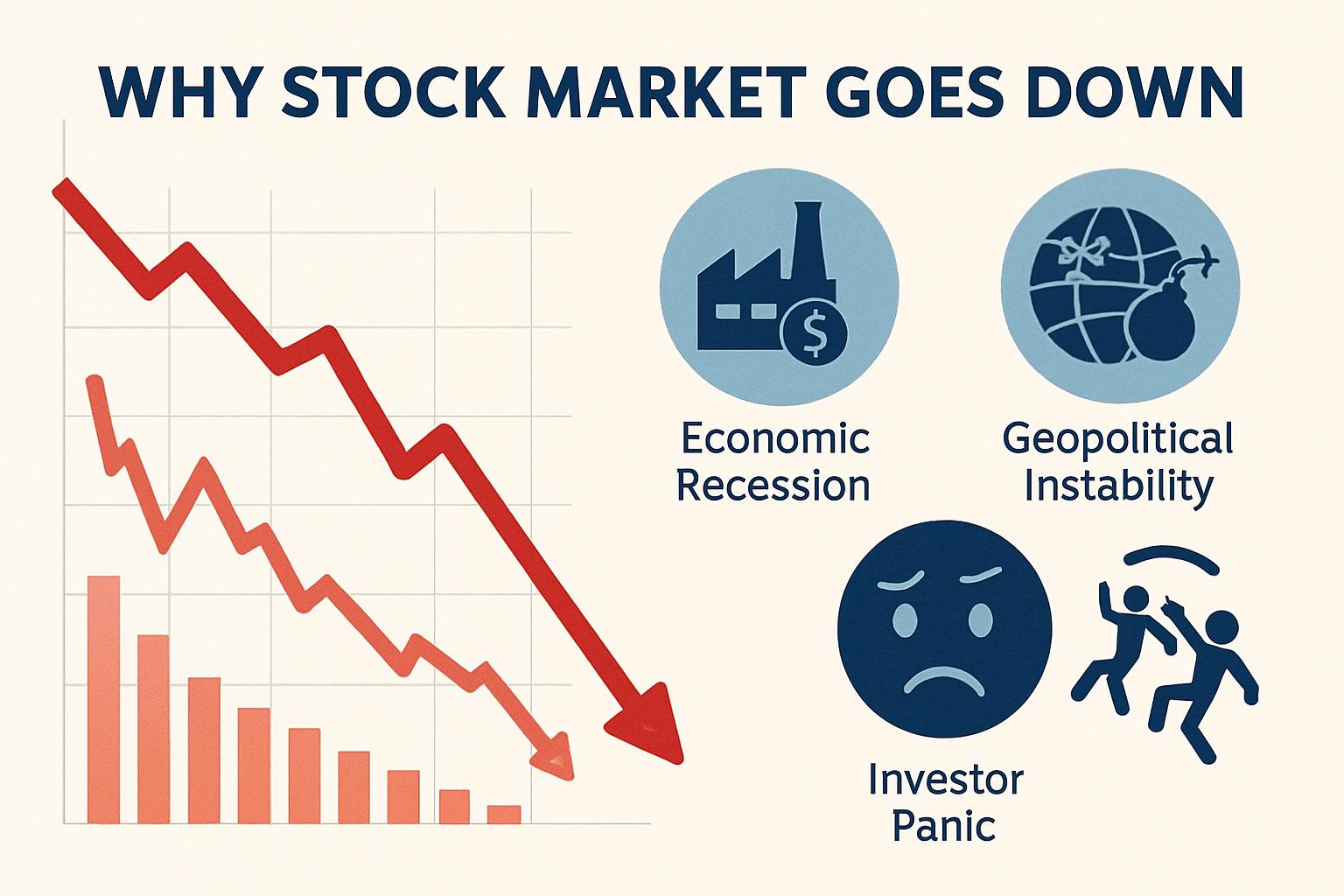
In this analysis, we will deconstruct the primary drivers behind market downturns, examining how interest rate policies, earnings cycles, and geopolitical tensions converge to create the volatility we see on our screens.
1. The Shadow of the Federal Reserve: Interest Rates and Monetary Policy
The most significant driver of market movement in the modern era is the cost of money. When markets decline sharply, the first place seasoned analysts look is the central bank—specifically the Federal Reserve in the United States. Monetary policy acts as the “gravity” of the financial world; when rates rise, the valuations of nearly all assets are pulled downward.
The Impact of “Higher for Longer” Strategies
Markets thrive on predictability. When the Federal Reserve signals a “hawkish” stance—implying that interest rates will remain high to combat inflation—the market reacts with trepidation. Higher interest rates increase the borrowing costs for corporations, which directly eats into their profit margins. For the individual investor, higher rates mean that “risk-free” assets, like Treasury bonds, suddenly offer more attractive yields. This leads to a rotation of capital out of “risky” stocks and into the safety of debt instruments, causing equity prices to fall.
Inflationary Pressures and the Consumer Price Index (CPI)
Market downturns are often triggered by the release of economic data that suggests inflation is “stickier” than expected. If the Consumer Price Index (CPI) or the Producer Price Index (PPI) comes in higher than analyst estimates, the market immediately prices in the likelihood of further rate hikes. Inflation erodes the purchasing power of consumers, leading to decreased demand for products and services. When investors see inflation rising, they anticipate a slowdown in economic growth, prompting a preemptive sell-off.
2. Corporate Earnings: The Reality Check of Valuations
While macroeconomic trends set the stage, corporate earnings are the individual performances that determine a market’s daily direction. A market downturn is often the result of a “miss” in the earnings season, where the largest companies—the bellwethers of the economy—fail to meet the lofty expectations of Wall Street.
The Gap Between Expectations and Guidance
It is a common irony in the stock market: a company can report record-breaking profits and still see its stock price tumble. This happens because the market is forward-looking. If a CEO provides “weak guidance”—suggesting that the next quarter or year will be challenging due to supply chain issues or cooling demand—investors will sell off the stock regardless of past performance. When several major players in a specific sector (such as Big Tech or Retail) provide poor guidance simultaneously, it can drag down entire indices like the S&P 500 or the Nasdaq.
Overvaluation and Price-to-Earnings (P/E) Compression
Sometimes, markets go down simply because they have become too expensive. In periods of euphoria, stock prices often outpace the actual growth of the companies they represent. This leads to inflated Price-to-Earnings (P/E) ratios. When the market eventually realizes that the growth trajectory is unsustainable, a “correction” occurs. This is a healthy, albeit painful, process where prices return to levels that are more aligned with historical averages and fundamental realities.
3. Geopolitical Instability and the “Flight to Quality”
The global economy is inextricably linked to international relations. When markets are down, it is frequently a reaction to “black swan” events or escalating tensions in key geopolitical regions. These events create uncertainty, and if there is one thing the stock market detests, it is an unknown future.
Energy Markets and Supply Chain Disruptions
Conflict in oil-producing regions or trade disputes between major economies can cause immediate spikes in commodity prices. High energy costs act as a “tax” on both businesses and consumers, slowing down economic activity. Furthermore, if a geopolitical event threatens to disrupt global supply chains—such as the closing of shipping lanes or the imposition of heavy tariffs—investors anticipate higher costs and lower efficiency for multinational corporations, leading to a broad market retreat.
The Mechanism of the “Safe Haven” Trade
During times of global unrest, institutional investors often engage in a “flight to quality.” This means they sell off volatile assets (equities, cryptocurrencies, emerging market currencies) and move their capital into “safe havens” like the U.S. Dollar, Gold, or Swiss Franc. This massive exit of capital from the stock market causes prices to plummet, even if the companies themselves are performing well. In this context, the market isn’t down because the businesses are failing; it’s down because the world feels unsafe.
4. The Psychology of the Sell-Off: Sentiment and Algorithms
Markets are not purely rational machines; they are driven by human emotion and, increasingly, by automated systems programmed to react to those emotions. A small dip can quickly turn into a significant downturn due to the feedback loops of fear and algorithmic trading.
The Role of Algorithmic and High-Frequency Trading
Today, a large percentage of market trades are executed by computers using complex algorithms. These programs are often set to “sell” once a certain price threshold is hit (stop-loss orders). When a piece of bad news breaks, these algorithms can trigger a cascade of selling in milliseconds. This “automated panic” can exacerbate a minor decline, turning a 0.5% dip into a 2% drop before human traders even have time to read the headlines.
Investor Sentiment and the “Fear and Greed” Index
Investor psychology often swings between extremes. When the market has been on a long winning streak, “greed” takes over, and people buy in at the top. However, the moment the momentum shifts, “fear” sets in. This psychological shift can lead to “panic selling,” where investors sell their holdings not because the fundamentals of the company have changed, but because they are afraid of losing more money. This collective behavior creates a self-fulfilling prophecy: people sell because the market is down, which in turn causes the market to go down further.
5. Navigating the Downturn: Strategic Financial Perspectives
For the disciplined investor, understanding why the market is down is the first step toward avoiding emotional mistakes. While downturns are uncomfortable, they are a fundamental part of the market cycle. From a professional finance perspective, these periods offer a unique set of opportunities for those who maintain a long-term outlook.
Rebalancing and Tax-Loss Harvesting
A down market is an ideal time for portfolio maintenance. Strategic investors use these periods to “rebalance”—selling assets that have become overweighted and buying those that are now undervalued. Additionally, “tax-loss harvesting” allows investors to sell losing positions to offset capital gains taxes, effectively turning a portfolio decline into a tax advantage. These are sophisticated maneuvers that separate professional wealth management from reactionary trading.
The Importance of Time in the Market vs. Timing the Market
The most critical takeaway during any market downturn is the historical resilience of the financial markets. Historically, every major market crash or correction has eventually been followed by a recovery and new all-time highs. Those who try to “time the market” by jumping out during a downturn often miss the most explosive days of the eventual recovery. Staying invested, maintaining a diversified portfolio, and understanding that volatility is the price one pays for long-term returns is the hallmark of a successful financial strategy.
In conclusion, when you ask “why are markets down today,” the answer is usually a tapestry of interest rate anxieties, corporate earnings adjustments, geopolitical shifts, and psychological triggers. While the “red” on the screen can feel like a crisis, it is often simply the market doing its job: processing new information, recalibrating valuations, and preparing for the next phase of the economic cycle. For the informed investor, the goal is not to avoid the downturn, but to understand it and remain positioned for the inevitable return to growth.
aViewFromTheCave is a participant in the Amazon Services LLC Associates Program, an affiliate advertising program designed to provide a means for sites to earn advertising fees by advertising and linking to Amazon.com. Amazon, the Amazon logo, AmazonSupply, and the AmazonSupply logo are trademarks of Amazon.com, Inc. or its affiliates. As an Amazon Associate we earn affiliate commissions from qualifying purchases.