
The stock market is often viewed as a complex, high-stakes arena reserved for financial elites and Wall Street titans. However, at its core, the stock market is one of the most accessible and powerful tools for individual wealth creation in the modern world. It is the heartbeat of the global economy, a vast network where ownership in public companies is bought, sold, and traded. To understand the stock market is to understand the mechanism by which capital is allocated to innovation, and how everyday individuals can participate in the growth of the world’s most successful corporations.
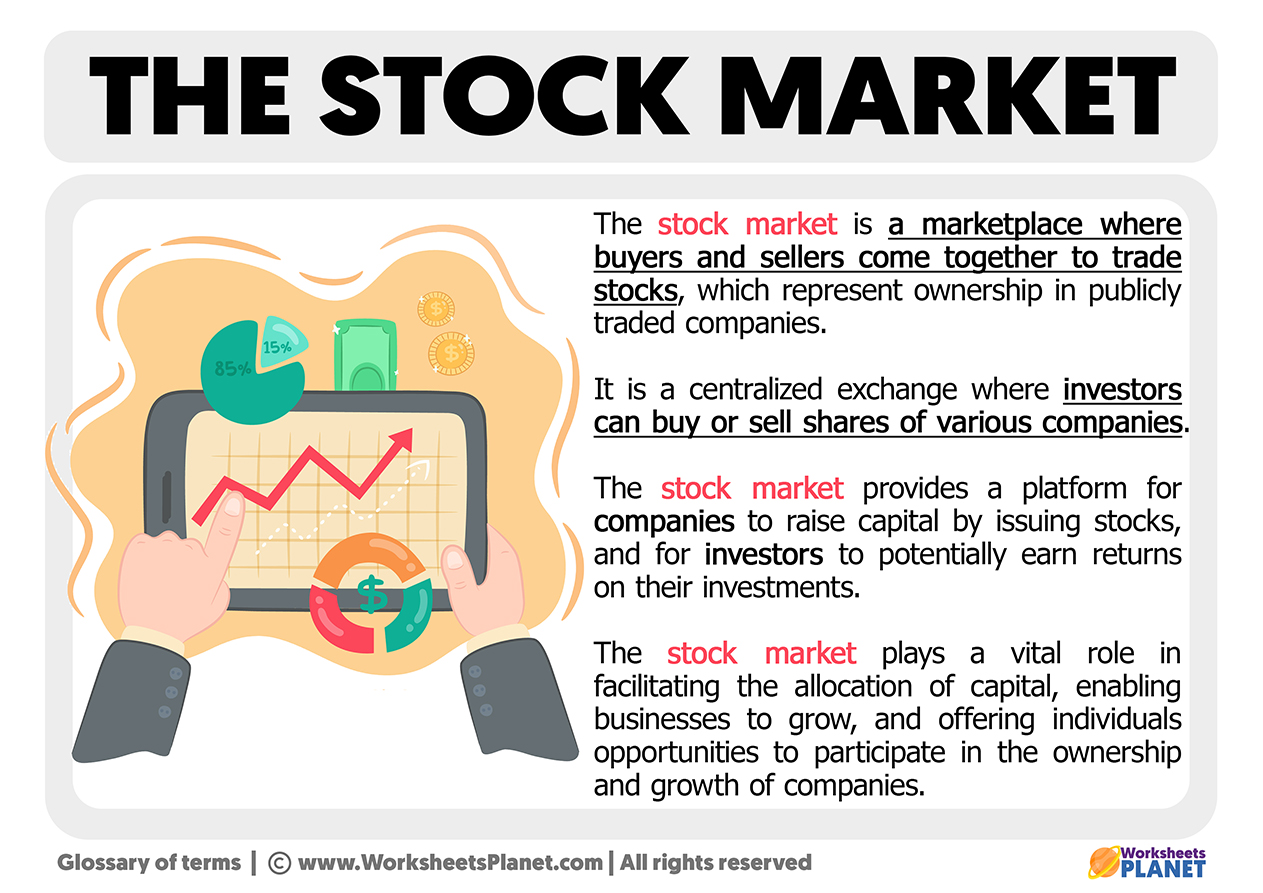
For the personal finance enthusiast or the aspiring investor, the stock market represents more than just ticker symbols and flashing green or red numbers. It represents the “Primary Engine of Compounding.” By shifting from a consumer mindset to an owner mindset, individuals can leverage the productivity of thousands of employees and the visionary leadership of CEOs to grow their own net worth.
The Core Mechanics: How the Stock Market Functions
To grasp the stock market, one must first understand what a “stock” actually represents. When a company decides it needs to raise capital—perhaps to build a new factory, research a breakthrough drug, or expand into international markets—it has two primary choices: borrow money (debt) or sell a piece of the company (equity). When a company goes public through an Initial Public Offering (IPO), it divides its ownership into millions of small pieces called shares.
The Primary vs. Secondary Market
The “stock market” is actually composed of two distinct stages. The primary market is where securities are created. This is where firms sell new stocks and bonds to the public for the first time. Once these shares are out in the wild, they trade on the secondary market. This is what most people refer to when they talk about “the market.” In the secondary market, investors trade shares among themselves, and the company that issued the stock is no longer a direct party to the transaction, nor do they receive money from these daily trades.
The Role of Stock Exchanges
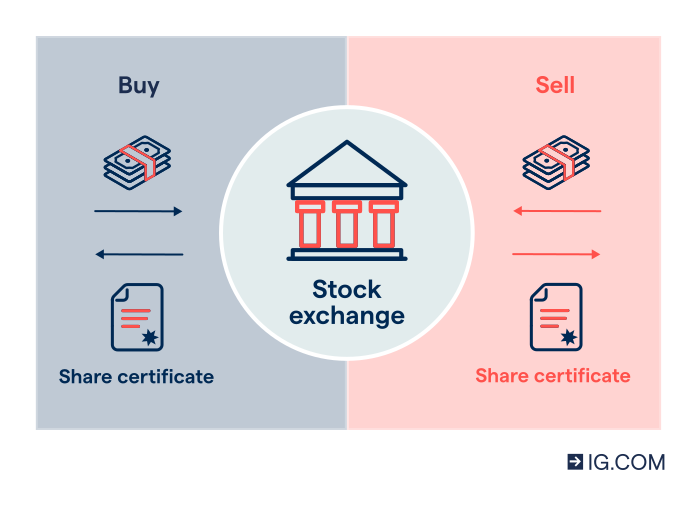
Stock exchanges, such as the New York Stock Exchange (NYSE) or the Nasdaq, act as the organized marketplace for these transactions. Think of an exchange as a highly regulated supermarket. For a stock to be traded there, the company must meet specific listing requirements regarding its financial health and reporting transparency. These exchanges ensure that there is a “fair and orderly” market where a buyer can always find a seller at a transparent price.
Price Discovery and Supply and Demand
What determines the price of a stock? In the short term, it is the law of supply and demand. If more people want to buy a stock (demand) than sell it (supply), the price goes up. If a company reports poor earnings or faces a scandal, investors may rush to sell, driving the price down. In the long term, however, stock prices tend to follow the underlying profitability and “intrinsic value” of the business. This tug-of-war between short-term emotion and long-term value is what creates the volatility—and the opportunity—within the market.
Navigating the Ecosystem: Key Players and Platforms
The stock market is not a monolith; it is a diverse ecosystem inhabited by various participants, each with different goals, timelines, and levels of capital. Understanding who else is in the “room” helps an investor contextualize market movements and develop a sound financial strategy.
Institutional vs. Retail Investors
For decades, the market was dominated by institutional investors—pension funds, mutual funds, insurance companies, and hedge funds. These entities trade in massive volumes and often have teams of analysts scrutinizing every financial statement. Retail investors, on the other hand, are individuals like you who invest for personal goals like retirement or a child’s education. Today, thanks to digital brokerage platforms and the elimination of commissions, retail investors have more power and access to information than ever before.
Market Indices: The Barometers of Success
You will often hear news anchors say, “the market was up today,” but they are usually referring to a specific index rather than the thousands of individual stocks.
- The S&P 500: This index tracks the 500 largest publicly traded companies in the U.S. It is widely considered the best single gauge of large-cap American equities.
- The Dow Jones Industrial Average (DJIA): A price-weighted index of 30 “blue-chip” companies. While famous, it is less representative of the broader market than the S&P 500.
- The Nasdaq Composite: This index is heavily weighted toward the technology and growth sectors.
The Role of Brokers and Financial Tools
In the modern era, the barrier to entry is nearly non-existent. Online brokerages act as the intermediary, executing your trades and holding your assets in a secure account. Beyond just execution, financial tools such as stock screeners, dividend trackers, and fundamental analysis software allow investors to perform “due diligence”—the process of verifying a company’s financial health before committing capital.
Investment Philosophies: Strategies for Building Wealth
Once you understand how the market works, the next step is determining how you will participate in it. There is no one-size-fits-all approach to investing; your strategy should be dictated by your risk tolerance, time horizon, and financial goals.
Growth vs. Value Investing
These are the two primary “schools” of thought in equity investing. Growth investors look for companies that are expected to grow their sales and earnings at an above-average rate. These companies often reinvest all their profits back into the business, meaning they rarely pay dividends. Value investors, conversely, look for “bargains.” They search for stocks that are trading for less than their intrinsic value, often due to temporary market pessimism or industry out-of-favor status.
The Power of Dividends and Passive Income
Many established companies pay out a portion of their profits to shareholders in the form of dividends. For the “Money” focused individual, dividends represent a form of passive income. By reinvesting these dividends to buy more shares, an investor can trigger a “snowball effect” where their ownership stake grows even without adding new capital. This is a cornerstone of the “Dividend Growth Investing” strategy, favored by those seeking long-term financial independence.
Diversification and Risk Management
The only “free lunch” in investing is diversification. By holding a basket of different stocks across various sectors (technology, healthcare, energy, consumer goods), you protect yourself from the failure of any single company. This is why Exchange-Traded Funds (ETFs) and Mutual Funds are so popular; they allow an investor to buy a single “share” that actually represents a tiny piece of hundreds or thousands of different companies.
Practical Steps: Transitioning from Observer to Investor
Starting your journey in the stock market requires a transition from theoretical knowledge to practical execution. The goal is not to “get rich quick,” but to build a sustainable financial future through disciplined habits.
Choosing the Right Account Type
Before buying your first stock, you must decide which “bucket” the money will live in. In the realm of personal finance, tax efficiency is paramount.
- Tax-Advantaged Accounts: These include 401(k)s and IRAs (Individual Retirement Accounts). They offer significant tax breaks but often come with restrictions on when you can withdraw the money.
- Taxable Brokerage Accounts: These offer the most flexibility. You can deposit and withdraw money at any time, but you will owe taxes on any capital gains or dividends earned.
The Importance of the Time Horizon
The stock market is incredibly volatile in the short term (days, months, or even a few years). However, historically, the probability of a positive return increases significantly the longer you hold your investments. For someone with a 20-to-30-year time horizon, a market crash is not a disaster; it is an opportunity to buy shares at a “discount.” Understanding your time horizon prevents emotional “panic selling,” which is the primary way retail investors lose money.
Developing a Consistent Contribution Strategy
The most successful investors are often not those with the highest IQs, but those with the most discipline. “Dollar-Cost Averaging” is a strategy where you invest a fixed amount of money at regular intervals (e.g., $500 every month), regardless of whether the market is up or down. This removes the stress of trying to “time the market” and ensures that you are buying more shares when prices are low and fewer shares when prices are high.

Conclusion: The Stock Market as a Tool for Freedom
The stock market is essentially a giant mirror of human ingenuity and economic progress. While it can be influenced by fear and greed in the short term, its long-term trajectory has historically been upward as companies find new ways to create value and solve problems.
For the individual focused on their financial future, the stock market is the most effective vehicle for outpacing inflation and building genuine wealth. By understanding the mechanics of exchanges, the roles of different market participants, and the fundamental philosophies of value and growth, you move from a place of uncertainty to a place of empowered decision-making. Investing is not a gamble; it is a calculated participation in the global economy. With patience, diversification, and a commitment to continuous learning, the stock market can transform from a source of confusion into a cornerstone of your financial freedom.
aViewFromTheCave is a participant in the Amazon Services LLC Associates Program, an affiliate advertising program designed to provide a means for sites to earn advertising fees by advertising and linking to Amazon.com. Amazon, the Amazon logo, AmazonSupply, and the AmazonSupply logo are trademarks of Amazon.com, Inc. or its affiliates. As an Amazon Associate we earn affiliate commissions from qualifying purchases.